
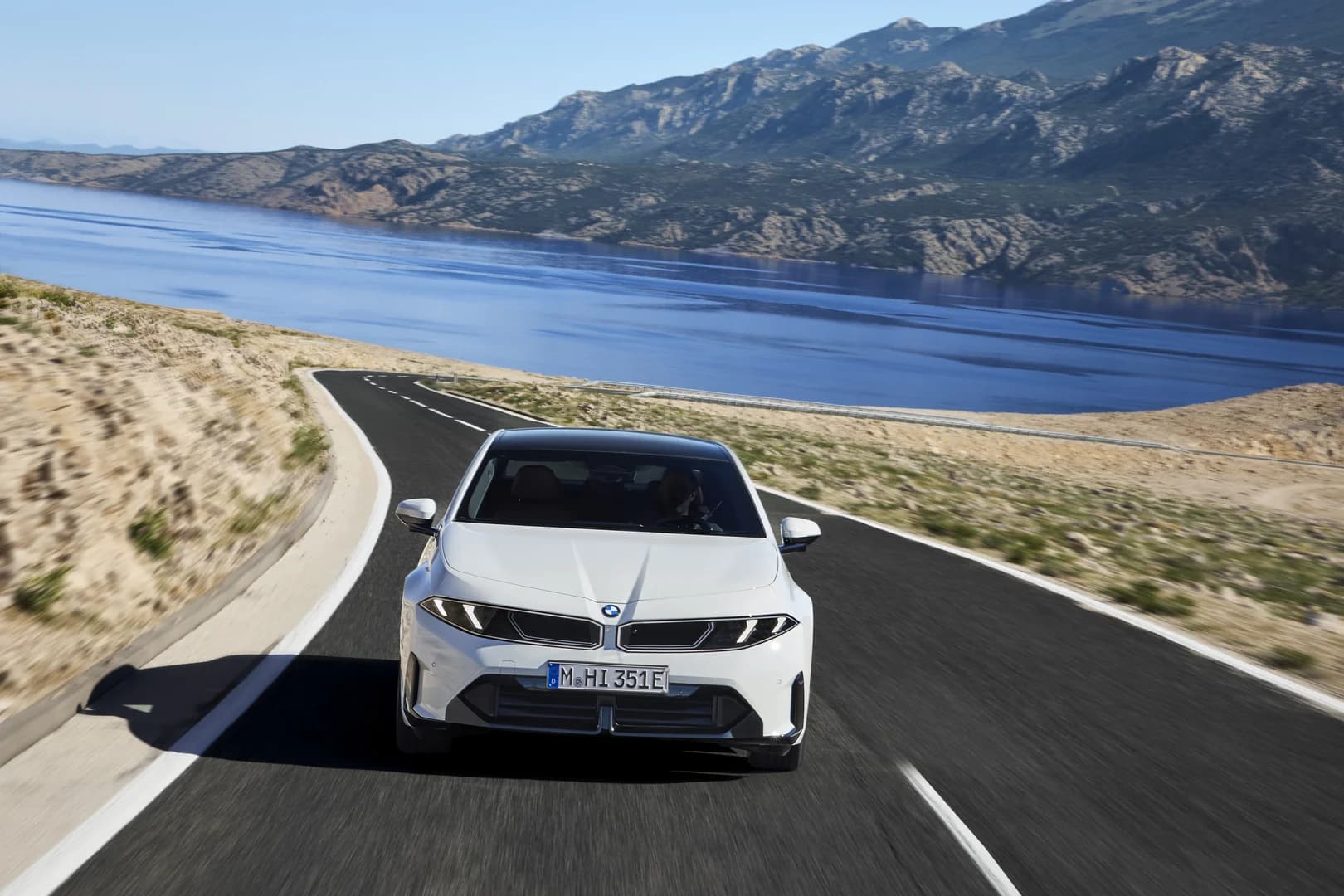
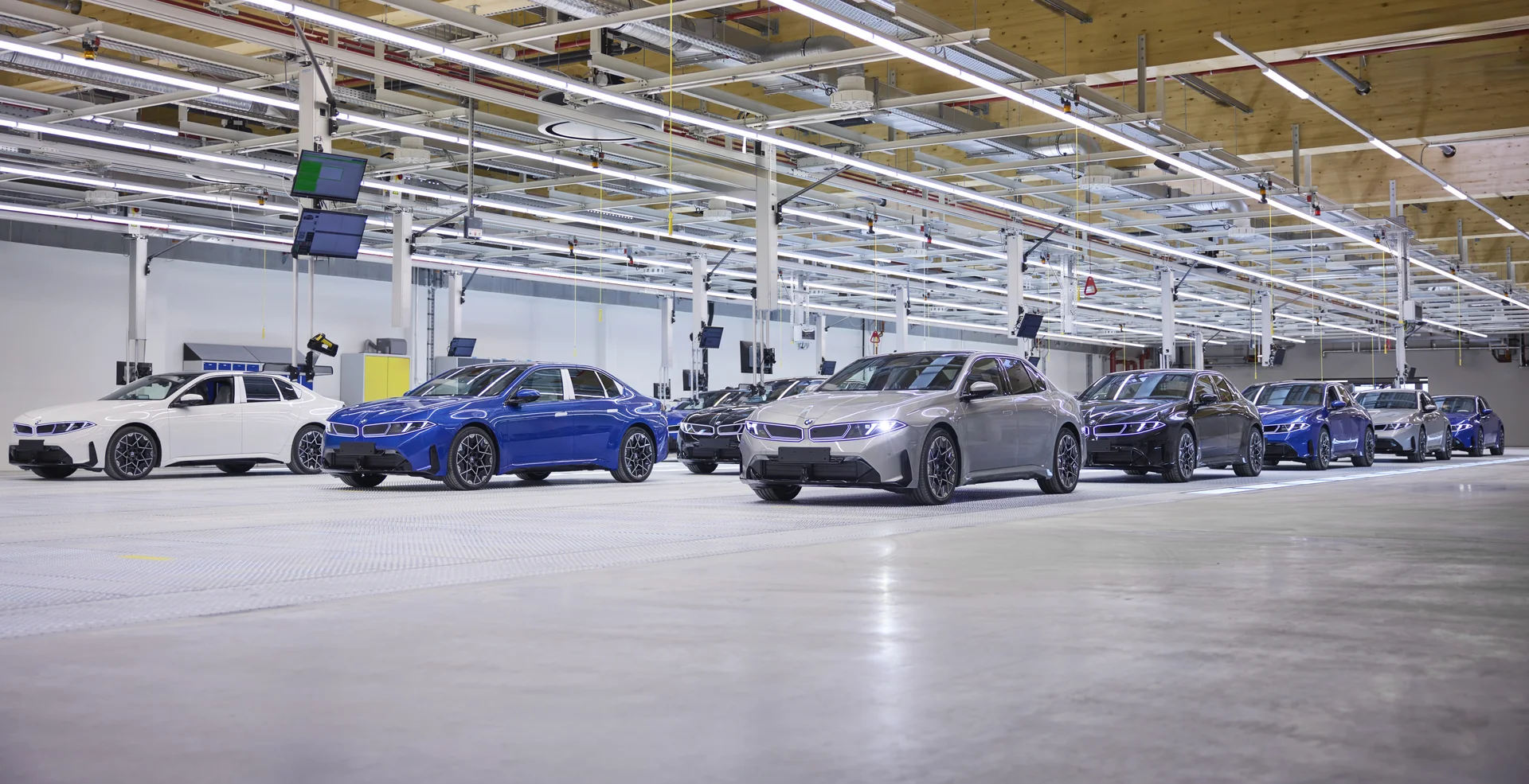
The BMW i3 Neue Klasse is the second production model built on BMW's new "Neue Klasse" electric architecture, following the iX3 SUV that launched the platform in late 2025. Rather than reviving the old 2013–2022 i3 hatchback, this all-new i3 is a fully electric mid-size sedan that effectively replaces the combustion 3 Series as BMW's electric answer to the segment. Series production began at BMW Group Plant Munich in August 2026, with European customer deliveries following in autumn 2026. The launch model is the dual-motor i3 50 xDrive, offered first as a fully-loaded First Edition before the standard configuration opens for order later this year. With an 800V electrical architecture, sixth-generation eDrive motors, and BMW's new Panoramic iDrive interior, the i3 is positioned as BMW's most technologically advanced electric sedan yet, aimed squarely at premium EV sedan buyers who might otherwise look at a Tesla Model S or a flagship Chinese EV sedan.
Performance & Specs
The launch i3 50 xDrive pairs one electric motor on the front axle with one on the rear, delivering a combined system output of 345 kW (469 PS, which converts to roughly 463 hp) and 645 Nm of torque, good for a 0-100 km/h time of 4.7 seconds according to BMW's own figures. That power comes from BMW's sixth-generation eDrive technology riding on an 800-volt electrical architecture — the same fundamental approach BMW debuted on the iX3 — paired with a new generation of cylindrical battery cells. BMW has not yet published a top speed figure for the i3, and a single-motor, rear-wheel-drive entry variant (widely expected to be badged i3 40) has been reported by outlets covering trademark filings and platform roadmaps, but BMW has not officially confirmed its price, power output, or on-sale timing, so treat that entry-level version as unconfirmed for now. Bidirectional charging is standard across the lineup, with Vehicle-to-Load, Vehicle-to-Home, and Vehicle-to-Grid capability built in — useful for powering devices or, eventually, a home during an outage.

| Powertrain | Dual-motor AWD BEV |
|---|---|
| Power | 345 kW (469 PS / 463 hp) |
| Torque | 645 Nm |
| 0–100 km/h | 4.7 s |
| Battery | 108.7 kWh |
| Range | Up to 906 km (WLTP) |
| POWERTRAIN TYPE | Dual-motor AWD BEV |
|---|---|
| HORSEPOWER | 345 kW (469 PS / 463 hp) |
| ACCELERATION | 4.7 s (0–100 km/h) |
| TOP SPEED | TBA — not yet published by BMW |
| DRIVETRAIN | AWD |
| BATTERY | 108.7 kWh |
| ELECTRIC RANGE | Up to 906 km (WLTP) |
Dimensions & Practicality

| Length | 4,760 mm |
|---|---|
| Width | 1,865 mm |
| Height | 1,480 mm |
| Wheelbase | ~2,897 mm |
| Weight | TBA |
| Seats | 5 |
At roughly 4,760 mm long, 1,865 mm wide, and 1,480 mm tall, the new i3 sits close to the outgoing combustion 3 Series in footprint, though the Neue Klasse's flat battery floor and longer wheelbase (reported at approximately 2,897 mm, per third-party measurements rather than an official BMW figure) should free up noticeably more rear legroom than the old car. BMW has not yet published an official curb weight for the i3. Cargo capacity is also not officially disclosed by BMW at time of writing; third-party outlets that measured the production car cite a roughly 420-litre boot plus a small 31-litre front trunk, for about 451 litres of total carrying space — smaller than the boxier iX3 crossover's own figures, which is consistent with the i3's lower, sedan-shaped body. Seating is five across two rows, in keeping with the segment.
| LENGTH | 4,760 mm (third-party measurement; not officially published by BMW) |
|---|---|
| WIDTH | 1,865 mm |
| HEIGHT | 1,480 mm |
| WHEELBASE | ~2,897 mm |
| CARGO VOLUME | ~420 L |
| FRUNK | ~31 L |
Charging & Battery
The i3 Neue Klasse rides on BMW's 800-volt electrical architecture, the same fundamental approach introduced on the iX3, paired with a new generation of cylindrical battery cells rated at 108.7 kWh. DC fast charging tops out at 400 kW, which BMW says can add roughly 423 km of range in just 10 minutes. AC charging is standard at 11 kW via the onboard charger, with an optional 22 kW AC Charging Professional upgrade for owners with three-phase home wallboxes who want meaningfully faster overnight top-ups. Bidirectional charging comes standard across the lineup, with Vehicle-to-Load, Vehicle-to-Home, and Vehicle-to-Grid capability built in, letting the car eventually power devices or a home.
| BATTERY | 108.7 kWh |
|---|---|
| AC CHARGING | 11 kW standard, 22 kW optional (AC Charging Professional) |
| DC FAST CHARGING | Up to 400 kW |
| DC 10-80% TIME | TBA — BMW cites roughly 423 km added in 10 minutes, not an official 10-80% figure |
Design & Interior
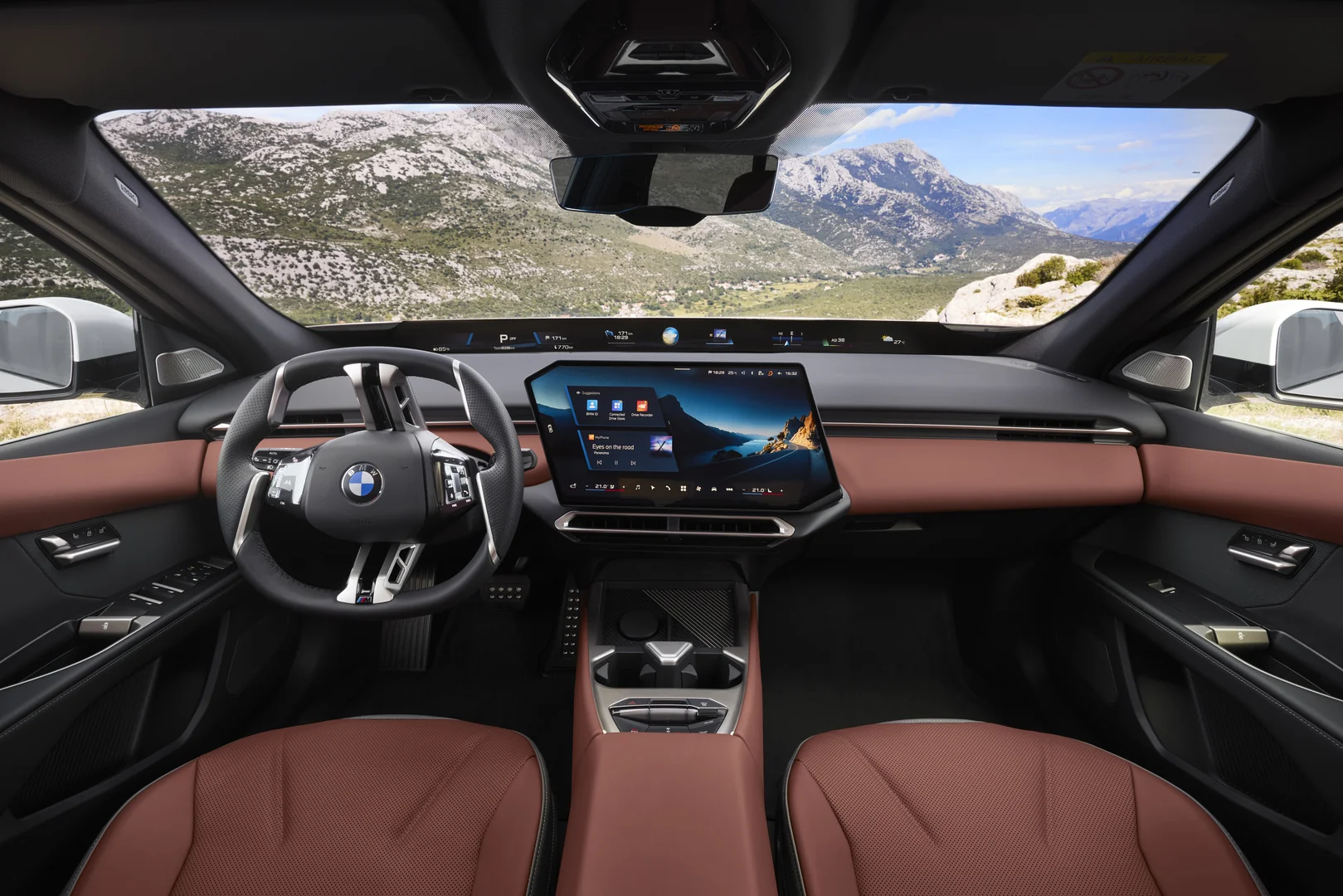
Exterior design leans into a cleaner, more minimalist language than recent BMW models, dropping the oversized kidney grille look in favor of a smoother nose that suits the Neue Klasse's efficiency-first mission. Inside, the star of the show is BMW's new Panoramic iDrive system, a fundamentally different interior architecture that stretches display real estate across the width of the dashboard rather than relying on a single central touchscreen. Materials lean toward sustainable and recycled content, echoing BMW's stated Neue Klasse design brief, and the cabin drops many physical switches in favor of touch- and voice-driven controls. Reviewers who previewed pre-production cars describe the interior as a clear step up in perceived quality from the outgoing 3 Series, with the driving position and sightlines shaped around the new panoramic display rather than a conventional gauge cluster.
Technology & Features
The centerpiece of the i3's technology story is the "Heart of Joy" high-performance computer, a new central processing unit BMW says responds up to ten times faster than the systems in its current lineup, consolidating what used to be handled by dozens of separate control units into four integrated domains covering driving dynamics, infotainment, automated driving, and comfort functions. That computing power underpins BMW's Panoramic iDrive infotainment, which spans a wide head-up display strip augmented by a central control display. Wireless Apple CarPlay and Android Auto are expected to carry over from BMW's existing lineup, and the sixth-generation eDrive software stack is built to receive over-the-air updates. BMW has also confirmed an optional 22 kW AC charging upgrade (AC Charging Professional) on top of the standard 11 kW onboard charger, letting owners with three-phase home wallboxes top up meaningfully faster overnight.
Safety & ADAS
BMW's official reveal materials for the i3 Neue Klasse introduce "BMW Symbiotic Drive," described as a new era for the brand's assisted-driving experience and built on the same Heart of Joy computing architecture that runs the car's other systems. Beyond naming Symbiotic Drive, BMW has not yet published a detailed ADAS feature list, sensor hardware suite, or a specific automation level for the i3 at time of writing, so treat the exact assistance-system lineup as unconfirmed for now.
| ADAS LEVEL | TBA — not yet published by BMW |
|---|---|
| ADAS FEATURES | BMW Symbiotic Drive (assisted driving); full feature list TBA |
Available Versions
| VERSION | POWER | TORQUE | 0-100 | DRIVETRAIN | BATTERY | EV RANGE | COMBINED RANGE | PRICE | KEY DIFFERENCES |
|---|---|---|---|---|---|---|---|---|---|
| i3 50 xDrive | 463 hp | 645 Nm | 4.7 s | AWD | 108.7 kWh | Up to 906 km | — | €65,900 | Standard launch trim; order books open around September 2026, deliveries autumn 2026 |
| i3 50 xDrive First Edition | 463 hp | 645 Nm | 4.7 s | AWD | 108.7 kWh | 758–906 km | — | €75,340 | Same powertrain, adds M Sport package, Iconic Glow exterior lighting, premium interior; orders opened June 2026 |
Pricing & Availability
BMW has officially confirmed pricing only for the launch i3 50 xDrive: €65,900 for the standard car and €75,340 for the fully-equipped First Edition, both figures from BMW's own German press materials. Order books for the First Edition opened in mid-June 2026, ahead of BMW's original schedule, reflecting what BMW describes as strong early demand; the standard i3 50 xDrive is expected to open for order around September 2026. Series production began at BMW Group Plant Munich in August 2026 — the plant's transformation for Neue Klasse output cost around €650 million and will make it an all-electric-only facility from 2027 — and the first customer deliveries in Europe are set for autumn 2026. A U.S. launch has been reported by industry outlets for around the first quarter of 2027, but BMW has not published official U.S. pricing or an exact on-sale date, so treat any dollar figure for the American market as an estimate rather than a confirmed price. No confirmed U.S. price exists as of this writing.
How It Compares
None of these three are a precise segment match for the i3 — the AVATR 12 is a budget-priced Chinese rival that out-powers it for less money, while the NIO ET9 and Tesla Model S both sit in a higher price bracket as larger flagship sedans. That spread is itself useful context: it shows a buyer weighing the i3's €65,900 starting price against both cheaper, more powerful Chinese alternatives and pricier Western flagships, with BMW's pitch resting on brand, chassis tuning, and the new Panoramic iDrive interior rather than a straightforward power-per-dollar argument.
- Up to 906 km WLTP range and 400 kW DC charging put it near the top of the segment on paper
- All-new Panoramic iDrive interior and "Heart of Joy" computer represent a genuine technology leap over BMW's outgoing EVs
- Bidirectional V2L/V2H/V2G charging comes standard, ahead of most rivals at this price
- Only the dual-motor AWD trim is priced and confirmed so far; the cheaper single-motor entry variant remains unconfirmed
- No official U.S. pricing or on-sale date yet, and several key figures (curb weight, top speed, exact ADAS feature list) haven't been published by BMW
The i3 Neue Klasse looks like a genuinely strong technical follow-up to the iX3, backing up its range and charging numbers with real architectural advances rather than just a badge change. At €65,900 it's priced aggressively against a Tesla Model S or NIO ET9, even if a cut-rate Chinese sedan like the AVATR 12 still beats it on raw power for less money. The catch right now is how much of the lineup remains unconfirmed — no U.S. pricing, no entry-level single-motor trim details, and several spec-sheet gaps BMW simply hasn't filled in yet. For buyers who can wait for BMW to finish rolling out the full range, this is shaping up to be one of the more credible premium EV sedans of 2026; for anyone shopping today, the AWD First Edition is the only fully-specified way in.