
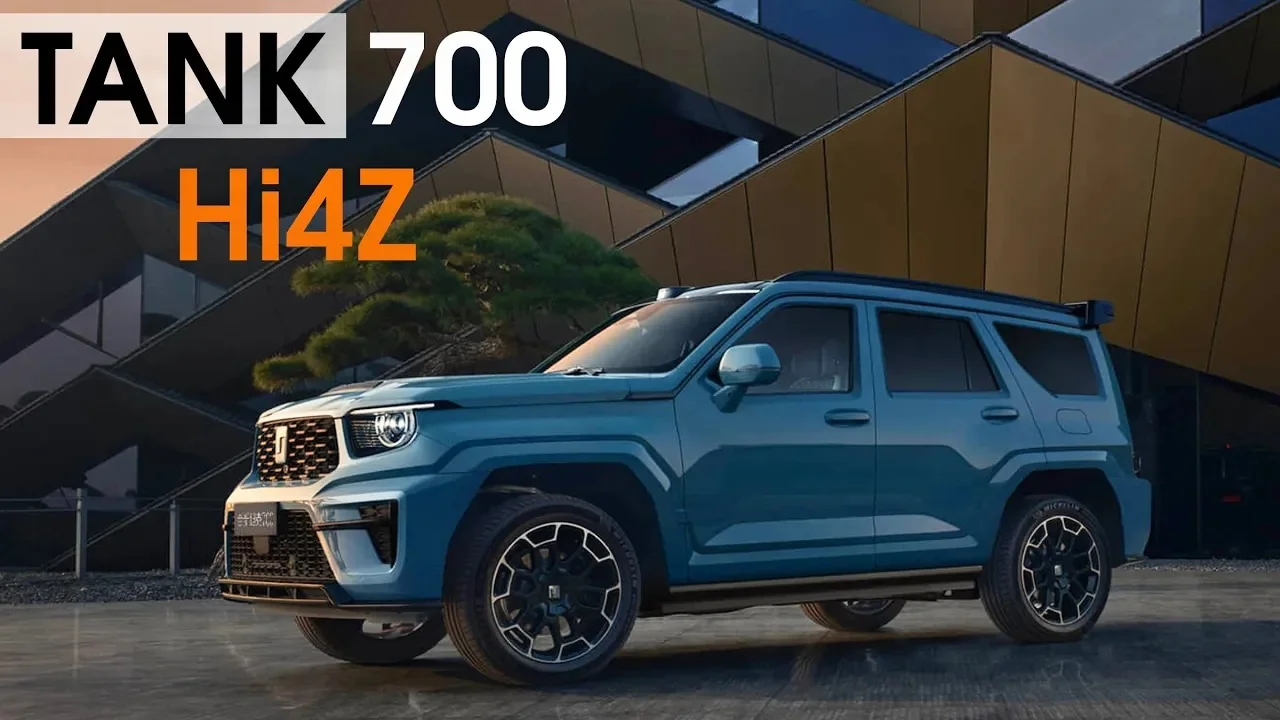
The 2026 GWM TANK 700 Hi4-Z is the version that finally makes the G-Class comparison fair. Where the existing Hi4-T uses a big 3.0T V6 as its primary muscle, the new Hi4-Z flips the formula: a smaller 2.0T four-cylinder drops into a supporting role, and a pair of powerful electric motors do the heavy lifting for a combined 864 hp (635 kW). The result, as one hands-on reviewer put it after driving both, is that “the real horses here are electric — 600 of them — and the engine barely pushes the car at all.” That delivers the instant, never-ending-single-gear torque surge Chinese buyers have become addicted to, wrapped in a body that’s NAPA-leather-lined from the door sills up and priced from roughly ¥428,000 (~$63,500 at pre-sale start). For context: a new Mercedes-AMG G63 costs about four times as much. This is GWM’s most direct assault yet on the luxury off-road establishment — and a genuinely different machine from the Hi4-T we covered previously.
Hi4-Z vs Hi4-T: Two Very Different TANK 700s
GWM now sells the TANK 700 in two distinct hybrid powertrains, and the difference is fundamental — not a trim level. The Hi4-T (the one in our earlier review) runs a 3.0T V6 as the main driver with electric assist, totalling around 517 hp and prioritising mechanical, engine-led off-road feel with a direct mechanical link to the rear wheels. The new Hi4-Z uses a 2.0T four-cylinder (248 hp) almost purely as a generator/booster, with dual electric motors (~600 hp of the total) doing the driving — closer in concept to the Denza B5 than to a traditional 4x4. The reviewer who drove both was blunt: after the Hi4-Z’s instant electric shove, “the V6 just isn’t interesting to accelerate in anymore — that’s why fewer people buy it.”

| Architecture | Hi4-Z series-parallel PHEV |
|---|---|
| Engine | 2.0T 4-cyl, 248 hp (185 kW) |
| Front motor | ~288 hp (in transmission) |
| Rear motor | ~322 hp (independent) |
| Combined power | 635 kW (864 hp) |
| Battery | 59.05 kWh NMC |
| Drive | Electronic AWD |
| POWERTRAIN | Hi4-Z series-parallel PHEV, AWD |
|---|---|
| ENGINE | 2.0T 4-cyl, 248 hp (185 kW) |
| ELECTRIC MOTORS | Dual (front in-transmission + independent rear) |
| COMBINED POWER | 635 kW / 864 hp |
| BATTERY | 59.05 kWh ternary lithium (NMC) |
| EV RANGE (WLTC) | 190 km |
| COMBINED RANGE | 1,191 km |
| FUEL TANK | 85 L |
| 0–100 KM/H | ~5.6 s (official) |
| TOWING | 2,500 kg |
Available Versions
| VERSION | POWER | BATTERY | EV RANGE | KEY DIFFERENCES | PRICE |
|---|---|---|---|---|---|
| Hi4-Z Ultimate | 864 hp (dual) | 59.05 kWh | 190 km / 1191 km combined | 2.0-liter turbocharged engine paired with dual electric motors, resulting in 864 hp. It also features a 59.05 kWh battery pack providing 190 km of EV range. | 428,000 yuan (~$62,780) |
| Hi4-Z Extreme | 864 hp (dual) | 59.05 kWh | 190 km | Includes front differential lock and second-row electrically powered sunshades compared to the Ultimate trim. | 468,000 yuan (~$68,645) |
| Hi4-T Pinnacle | 516 hp (single) | 37.1 kWh | 90 km | Features a 3.0-liter V6 turbo-petrol plug-in hybrid powertrain, a 9-speed automatic transmission, and air suspension. | 508,000 yuan (~$74,520) |
Pricing & Trims
Pre-sales for the Hi4-Z opened on March 31, 2026 starting around ¥428,000 ($63,500), with the official China launch following on April 21. Pricing runs roughly ¥428,000 – ¥468,000 ($63,500 – ~$65,000) across two main grades — Ultimate and Extreme. The hands-on reviewer (filming just before official launch) quoted a figure closer to $68,000 for the loaded car he drove, and importantly pointed out a money-saver: the coil-spring suspension version is about $3,500 cheaper than the air-suspension car, while still delivering serious off-road ability. Either way, the headline holds: this is an 864 hp, fully-loaded luxury off-roader for roughly a quarter the price of an AMG G63.
Dimensions & Practicality

| Length | 5,105 mm |
|---|---|
| Width | 2,061 mm |
| Height | 1,985 mm |
| Wheelbase | 3,000 mm |
| Ground clearance | 210–270 mm (air) |
| Seating | 5 |
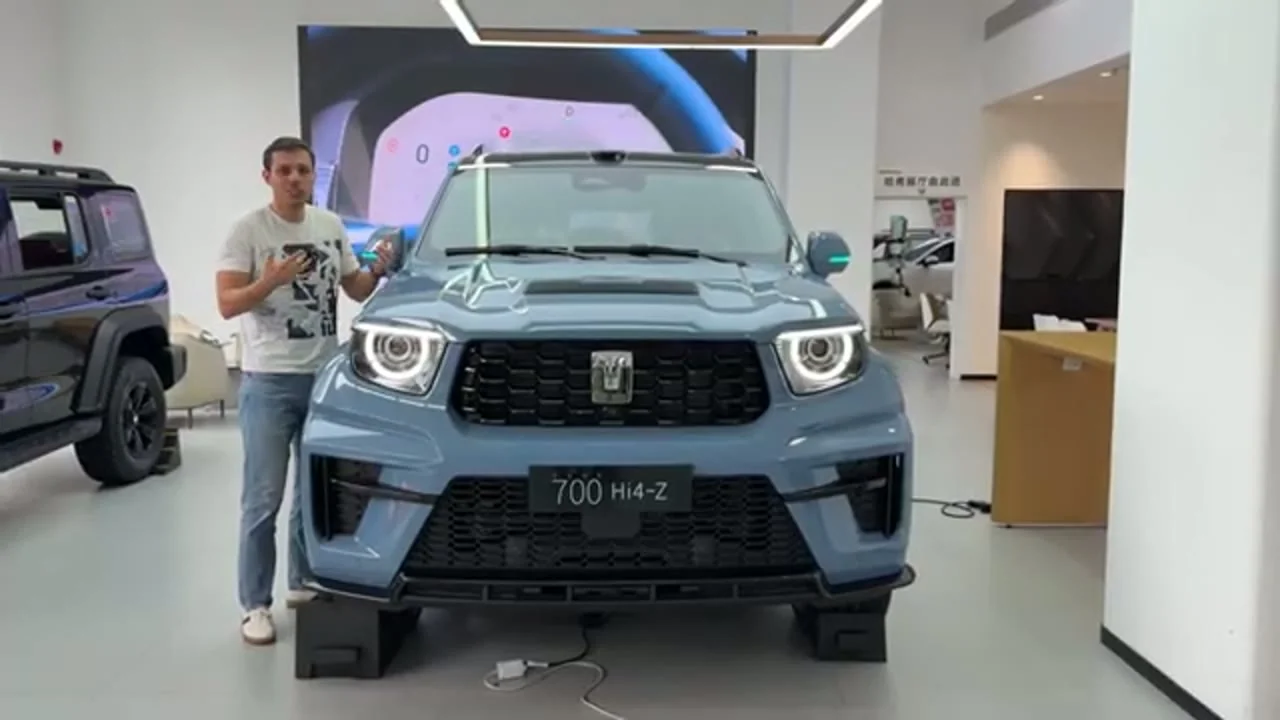
At 5,105 mm long on a 3,000 mm wheelbase, the TANK 700 is a genuine full-size off-roader — the reviewer noted it weighs almost as much as a BYD Yangwang U8. Space is generous: at 187 cm tall he had four fingers of knee room behind his own driving position, and called the rear bench “huge, with great shoulder and headroom.” The cabin is the real story — NAPA leather wraps virtually every surface, including spots that are usually bare plastic (lower pillars, sill corners), with an Alcantara headliner and ambient lighting. The black-and-white scheme with orange contrast stitching drew specific praise as a younger, more fashion-forward look than the old TANK.
One honest caveat from the walkaround: you can’t sleep flat inside. The reviewer initially called it “hardcore luxury,” then walked it back — the rear seats don’t fold flat because the battery sits under the floor. The fix, he joked, is a roof tent: “the suspension can definitely handle it.” The second row also skips the panoramic roof (for body rigidity) but keeps a small sunroof with a shade, double-glazed glass, and rear sunshades.
| LENGTH | 5,105 mm (201.0 in) |
|---|---|
| WIDTH | 2,061 mm (81.1 in) |
| HEIGHT | 1,985 mm (78.1 in) |
| WHEELBASE | 3,000 mm (118.1 in) |
| GROUND CLEARANCE | 210–270 mm (air suspension) |
| WHEELS | Up to 22-inch, 275/50 tyres |
| BRAKES | Ventilated discs, all round |
| TORSIONAL RIGIDITY | 30,000 Nm/° (S-Class level) |
On The Road
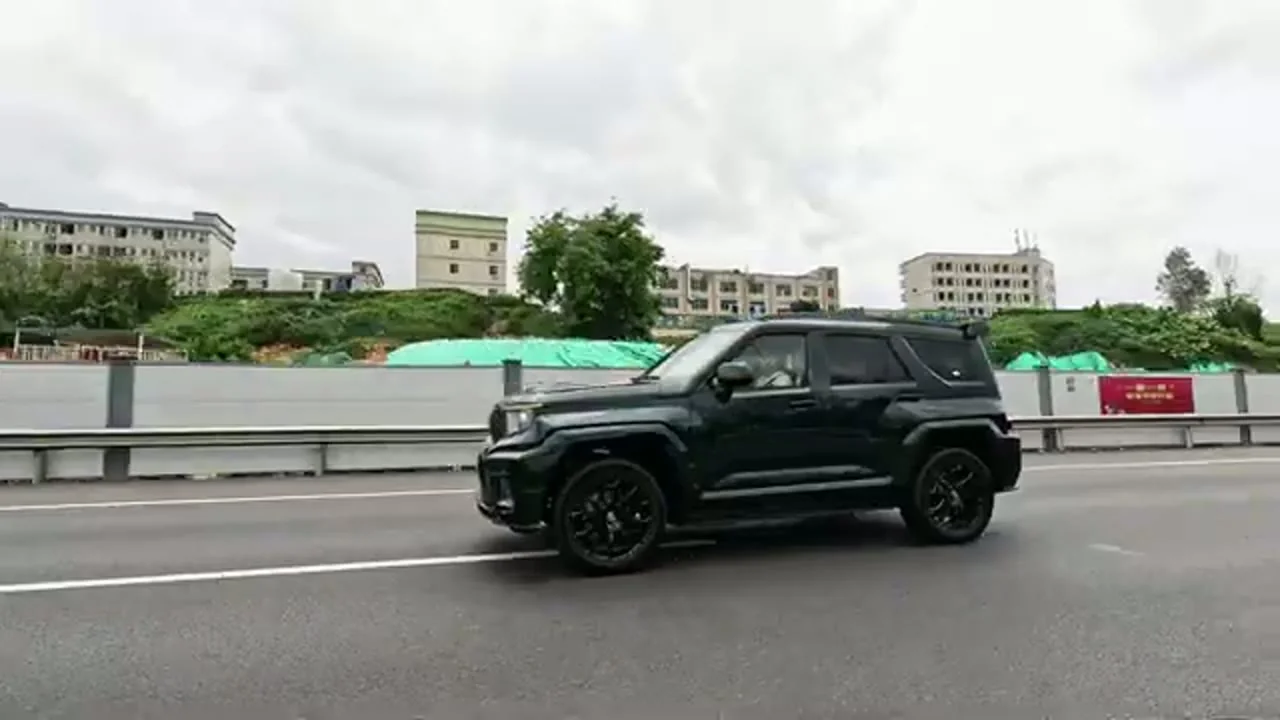
The reviewer’s driving impressions, captured on city streets and headed for the autobahn-style expressway, line up with the electric-first hardware. Acceleration: he estimated something in the 4.8–5.2 second range by feel (cautioning he was filming before final figures; the official number is ~5.6 s) — either way “noticeably quicker and more satisfying than the V6 Hi4-T.” Ride and handling: the suspension is “firm, you feel it immediately” in Sport mode, with the classic tall-SUV trait of body sway up high. Refinement: this is where it shines — sound insulation is “astonishing,” matching the Yangwang U8 in the city and, he expected, holding up better at speed. The HUD projector image is crisp; the surround-camera system is functional but “basic” (no side-camera or map overlay on the live view).
How It Compares
Verdict
- 864 hp electric-first powertrain — instant, addictive torque
- NAPA leather on nearly every surface; Alcantara headliner
- Yangwang-U8-level city refinement at a fraction of the price
- 190 km EV range + 1,191 km combined
- ~$63,500 start — roughly a quarter of an AMG G63
- Coil-spring version saves ~$3,500 with little off-road loss
- Roof LiDAR + VLA autopilot on GWM’s own software
- Rear seats don’t fold flat — battery under floor, no sleeping inside
- No panoramic roof for second-row passengers
- Surround-camera UI is basic (no side-cam / map on live view)
- Tall-SUV body sway; firmer ride than a G-Wagen
- Almost all controls moved to the touchscreen — fewer physical buttons
- Hi4-Z drops the mechanical rear link — less hardcore than V6 Hi4-T for extreme crawling
The TANK 700 Hi4-Z is the clearest sign yet that China’s premium off-roaders have stopped imitating and started out-equipping the establishment. At roughly $63,500 it brings 864 hp, a 190 km electric range, S-Class-level body rigidity and a cabin trimmed in NAPA leather to within reach of a loaded Defender — and it does it while making an AMG G63 buyer, in the reviewer’s words, “question their life choices.” It isn’t flawless: the battery-blocked flat-fold, the touchscreen-heavy controls and the slightly busy ride keep it from being perfect, and serious rock-crawlers may still prefer the mechanically-linked V6 Hi4-T. But as a do-everything luxury off-roader judged on value, technology and refinement, the Hi4-Z is genuinely hard to argue with. The reviewer’s parting line says it best: this — not the 1,184 hp Yangwang U8 — is the car GWM should have lined up against the G-Wagen all along.