
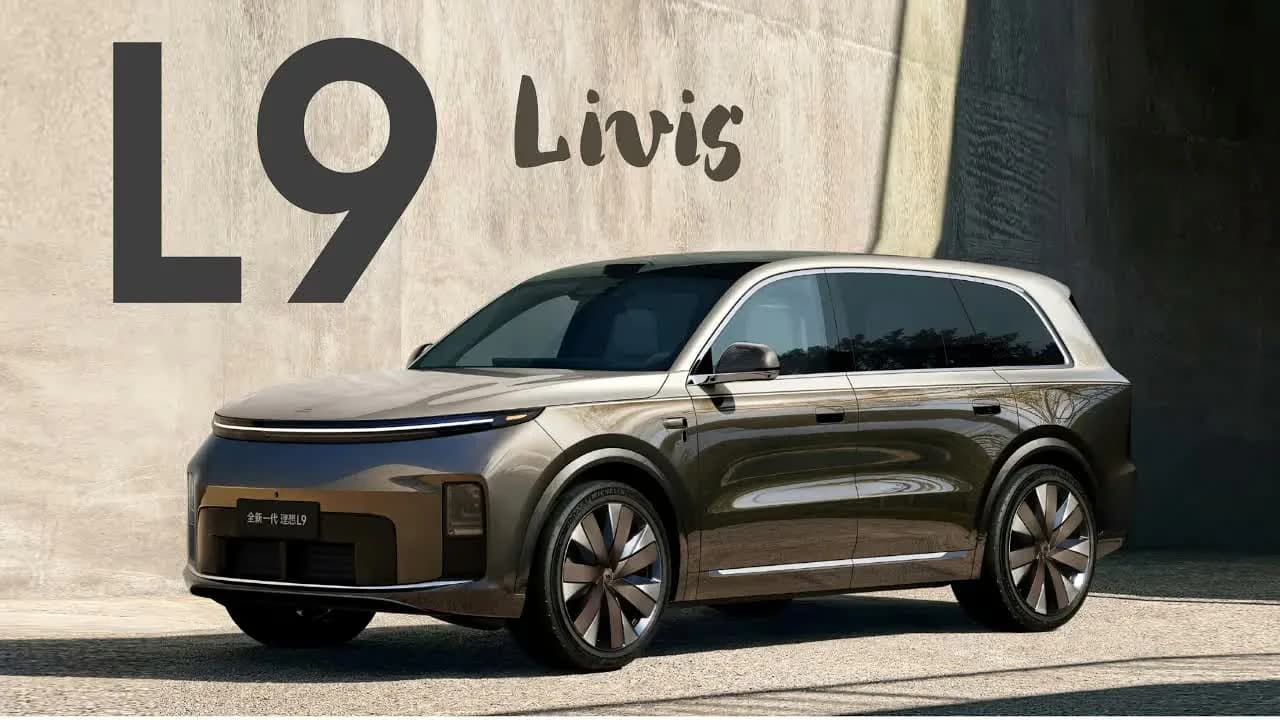
Two of China’s most ambitious 2026 flagship 6-seat family SUVs sit at almost identical $75k pricing: the Lixiang L9 Livis (launched May 15, 2026 at 509,800 yuan, about $76,100) and the NIO ES9 (launched May 27, 2026 at 498,000 yuan, about $74,300, or about $58,200 with battery rental). The L9 Livis ships with fully active suspension, and the ES9 gets it on its Signature and Horizon Special trims. Both seat six in 2+2+2 captain-chair configurations, and both target the same buyer pool — Chinese first-tier-city families upgrading from BMW X7 / Mercedes GLS / Audi Q7 ownership. But they differ on the fundamental powertrain question: L9 is an EREV (range-extender) with a 1.5T generator + 72.7 kWh battery for 420 km EV / 1,650 km combined, while ES9 is a pure BEV with a 102 kWh battery for up to 620 km CLTC. The Russian-language reviewer at Gilevich Sergey’s channel got back-to-back wheel time with both cars in Shenzhen, and his blunt verdict: ES9 wins on highway-speed quietness past 100 km/h, L9 Livis wins on steering precision and content; both are class-leaders in their respective powertrain camps.
Performance & Specs
The Lixiang L9 Livis uses Li Auto’s third-generation in-house 1.5T turbo 4-cylinder generator (Suzhou-built L3E15CA, ~115 kW / 154 hp) paired with dual electric motors AWD producing a combined 420 kW (563 hp) and 710 Nm of torque. The reviewer’s walkaround confirms the 72.7 kWh CATL ternary NMC battery, 4.9-second 0-100 km/h time, 200 km/h top speed, and 5C DC fast-charging capability with 10-80% in approximately 10 minutes. The NIO ES9 is a pure BEV with a 180 kW induction motor at the front and a 340 kW permanent-magnet synchronous motor at the rear, producing 520 kW (697 hp) and 700 Nm on a 900V architecture, with a 102 kWh CATL NMC battery for up to 620 km CLTC range. The ES9 hits 100 km/h in 4.3 seconds and supports 5C charging with up to 600 kW peak DC power, plus battery swaps in about 3 minutes. The reviewer notes the L9 Livis steering is meaningfully sharper than the ES9’s.

| Powertrain | EREV (1.5T generator + dual-motor AWD) |
|---|---|
| Power | 420 kW (563 hp) |
| Torque | 710 Nm |
| 0–100 km/h | 4.9 s |
| Battery | 72.7 kWh |
| Range | 420 km EV / 1,650 km combined |
Head-to-Head Spec Comparison
| SPEC | LIXIANG L9 LIVIS | NIO ES9 |
|---|---|---|
| POWERTRAIN | EREV (1.5T + dual motor AWD) | BEV dual-motor AWD |
| SYSTEM POWER | 563 hp (420 kW) | 697 hp (520 kW) |
| SYSTEM TORQUE | 710 Nm | 700 Nm |
| 0-100 KM/H | 4.9 s | 4.3 s |
| TOP SPEED | 200 km/h | 220 km/h |
| BATTERY | 72.7 kWh CATL NMC (5C) | 102 kWh CATL NMC |
| EV RANGE | 420 km (CLTC) | 620 km (CLTC, Executive Luxury); 600 km (Signature, Horizon Special) |
| COMBINED RANGE | 1,650 km | 620 km (BEV only) |
| FUEL ECONOMY | 6.3 L/100km WLTC | N/A |
| DC FAST CHARGING | 5C peak (~420 kW) | 5C, up to 600 kW peak |
| DC 10-80% TIME | ~10 min | ~11-15 min (independent estimates) |
| HV ARCHITECTURE | 800V (Livis) | 900V |
| LIDAR | 4 × (Livis) | 3 × |
| ADAS CHIP | Dual M100 (2,560 TOPS) | 1-2 × Shenji NX9031 (by trim) |
Dimensions & Practicality

| L9 Livis Length | 5,255 mm |
|---|---|
| L9 Livis Wheelbase | 3,125 mm |
| L9 Livis Cargo | 545 L (seats up) |
| L9 Livis Turning Radius | 5.3 m (4-wheel steer) |
| ES9 Length | 5,365 mm |
| ES9 Wheelbase | 3,250 mm |
| ES9 Turning Radius | 5.4 m (rear-wheel steer) |
Both vehicles are full-size 3-row flagship SUVs with 6-seat 2+2+2 captain-chair configurations. The NIO ES9 is 110 mm longer (5,365 mm vs 5,255 mm) and runs a 125 mm longer wheelbase (3,250 vs 3,125), giving it noticeably more 2nd-row legroom and a more limousine-like feel. The reviewer specifically calls out the ES9’s steering wheel telescope range and pedal-to-knee distance as the most generous he’s tested in this segment — even better than the Mercedes GLS. Both cars steer the rear axle: the L9 Livis adds 4-wheel steering (turning radius 5.3 m) and the ES9 combines rear-wheel steering with steer-by-wire (5.4 m), so their urban agility is essentially equal despite the ES9’s longer wheelbase. Cargo: L9 Livis 545 L behind the 3rd row; the ES9 has 600 L behind the third row (477 L above the floor plus 123 L underfloor), 1,586 L with the third row folded, and a 216 L frunk.
| SPEC | LIXIANG L9 LIVIS | NIO ES9 |
|---|---|---|
| LENGTH | 5,255 mm | 5,365 mm |
| WIDTH | 2,000 mm | 2,029 mm |
| HEIGHT | 1,810 mm | 1,870 mm |
| WHEELBASE | 3,125 mm | 3,250 mm |
| CURB WEIGHT | ~2,835 kg | 2,845-2,915 kg |
| TURNING RADIUS | 5.3 m | 5.4 m |
| CARGO VOLUME | 545 L (seats up) | 600 L (477 L above floor + 123 L underfloor); 1,586 L folded; 216 L frunk |
| WHEELS | 22″ 285/40 (Livis) | 21″ 265/50 (entry); 22″ 275/45 or 23″ 275/40 (higher trims) |
| SEATING | 6 (2+2+2) | 6 (2+2+2) |
Real-World Driving Impressions
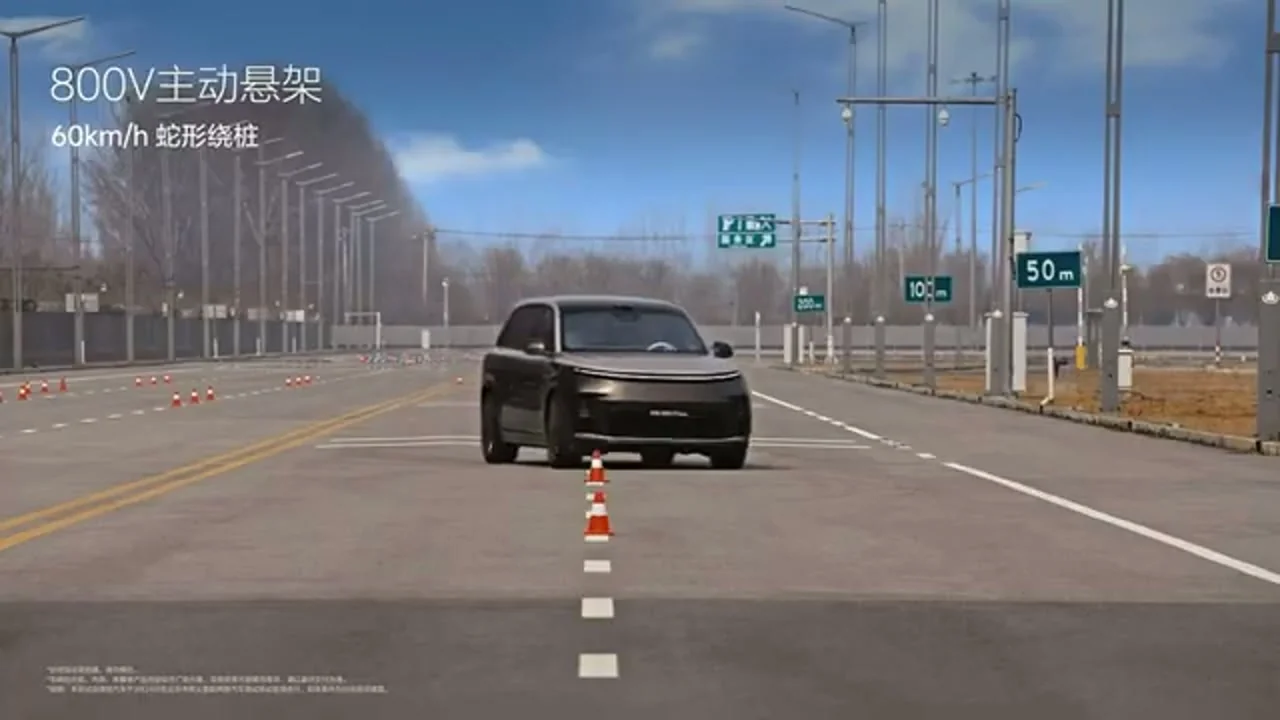
The reviewer’s direct back-to-back impressions from Shenzhen are worth quoting closely. On the NIO ES9: “Steering wheel telescope range and pedal-to-knee distance are the most generous in this segment. Quieter than my (L9) Ultra past 100 km/h, also quieter than ZEEKR 9X at 80. Ride is firmer than L9 Ultra and Huawei M9 but the handling is the best of all of them. New active suspension makes some noise when all four wheels hit imperfections simultaneously — they clearly haven’t fully silenced the system yet.” On the Lixiang L9 Livis: “22-inch 285/40 wheels (a Lixiang first), steering noticeably better than L9 Ultra, much flatter through corners with less body roll, by-wire steering ‘an absolute drug.’ Active suspension is not about being a couch-on-wheels — it’s about being flatter, less wallow, less squat, ultimately better handling. Ride quality similar to ES9 at low speed; firmer than L9 Ultra in sport mode.” The verdict: if your priority is maximum ride comfort, get the L9 Ultra (cheaper, regular suspension); if you want best handling at L9 dimensions, get L9 Livis; if you want maximum highway-speed quietness with the BEV refinement advantage, get NIO ES9.
Available Versions
| VERSION | POWER | TORQUE | 0-100 | TOP SPEED | DRIVETRAIN | BATTERY | EV RANGE | COMBINED RANGE | PRICE | KEY DIFFERENCES |
|---|---|---|---|---|---|---|---|---|---|---|
| Ultra | 563 hp | 710 Nm | 4.9 s | 200 km/h | AWD | 72.7 kWh | 420 km | 1,650 km | $68,600 | One LiDAR, single M100 chip, regular suspension, 285/45 R21 tyres |
| Livis | 563 hp | 710 Nm | 4.9 s | 200 km/h | AWD | 72.7 kWh | 420 km | 1,650 km | $76,100 | Four LiDARs, dual M100 chips (2,560 TOPS), 800V active suspension + steer-by-wire + 4WS, 285/40 R22 tyres |
Pricing & Trim Strategy
The Lixiang L9 launched on May 15, 2026 in two trims: the regular L9 Ultra at 459,800 yuan (about $68,600) with conventional suspension, and the L9 Livis at 509,800 yuan (about $76,100) with the full by-wire chassis package. The NIO ES9 launched on May 27, 2026 with three trims: the Executive Luxury at 498,000 yuan (about $74,300), the Executive Signature at 558,000 yuan (about $83,300) and the Horizon Special at 628,000 yuan (about $93,700). BaaS battery subscription on the ES9 reduces the up-front price by 108,000 yuan (about $16,100), bringing the ES9 entry to 390,000 yuan (about $58,200) against a monthly battery fee of 1,128 yuan (about $168). On outright prices the ES9 entry trim is now about $1,800 cheaper than the L9 Livis (about $17,900 cheaper with BaaS), while the L9 Ultra undercuts both; the ES9’s BaaS option is the wildcard that can flip the comparison depending on the buyer’s ownership model.
| TRIM | PRICE (USD) | KEY DIFFERENCES |
|---|---|---|
| 2026 L9 Ultra | ~$68,600 (459,800 yuan) | One LiDAR, single M100 chip, regular suspension, 21″ 285/45 wheels |
| 2026 L9 Livis | ~$76,100 (509,800 yuan) | Dual M100 chips (2,560 TOPS), four LiDARs, 800V active suspension + steer-by-wire + 4WS, 22″ 285/40 wheels |
| 2026 NIO ES9 Executive Luxury | ~$74,300 (498,000 yuan); ~$58,200 with BaaS | 900V, three LiDARs, one NX9031 chip, dual-chamber air suspension with CDC dampers |
| 2026 NIO ES9 Executive Signature | ~$83,300 (558,000 yuan); ~$67,200 with BaaS | Two NX9031 chips, SkyRide fully active suspension |
| 2026 NIO ES9 Horizon Special | ~$93,700 (628,000 yuan); ~$77,600 with BaaS | Top trim: two NX9031 chips, SkyRide, exclusive paint options |
Design & Interior
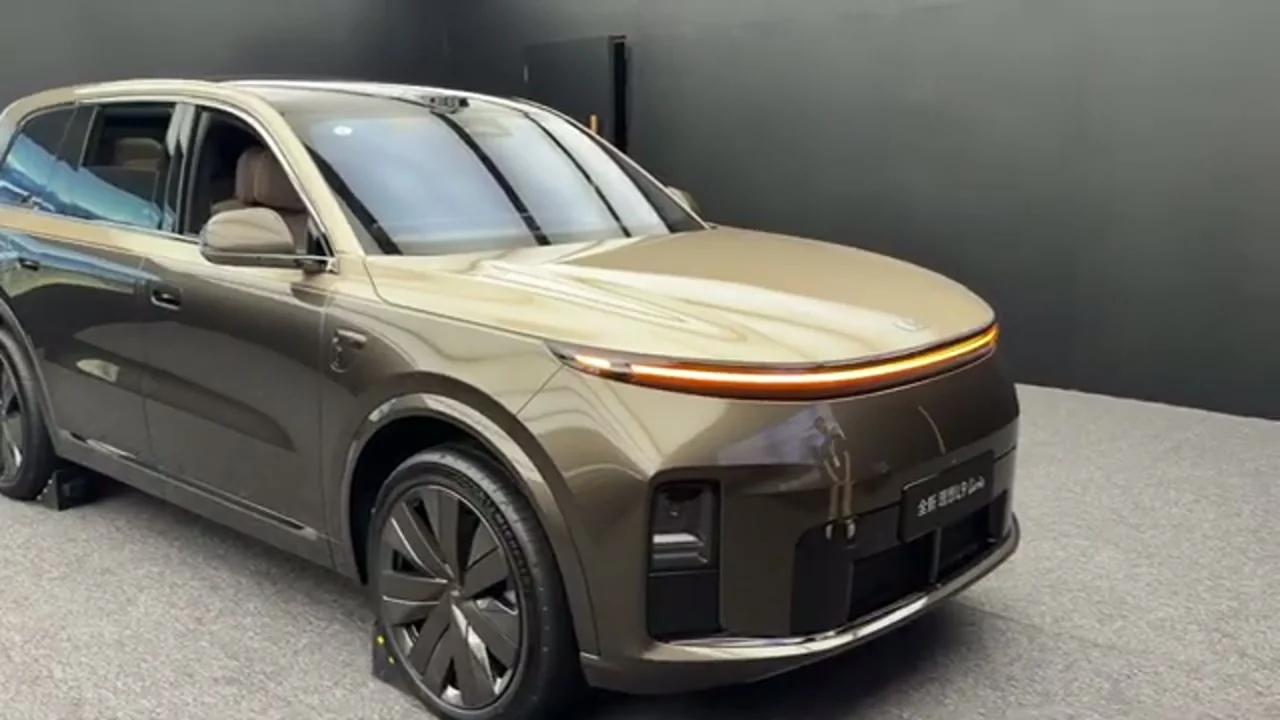
The L9 Livis exterior carries over the L9’s signature look refreshed: full-width LED light bar across the front with orange ambient accent, slim matrix headlamps, body-color closed grille, and the 22-inch wheels are the first time Lixiang has fitted a wheel that large to any production vehicle. The reviewer’s showroom unit is finished in champagne / olive brown with a black contrast roof. Inside, the cabin features a 29-inch 6K panoramic ultra-wide display as the single dashboard element — no separate driver instrument cluster, with information projected to a HUD instead. Material treatment uses 33-speaker premium audio (massive upgrade from the original L9’s 22-speaker), zero-gravity captain chairs front and 2nd row, real wood inserts in the dashboard, leather-wrapped door cards, and what the reviewer specifies is “nicer fabric than usual” on the headliner (not Alcantara, but premium woven fabric). Notable cabin negatives: C-pillar trim is plastic (not leather), 3rd row uses bare plastic in places — the reviewer calls this “soft luxury, not hard luxury,” appropriate for a price of about $76,100 but a step below the ZEEKR 9X / Huawei M9 / NIO ES9 ultra-luxury benchmarks.
Safety & ADAS Comparison
The Lixiang L9 Livis ADAS stack is the most advanced Li Auto has ever shipped: 4 LiDARs (1 roof + 3 perimeter) replacing the standard 3-LiDAR layout, dual in-house 5 nm Mach 100 chips delivering combined 2,560 TOPS of compute (Li Auto claims this is 3x more compute than Nvidia Thor-U), UWB sensors replacing the traditional ultrasonic sensors, and Highway + Urban NOA across all road types. The NIO ES9 uses three LiDARs (one on the roof, two on the front fenders) and 31 sensing units in total, processed by NIO’s in-house Shenji NX9031 chip — one chip on the entry trim, two on the higher trims — running the NIO World Model-based NOP+ suite. Both cars offer navigation-based assisted driving on highways and in cities. The reviewer specifically notes that on Highway NOA at 100+ km/h the Lixiang AD Max system “lets you relax completely” — consistent with the ES9 experience.
How It Compares
The L9 Livis and ES9 occupy the same Chinese premium 6-seat flagship SUV tier but with fundamentally different powertrain philosophies. The Huawei AITO M9 EREV is the closest spiritual competitor to the L9 Livis — same 6-seat layout, same EREV architecture, and an entry price of 479,800 yuan (about $71,600) — but uses Huawei’s ADS instead of Li Auto’s in-house AD Max stack. The ZEEKR 9X six-seater starts at 465,900 yuan (about $69,500) as an 885 hp plug-in hybrid with 300 km of electric range and 1,200 km combined; its tri-motor versions reach 1,381 hp. For Chinese first-tier-city buyers with budget flexibility, the actual decision typically narrows to: EREV or plug-in hybrid (L9 Livis, AITO M9 or ZEEKR 9X) vs BEV (NIO ES9, with or without BaaS) based on charging-infrastructure preference and road-trip frequency.
- 1,650 km combined range vs 620 km pure EV — better road-trip flexibility
- 4-LiDAR + dual M100 chip (2,560 TOPS) — Li Auto’s most powerful ADAS stack
- By-wire chassis (steer-by-wire + 4WS + 800V active suspension + EMB) — billed by Li Auto as the world’s first in production
- 22″ 285/40 wheels (Lixiang first), 29″ 6K panoramic display, 33-speaker audio
- 5C charging: 10-80% in about 10 minutes at up to 420 kW
- 134 hp less peak power (563 vs 697 hp) and 0.6 s slower 0-100 (4.9 s vs 4.3 s)
- The ES9’s 620 km pure-electric range covers more daily driving without burning fuel (L9: 420 km)
- The ES9 entry (498,000 yuan) undercuts the L9 Livis (509,800 yuan) by about $1,800, or by about $17,900 with BaaS
- L9 Livis cabin material grading is “soft luxury” vs the “hard luxury” benchmark of the ES9
- ES9 has 110 mm more length + 125 mm more wheelbase — noticeably more 2nd-row legroom
- The ES9 is quieter past 100 km/h per the reviewer’s back-to-back test
The 2026 Lixiang L9 Livis and NIO ES9 are simultaneously each other’s direct competitor and complementary halves of the same premium Chinese 6-seat flagship segment. Choosing between them comes down to four questions: (1) Do you prefer EREV’s no-range-anxiety road-trip flexibility (L9) or pure BEV’s simpler ownership model (ES9)? (2) Do you outright-buy or subscribe to BaaS battery service (ES9 has this option, L9 doesn’t)? (3) Do you prioritize cabin acoustic refinement at highway speed (ES9) or ADAS compute headroom + by-wire chassis innovation (L9 Livis)? (4) Do you need maximum 2nd-row legroom in a chauffeured-rear configuration (ES9) or sharper handling for the driver (L9 Livis)? Neither vehicle is meaningfully better — they’re simply different philosophies. On price the ES9 now has the edge: 498,000 yuan (about $74,300) for the entry trim against 509,800 yuan (about $76,100) for the L9 Livis, and about $58,200 with BaaS. For our money, the L9 Livis is the pick if you want range-extender freedom, sharper steering and the by-wire chassis; the ES9 is the better buy if you want a pure BEV with 697 hp, battery swapping and BaaS pricing.