
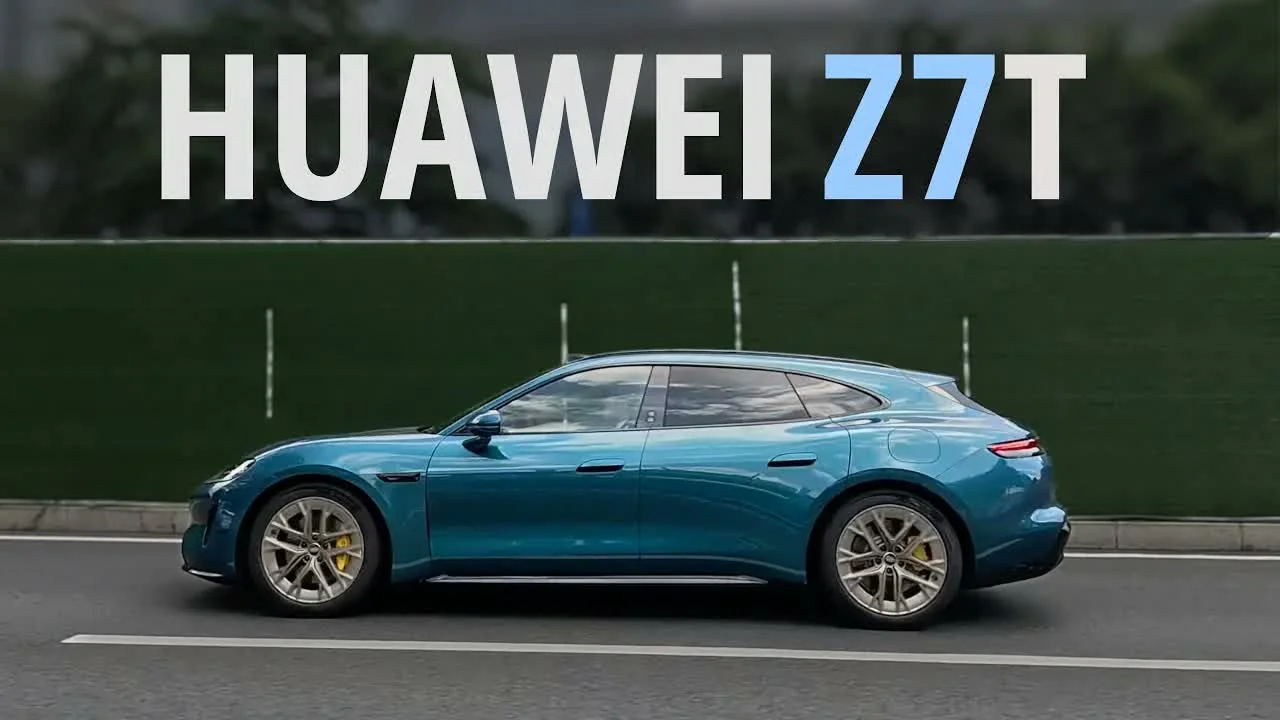
The 2026 Shangjie Z7T (SAIC Z7T) has crossed a sales-validation threshold that few new Chinese EVs hit in their first 60 days: 100,000 cumulative preorders for the Z7 and Z7T combined as of mid-May 2026, up from 70,000 at the April 17 milestone — effectively confirming that Huawei’s HIMA alliance now has its first genuine head-to-head competitor for the Xiaomi SU7. Russian-market reviewer Sergey Gilevich, in a hands-on Shenzhen test drive, frames the Z7T as the model that finally fixes the Luxeed S7’s failure to capture the SU7’s buyer pool: the SAIC-built body looks visibly more aggressive than the earlier S7 silhouette, the Huawei ADS 4.1 LiDAR-equipped ADAS stack matches or beats Xiaomi’s in-house Pilot system, and pricing starts at ¥239,800 ($34,820) for the Z7T “shooting brake” variant. This refresh confirms the headline 905 km range applies to the Z7 sedan; the slightly less aerodynamic Z7T tops out at 873 km CLTC, still elite-segment territory.
Performance & Specs
The Z7T is offered in two distinct configurations. The single-motor RWD trims pair an 81 kWh or 100 kWh battery to a 264 kW (354 hp) rear permanent-magnet motor, delivering a 0-100 km/h time of 5.47 seconds and a 220 km/h top speed. The dual-motor AWD trims add a 170 kW front motor for a combined 434 kW (590 hp) and 0-100 in just 3.4 seconds (sedan Z7) or 3.9 seconds (Z7T — slightly heavier with shooting-brake cargo area), topping out at 239-242 km/h. The reviewer explicitly notes the AWD top trim with 590 hp at ¥300,000 ($43,300) is “competitive at the upper end” while pointing out that Xiaomi’s SU7 Max delivers 673 hp for similar money — trading some raw power for the Z7T’s superior range and Huawei ADS 4.1 stack.

| POWERTRAIN TYPE | BEV — RWD single-motor or AWD dual-motor |
|---|---|
| HORSEPOWER (RWD) | 354 hp (264 kW) |
| HORSEPOWER (AWD) | 590 hp (434 kW) |
| 0-100 KM/H | 5.47 s (RWD) / 3.4 s sedan / 3.9 s Z7T |
| TOP SPEED | 220 km/h (RWD) / 239-242 km/h (AWD) |
| BATTERY | 81 kWh or 100 kWh CATL ternary lithium |
| EV RANGE (Z7T) | 712 km (81 kWh RWD) / 873 km (100 kWh RWD) / 776 km (100 kWh AWD) |
| EV RANGE (Z7 sedan headline) | 905 km (100 kWh RWD) |
| HV ARCHITECTURE | 800 V Whale SiC platform |
Dimensions & Practicality

| Length | 5,036 mm |
|---|---|
| Width | 1,976 mm |
| Height | 1,465 mm |
| Wheelbase | 3,000 mm |
| Drag Coefficient | ~0.21 (slightly higher than 0.203 sedan) |
At 5,036 mm long on a generous 3,000 mm wheelbase, the Z7T sits in the same dimensional class as the Porsche Taycan Sport Turismo and Mercedes EQE Wagon. The shooting-brake silhouette delivers a key practical advantage over the Xiaomi SU7 sedan: 1,694 liters of cargo with the rear seats folded versus SU7’s ~517 liters. The seats-up cargo measures approximately 620 liters per Wancheng data — well above any direct sedan rival. A small under-hood frunk is present (opens via double-tap, no electric assist; reviewer specifically notes the entry trim lacks the auto-lift mechanism), but exact frunk volume has not been officially published. Curb weight is approximately 1,850-1,950 kg depending on configuration. The reviewer notes the Z7T lacks rear-wheel steering — a feature its smaller IM L6 sibling does include — suggesting it’ll feel slightly less agile in tight maneuvers despite the 3,000 mm wheelbase.
| LENGTH | 5,036 mm |
|---|---|
| WIDTH | 1,976 mm |
| HEIGHT | 1,465 mm |
| WHEELBASE | 3,000 mm |
| CARGO VOLUME (Z7T) | ~620 L (1,694 L seats folded) |
| FRUNK | Present (volume TBA) |
| CURB WEIGHT | 1,850-1,950 kg |
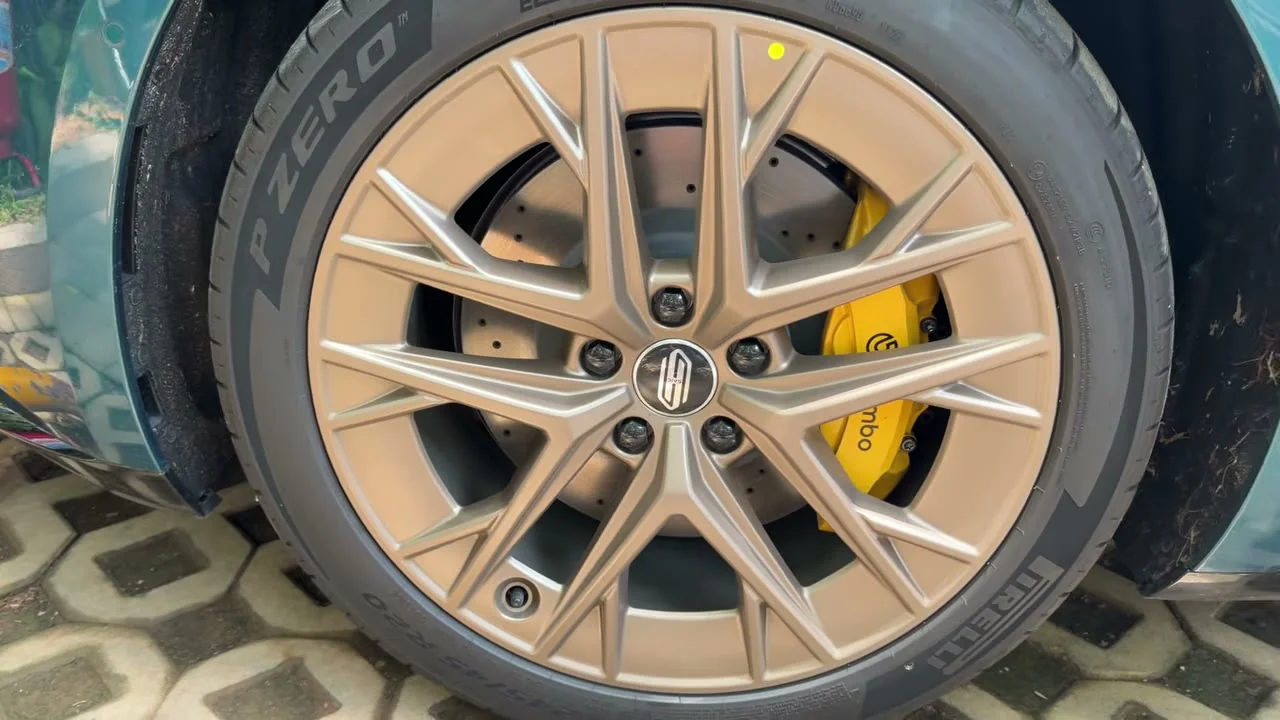
| WHEELS / TIRES | 20″ staggered — 245/45 front, 275/40 rear, Pirelli P Zero |
| BRAKES (AWD) | Brembo perforated rotors |
| SUSPENSION | Single-chamber air suspension, double wishbone front, multi-link rear |
Charging & Battery
The Z7T runs Huawei’s in-house 800V “Whale” high-voltage platform with SiC-based inverters, supporting peak DC charging capable of adding 200 km of range in just 5 minutes and completing 30-80% in approximately 12 minutes. Battery options are 81 kWh (entry, ~712 km Z7T range) and 100 kWh (top, ~873 km Z7T range) — both confirmed as CATL ternary lithium. The reviewer’s real-world estimate for the 100 kWh AWD top trim: roughly 600 km on a Shenzhen summer day with mixed city/highway driving, dropping to approximately 350 km in cold winter conditions — consistent with the 30-40% efficiency drop typical of CATL ternary chemistries below freezing.
| BATTERY OPTIONS | 81 kWh / 100 kWh CATL ternary lithium |
|---|---|
| HIGH-VOLTAGE ARCHITECTURE | 800 V Whale SiC platform |
| AC CHARGING | 11 kW |
| DC FAST CHARGING (peak) | ~400 kW (200 km in 5 min) |
| DC 30-80% TIME | ~12 min |
| REAL-WORLD RANGE (100 kWh, summer) | ~600 km (per reviewer) |
| REAL-WORLD RANGE (100 kWh, winter) | ~350 km (per reviewer) |
Design & Interior
The Z7T’s exterior is the model that finally captures the “Taycan Sport Turismo at half the price” aesthetic that Chinese EV buyers have been asking for. The shooting-brake roofline, frameless doors, hidden flush door handles, and slim full-width LED daytime running lights project a level of design coherence that the reviewer rates “visually more appealing than both the Z7 sedan and the earlier Luxeed S7.” Wheels are staggered 20-inch bronze 10-spoke alloys wrapped in Pirelli P Zero tires (245/45 R20 front, 275/40 R20 rear) — the reviewer comments these are noise-compromised relative to Michelin Pilot Sport but reflect Huawei’s cost optimization. Inside, the cabin uses real leather seats with massage standard on the front row (ventilation/heating only on the rear), an Alcantara headliner, and an external loudspeaker that lets the driver talk to someone outside while staying inside the vehicle — a feature the reviewer specifically validated mid-test. Materials get an “8 out of 10” from Gilevich — not the absolute best for the price, but solid and well-assembled, with no rattles or fit issues detected during the test. There are no fragrance diffusers on any trim — an omission the reviewer notes is unusual for the price class.
Technology & Features
The Z7T runs HarmonyOS Cockpit 4.0 on a Qualcomm Snapdragon 8295P SoC — the same chip as the BYD Yangwang U8 and Xiaomi SU7. The signature interior feature is the 4D Sunflower rotating central display: the touchscreen physically rotates and tilts to face whichever occupant is interacting with it. Reviewer confirms it works smoothly, doesn’t rattle even when manually pulled forward, and the screen never goes blurry under acceleration. A 12.3-inch digital cluster sits behind the steering wheel, joined by a streaming side-mirror display (in lieu of physical inside mirror), a head-up display, and dual rear screens. The 22-speaker audio system is a clear step up from typical $35k Chinese EVs. Wireless charging is dual-pad up front at 50W and 66W in the rear armrest area. Steering-wheel buttons are configurable for autopilot activation or voice-assistant launch.
Safety & ADAS
The Z7T’s headline feature is Huawei’s newest ADS 4.1 Qiankun driver-assistance stack, with the world’s highest-resolution production LiDAR (896 lines, image-grade dual-path) leading a sensor suite of 3 × 4D mmWave radars, 13 HD cameras, and 12 ultrasonic sensors. The Russian reviewer’s blunt assessment: “after Tesla, Huawei has the second-best autopilot in the world” — specifically citing the system’s ability to relax the driver in city traffic where lane-changing manual control becomes tedious. ADS 4.1 features Highway + Urban NOA with valet parking, route memory, AEB, ACC, LKA, BSM, RCTA, and 360-degree surround view. Built on Huawei’s Tuling platform (in-house automotive compute), confirmed via Wikipedia and CarNewsChina sources.
| ADAS LEVEL | L2+ (Huawei ADS 4.1 Qiankun Highway + Urban NOA) |
|---|---|
| LiDAR | 1 × 896-line image-grade dual-path |
| RADARS | 3 × 4D mmWave (plus 2 additional) |
| CAMERAS | 13 × HD |
| ULTRASONIC | 12 |
| ADAS FEATURES | Highway NOA, Urban NOA, Valet Park, Route Memory, AEB, ACC, LKA, BSM, RCTA, 360° camera |
Available Versions
| VERSION | POWERTRAIN | BATTERY | EV RANGE (Z7T) | 0-100 | PRICE | KEY DIFFERENCES |
|---|---|---|---|---|---|---|
| 81 kWh RWD | BEV Single Rear-Motor | 81 kWh CATL | 712 km | 5.47 s | $34,820 | Z7T entry trim, ADS 4.1 + LiDAR standard |
| 100 kWh RWD | BEV Single Rear-Motor | 100 kWh CATL | 873 km | 5.47 s | ~$38,000 | Long-range RWD trim — max efficiency |
| 100 kWh AWD Ultra | BEV Dual-Motor 590 hp | 100 kWh CATL | 776 km | 3.9 s | ~$43,300 | Top trim with Brembo brakes, air suspension |
Pricing & Availability
The Z7T is on pre-sale across mainland China with delivery beginning late Q2 2026. Entry pricing is ¥239,800 ($34,820) for the 81 kWh RWD trim, ¥258,000-¥278,000 ($37,500-$40,300) for the 100 kWh RWD configurations, and approximately ¥300,000 ($43,300) for the 100 kWh AWD Ultra. Early-bird incentives of up to ¥11,000 ($1,600) apply for preorders booked before the official market launch. Cumulative preorders for the Z7 sedan and Z7T shooting brake combined have crossed 100,000 units as of mid-May 2026, up from 70,000 at the April 17 milestone — a 43% increase in 27 days. Russia / CIS export markets have no official program; grey-import / parallel-import channels (via Kazakhstan, Kyrgyzstan, Uzbekistan) are the only current acquisition route for Russian buyers, reflected in Russian YouTube reviewer coverage like Gilevich’s.
How It Compares
The Z7T’s direct rival framing is now explicitly the Xiaomi SU7 — both Chinese reviewer consensus and the Russian Gilevich review point at the same head-to-head. The Z7T wins on cargo (shooting brake vs sedan: 1,694 L vs ~500 L), range margin (873 km vs 902 km is roughly tied, but Huawei’s 800V Whale charging is faster than Xiaomi’s), and Huawei ADS 4.1 versus Xiaomi’s in-house Pilot. The SU7 wins on raw acceleration (3.0 s SU7 Ultra vs 3.4 s Z7T AWD top), brand cachet (Xiaomi’s consumer-electronics association), and slightly better suspension tuning per the Russian reviewer’s direct comparison. The Z7T’s strongest argument vs SU7 is the form factor — if you prefer a liftback/shooting-brake versus a four-door sedan, the Z7T has no Chinese rival in the segment.
- 100,000 preorders confirm market validation — Huawei’s first true SU7 challenger
- 873 km CLTC range from 100 kWh battery — class-leading efficiency at 11.5 kWh/100 km
- Huawei ADS 4.1 + 896-line LiDAR — the highest-spec ADAS hardware in the segment
- 1,694 L max cargo via shooting brake design — 3x more than SU7 sedan
- Brembo brakes + Pirelli P Zero + 4D Sunflower rotating display + 22-speaker audio
- 800V Whale platform — 200 km of range in 5 minutes DC charging
- Less peak horsepower than Xiaomi SU7 Max (590 hp vs 673 hp)
- No rear-wheel steering — smaller IM L6 sibling has this feature, Z7T does not
- Frunk lacks electric auto-lift mechanism on entry trim — reviewer noted this as “weird at this price”
- No fragrance diffuser on any trim — unusual omission for the price band
- Pirelli P Zero tires save cost vs Michelin Pilot Sport but at ~1-2 dB noise penalty
- Slightly less plush ride compared to Xiaomi YU7 SUV sibling per reviewer’s direct comparison
The 2026 Shangjie Z7T (SAIC Z7T) is the most consequential Huawei-aligned EV launch of 2026 not because it’s perfect, but because it’s the first one that demonstrably converts Xiaomi SU7-shoppers. 100,000 preorders in 60 days isn’t a marketing number — it’s validation that Huawei’s HIMA alliance + SAIC’s manufacturing scale now have the right combination of design, ADS hardware, range, and pricing to take serious bite out of Xiaomi’s dominance. The shooting-brake silhouette is the closing argument: SU7 buyers who want a hatchback or wagon-style cargo bay have had no domestic Chinese option until now. The compromises — no rear-wheel steering, manual frunk on entry trim, no fragrance diffuser, slightly less power than SU7 Max — are deliberate cost-downs visible in the price-to-spec match. For buyers prioritizing range + cargo + Huawei ADS 4.1 over raw acceleration and Xiaomi’s brand cachet, the Z7T is the segment’s clear pick.