
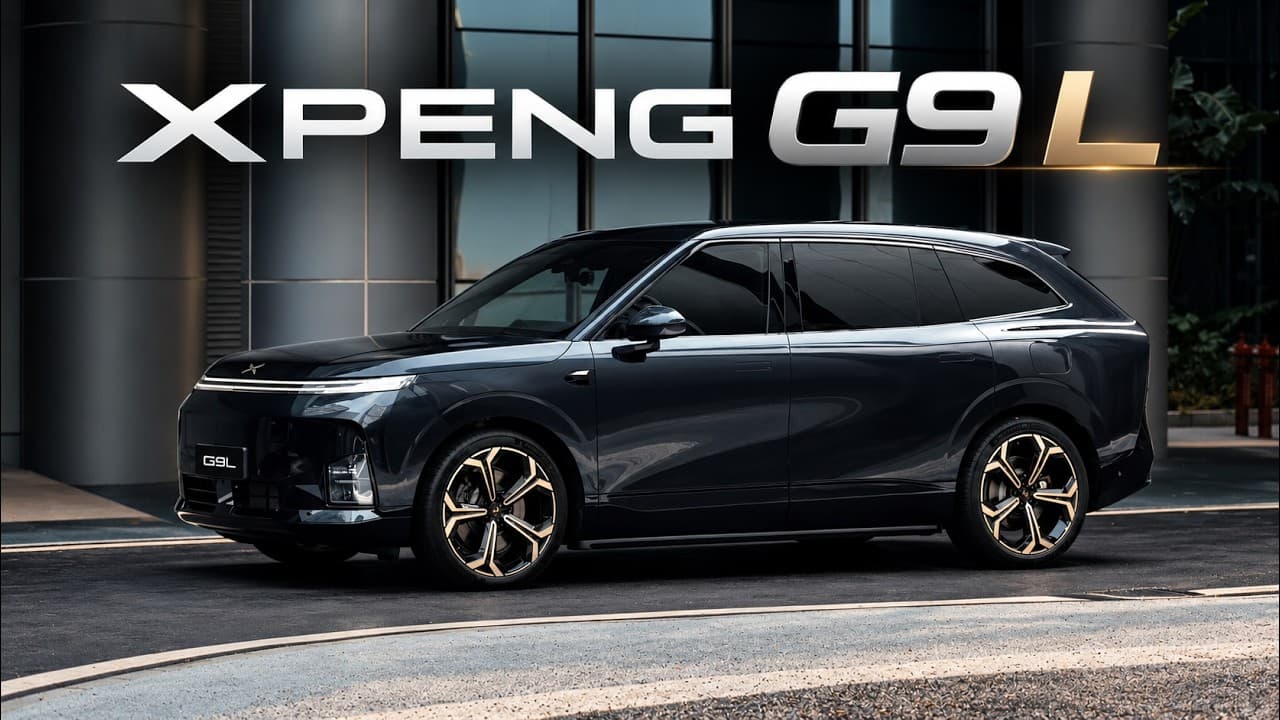
Russian-language partner reviewer Sergey Gilevich spent 14 minutes with the XPeng G9L in a video uploaded on 18 October 2026, and his verdict is in the title: "good for the money". He calls the G9L a big, quiet, comfortable five-seat SUV with an unusually well-equipped cabin for its price, and says its one real weakness is stability at speed, because after about 80 km/h the car starts to wander more the faster it goes. The G9L is XPeng's five-seat flagship, 5,120 mm long on a 3,100 mm wheelbase, sold in China as a battery-electric (BEV) model or as a range-extender (EREV, which XPeng calls super range-extended) model on the same body. XPeng launched it in China on 17 September 2026 with six versions, and the limited-time launch prices run from CNY 231,800 (about $34,570) to CNY 309,800 (about $46,210). This article leads with what Gilevich found on camera, and checks his claims against XPeng's published figures.
What Gilevich Says After Driving It
Gilevich opens by describing both powertrains. The hybrid, as he puts it, is a 1.5-litre turbo petrol engine acting as a generator plus two electric motors with a 63 kWh battery, and the electric version is "a bit more powerful" at about 580 hp on two motors with a 91 kWh battery. Both, he notes, have double-chamber air suspension, with double wishbones at the front and a multi-link axle at the rear. He then says he is driving the top version, and quotes an acceleration time of "4.5 seconds", which matches XPeng's claim of as little as 4.45 seconds for the AWD battery-electric versions rather than the EREV's 4.95 seconds, but the trunk shot with the 63 kWh battery and 60-litre tank is the EREV, so the trim shown is unconfirmed. He does not name the exact trim on camera, so treat the driving impressions below as those of a top-spec G9L.
On the road he first praises the car at low speed, where the rear wheels steer by about 7 degrees each, which he says helps the large body turn well; launch coverage lists 15 degrees of two-way rear steering and a 5.4-metre turning radius. Rear steering and air suspension are standard on every version, according to Gilevich. He calls the G9L a quick crossover, "not the fastest, but 4.5 seconds is still fast" for a car of this size in 2026, rates the regenerative braking as medium, and says the car is comfortable and softer than the ZEEKR 8X, the Xiaomi YU7 GT, the Audi Q5 and the BMW X3, although he adds that the first-generation G9 was a little softer still.
Noise insulation gets his strongest praise. He puts it at the level of Li Auto, Denza and AITO and says the ZEEKR 8X is a little behind in that respect, while the German cars at this price, he names the Audi Q5 and BMW X3, are louder. The car stays composed up to 70 to 80 km/h, he says, and the suspension is faintly audible, as in every car at this price including the German ones, but he noticed no knocks or rattles, which he says cannot be said of some other Chinese cars.
His complaint comes after 80 km/h. From there the G9L begins to lose its composure, and the higher the speed the more it wanders, in his words like some other Chinese and Japanese cars. If a buyer wants confident handling above 100 km/h, he says, they would have to pay at least $10,000 more for a ZEEKR 8X or a Xiaomi YU7 GT, or take an Audi Q5 or BMW X3 in a basic specification, which he says are smaller, have no air suspension and are much barer inside. He is explicit that this is his impression, and that he compares the G9L with the base German cars because they cost the same money. These are one reviewer's findings and not an instrumented test, so the handling verdict should be read as an impression of a single car on a single road.
Performance & Specs
XPeng's published figures make the BEV and the EREV two different cars on one body. The rear-drive battery-electric 702 Max uses a single rear motor rated at 270 kW (362 hp). The AWD battery-electric versions add a front motor, for a combined 430 kW (577 hp), and Chinese type-approval filings list peak outputs of 160 kW at the front and 270 kW at the rear. XPeng quotes 0-100 km/h in as little as 4.45 seconds for the AWD BEVs, with a top speed of 200 km/h in the type-approval paperwork. The EREV is always all-wheel drive, with a 1.5-litre turbo engine rated at 110 kW (148 hp) that drives a generator and never the wheels, plus two motors of 160 kW and 210 kW, for a combined 370 kW (496 hp) and a quoted 4.95 seconds to 100 km/h. Gilevich rounds the engine up to "160 horses" and the motors to "500", which are loose conversions of the same hardware.
Weight and body strength are the other numbers he mentions. Gilevich cites a torsional rigidity of 56,000 N·m per degree, which he calls "a very serious figure" and recalls being surprised by a similar figure on the Yangwang U9; Chinese launch coverage gives the same number. The type-approval filing lists the AWD BEV at 2,720 to 2,740 kg, and XPeng's drag coefficient for the Chinese car is 0.238 Cd. The wheels are 22 inches with staggered Michelin Primacy tyres, which Gilevich reads out as 265/40 at the front and 285/40 at the rear, and the type-approval list of tyre sizes includes both of those fitments.

| Powertrain | Dual-motor AWD BEV (the powertrain that matches the 4.5 s on camera) |
|---|---|
| Power | 430 kW (577 hp) |
| Torque | 695 Nm on XPeng's European BEV sheet (China figure not found) |
| 0–100 km/h | As little as 4.45 s (XPeng) |
| Battery | 91.9 kWh LFP or 110 kWh NMC |
| Range | 660–755 km CLTC |
| POWERTRAIN TYPE | BEV (rear-drive and AWD) or EREV (AWD only) |
|---|---|
| HORSEPOWER | 270 kW (362 hp) BEV RWD; 430 kW (577 hp) BEV AWD; 370 kW (496 hp) EREV AWD |
| ACCELERATION | As little as 4.45 s (BEV AWD); 4.95 s (EREV) |
| TOP SPEED | 200 km/h (BEV, type-approval filing) |
| DRIVETRAIN | RWD (702 Max) or AWD (all other versions) |
| BATTERY | BEV 91.9 kWh LFP or 110 kWh NMC; EREV 63.3 kWh LFP |
| BEV RANGE | 702 km (Max RWD), 660 km (AWD 91.9 kWh), 755 km (AWD 110 kWh), all CLTC |
| EREV RANGE | 435 km CLTC electric only; 1,602 km CLTC combined, 60 L fuel tank |
Dimensions & Practicality

| Length | 5,120 mm |
|---|---|
| Width | 1,999 mm |
| Height | 1,782 mm |
| Wheelbase | 3,100 mm |
| Cargo (rear seats up) | 1,152 L |
The G9L is a five-seater only in China, 5,120 mm long, 1,999 mm wide and 1,782 mm high on a 3,100 mm wheelbase. Gilevich says the rear seat has "a lot of space" and has a colleague climb in to check it. He also says the front seat cushion is already long and can be extended further. XPeng quotes 1,152 litres of cargo space behind the second row, plus a further 230 litres of storage, according to launch coverage, and the EREV has a 60-litre fuel tank, and Gilevich points to a large recess in the load floor and, in the same breath, the hybrid's 63 kWh battery and 60-litre tank. The BEV versions have a 109-litre front trunk according to CarNewsChina; no front-trunk figure was found for the EREV.
One practical detail he flags is that the top-specification car has individual second-row seats of a reclining zero-gravity type, and because of that its seat back does not fold. In lower trims the seat back is an ordinary one that folds flat and can form a bed, he says. He also notes that the right-hand rear seat slides forward, and that a mattress would make the reclined position more comfortable, since the cut-out in the backrest presses on the back. XPeng's launch description says the second row has independent zero-gravity seats and a bed mode of more than 1.8 metres when the front and rear seats recline together.
| LENGTH | 5,120 mm |
|---|---|
| WIDTH | 1,999 mm |
| HEIGHT | 1,782 mm |
| WHEELBASE | 3,100 mm |
| SEATS | 5 |
| CARGO VOLUME | 1,152 L behind the second row |
| FRUNK | 109 L (BEV only) |
| KERB WEIGHT | 2,720-2,740 kg (BEV AWD, type-approval filing) |
Charging & Battery
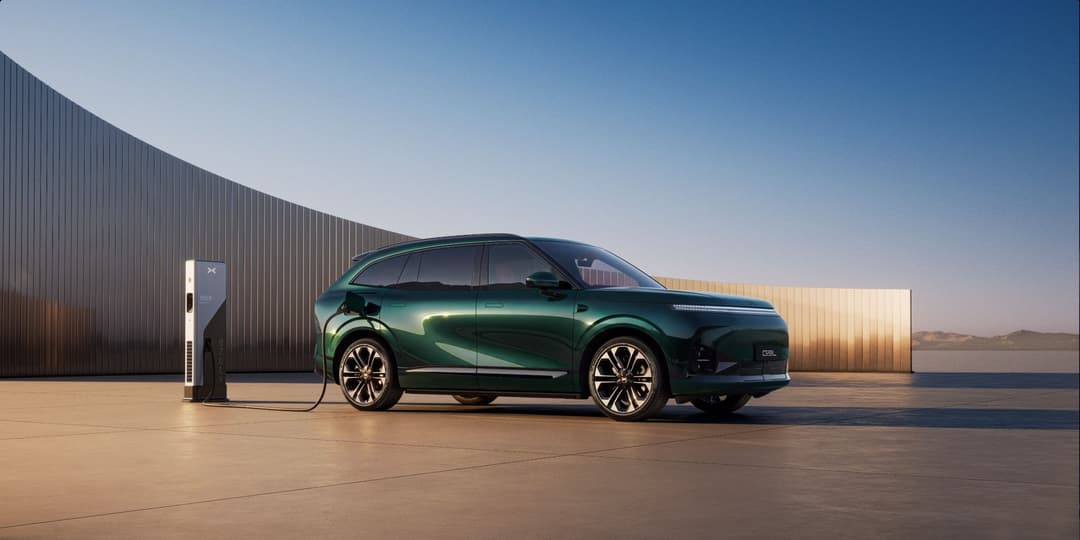
Every G9L uses an 800 V architecture and 5C-rated cells, and XPeng's launch material claims about 450 km of range added in 9 minutes on a DC fast charger for the BEV, and 10-80% in as little as 11 minutes. The Chinese material read for this article does not give a peak DC kilowatt figure for the Chinese car, and the 540 kW peak that XPeng quotes belongs to the 110 kWh European version, which is a different specification. The BEV comes with a 91.9 kWh lithium iron phosphate pack from CALB on the Max, Ultra SE and Ultra, and a 110 kWh nickel-cobalt-manganese pack on the 755 km Ultra Flagship. The EREV carries a 63.3 kWh LFP pack, which XPeng rates at 435 km of CLTC electric range, and the 1.5-litre generator extends the total to 1,602 km CLTC.
The battery figures are consistent with the claimed ranges. The 91.9 kWh pack and 702 km CLTC for the Max work out at about 13.1 kWh/100 km, the 110 kWh pack and 755 km at about 14.6 kWh/100 km, and the EREV's 63.3 kWh and 435 km at about 14.6 kWh/100 km, all battery-to-wheel figures on the generous CLTC cycle. Gilevich did not give a real-world range or consumption figure in the video, so there is no on-road efficiency data here yet, and CLTC ranges are generally well above what the same car achieves on the WLTP or EPA cycles.
| BATTERY | BEV 91.9 kWh LFP / 110 kWh NMC; EREV 63.3 kWh LFP |
|---|---|
| AC CHARGING | Not stated in the Chinese material |
| DC FAST CHARGING | 800 V, 5C; about 450 km added in 9 min (XPeng claim, BEV) |
| DC 10-80% TIME | As little as 11 min (XPeng claim) |
Design & Interior
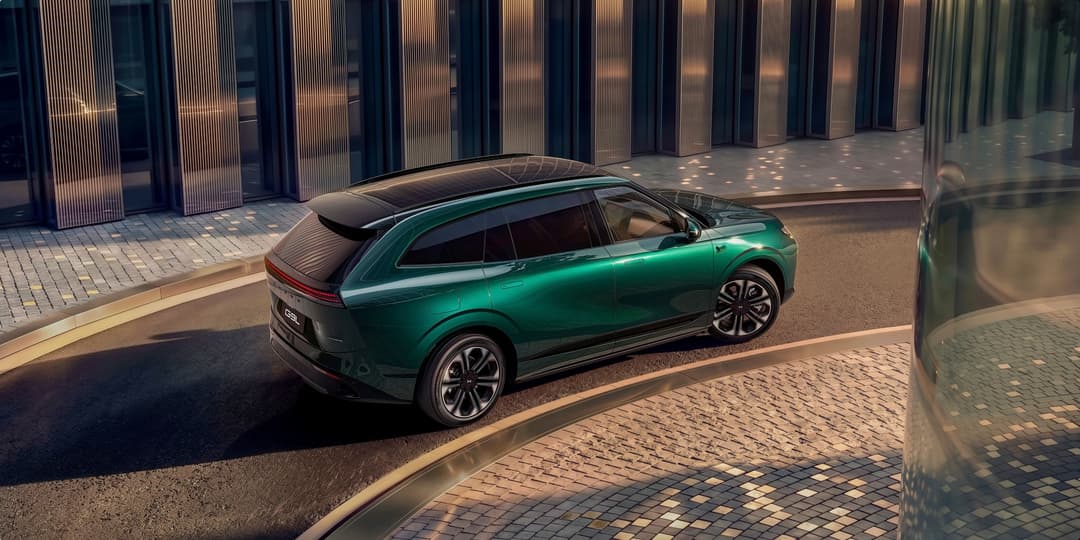
Gilevich spends most of the video inside. He says the design and materials are practically identical to those of the larger XPeng GX flagship, which he reviewed recently, and that for the price they are "top", although he adds that this is true of Chinese cars in general, give or take a rounding error. The seats are not leather but a soft, smooth Nappa-type synthetic that he says feels very pleasant, the headliner is cloth and not Alcantara, and the steering wheel material is smooth and pleasant to touch. Physical buttons on the wheel and a set of driving-mode controls save him from digging through menus. A wireless phone charger with a soft-touch finish sits in the rear armrest, and the front passenger seat has a zero-gravity recline.
The seats are the part he enjoys most. The front seats have adjustable side bolsters on both the cushion and the backrest, and he says that pulled in, they hug the occupant like a bucket seat, which he finds "very interesting for this price". He describes an AI function that starts a massage when the occupant fidgets, makes the lumbar area more concave under acceleration so it does not press, and inflates it again at a steady cruise. The massage is "firm", though not as strong as in a ZEEKR, and in the rear there is massage, ventilation and heating, plus a built-in fridge between the rear seats, shown in the video. The car has a panoramic roof with electric blinds (XPeng lists 270-degree blinds on three sides), Gilevich counts 23 speakers in the sound system (XPeng's European spec sheet also lists 23), there is double-layer glass, and the rear screens and a tablet holder in the back add what he jokes is a "screen abundance". The doors are electric.
He rates the head-up display more cautiously. The projection works and is shown on the road, but he says it is "not very sharp" and gives it a score of 7 out of 10. The central screen, by contrast, reacts quickly in the video's tests. The tyres are Michelin Primacy. Gilevich also mentions that production of the G9L has started in Austria, so the European car avoids the extra EU duty on Chinese-built EVs, which matches the European version covered separately by this site.
Technology & Features
XPeng's launch material says the G9L carries one Turing AI chip on the Max, two on the Ultra SE and three on the Ultra, for up to 2,250 TOPS of effective compute, with an 88-inch augmented-reality head-up display, a 12.5-litre dual-zone fridge with two doors, a 220 V outlet and a ceiling screen for the rear seats. The seat has 91 pressure sensors, according to Chinese coverage, which is the hardware behind the AI-seat behaviour Gilevich describes. The video does not test the assisted-driving system, so its performance on the road is not covered here.
Safety & ADAS
Gilevich does not test the driver-assistance features, and he only shows the physical autopilot button on the steering wheel. XPeng says the G9L has been tested over 6.74 million kilometres in 26 countries and regions. No independent crash-test rating for the Chinese car had been found at the time of writing, so the safety story rests on XPeng's own claims for now.
| ADAS LEVEL | Assisted driving on XPeng's Turing chips (not tested in the video) |
|---|---|
| ADAS FEATURES | Autopilot button on the steering wheel (shown in the video); individual features not itemised in the sources read |
Available Versions
| VERSION | POWER | TORQUE | 0-100 | TOP SPEED | DRIVETRAIN | BATTERY | EV RANGE | COMBINED RANGE | PRICE | KEY DIFFERENCES |
|---|---|---|---|---|---|---|---|---|---|---|
| 702 Max (BEV) | 362 hp | — | — | 200 km/h | RWD | 91.9 kWh | 702 km | — | $34,570 | CNY 231,800 limited-time, guide CNY 241,800; single rear motor, one Turing chip |
| 660 AWD Ultra SE (BEV) | 577 hp | — | — | 200 km/h | AWD | 91.9 kWh | 660 km | — | $37,260 | CNY 249,800 limited-time, guide CNY 259,800; dual motor, two Turing chips |
| 660 AWD Ultra (BEV) | 577 hp | — | — | 200 km/h | AWD | 91.9 kWh | 660 km | — | $41,730 | CNY 279,800 limited-time, guide CNY 289,800; three Turing chips |
| 755 AWD Ultra Flagship (BEV) | 577 hp | — | 4.45s | 200 km/h | AWD | 110 kWh | 755 km | — | $46,210 | CNY 309,800 limited-time, guide CNY 319,800; largest battery, longest BEV range |
| 1602 AWD Ultra SE (EREV) | 496 hp | — | 4.95s | — | AWD | 63.3 kWh | 435 km | 1,602 km | $37,260 | CNY 249,800 limited-time, guide CNY 259,800; 1.5T generator, 60 L tank |
| 1602 AWD Ultra Flagship (EREV) | 496 hp | — | 4.95s | — | AWD | 63.3 kWh | 435 km | 1,602 km | $44,710 | CNY 299,800 limited-time, guide CNY 309,800; top equipment level |
Pricing & Availability
XPeng launched the G9L in China on 17 September 2026, after pre-sales opened on 11 August at CNY 259,800 (about $38,750). The guide prices run from CNY 241,800 to CNY 319,800, and the limited-time prices XPeng is advertising are CNY 10,000 below the guide price on every one of the six versions. Sina reportedly says the limited-time offer applies to orders with a deposit placed by 15 November 2026, 24:00. Per trim: the 702 Max is CNY 231,800 (about $34,570), the 660 AWD Ultra SE and the EREV Ultra SE are both CNY 249,800 (about $37,260), the 660 AWD Ultra is CNY 279,800 (about $41,730), the EREV Ultra Flagship is CNY 299,800 (about $44,710) and the 755 AWD Ultra Flagship is CNY 309,800 (about $46,210), all converted at 6.7048 yuan to the dollar and before options. Chinese outlets and CnEVPost agree on these figures; XPeng's own Chinese price page could not be opened for this article, so the per-trim split comes from the launch coverage of two Chinese outlets that match the CnEVPost price list. Gilevich put a price list on screen but does not read the prices out, so none of his remarks here rest on a quoted price, beyond his statement that the ZEEKR 8X and Xiaomi YU7 GT cost at least $10,000 more.
The G9L is sold in China, and a separate European version, a BEV with six or seven seats and a 110 kWh battery, went on sale on 12 October 2026 from EUR 74,600 in Germany with deliveries from December, built by Magna Steyr in Graz, Austria. That car is covered in its own article and is a different specification from the five-seat Chinese car reviewed here. In Israel XPeng is sold by the importer Freesbe, which had not announced the G9L as of October 2026.
How It Compares
The comparison cards use figures re-checked against official launch figures, so the markets, model years and cycles differ slightly. The XPeng G7 EREV is the cheaper sibling: in China it has a 218 kW (292 hp) motor and a 1,704 km CLTC combined range from CNY 195,800 (about $29,200), so it undercuts even the entry G9L, but in a smaller body. The Xiaomi YU7 GT is the car Gilevich names as the better-handling alternative; it makes 738 kW (990 hp) and is rated at 705 km CLTC, and at CNY 389,900 (about $58,150) it sits about $11,900 above the top G9L at its limited-time price, in line with his remark that it costs at least $10,000 more. The ZEEKR 8X, Audi Q5 and BMW X3 he mentions are his own comparison points and are not shown in the cards, because our catalog entry for the ZEEKR 8X carries conflicting figures and the Audi Q5 and BMW X3 are petrol cars outside the catalog.
- Gilevich rates the noise insulation at the level of Li Auto, Denza and AITO and quieter than the Audi Q5 and BMW X3, and he heard no knocks or rattles
- A large, well-equipped five-seat cabin with a rear fridge, rear massage and ventilation, and AI-adjusted zero-gravity seats, from CNY 231,800 (about $34,570)
- Choice of BEV (up to 755 km CLTC, 577 hp AWD) or EREV (1,602 km CLTC combined) on the same body, with air suspension and rear steering on every version
- Gilevich says the car loses composure above 80 km/h and wanders more the faster it goes, and the head-up display is not very sharp
- The top-spec rear seat does not fold, and no on-road range or consumption figures have been published for the Chinese car yet
Gilevich's verdict is a fair summary of what XPeng has built: for CNY 231,800 to CNY 309,800 the G9L gives a big, quiet, softly sprung five-seater with air suspension, rear steering and a rear cabin that the reviewer says feels well above its price. His one real criticism is stability above 80 km/h, which is an impression from a single drive and not a measured result, but it is worth testing before buying if highway speeds matter. The EREV suits long trips and the BEV offers the better acceleration, and buyers who want sharper handling can move to the ZEEKR 8X or Xiaomi YU7 GT at a higher price. For comfort-focused families who spend most of their time below 100 km/h, it is a strong value pick.