

The Navara Pro Plug-In Hybrid (PHEV) is a ladder-frame 4x4 that pairs a 1.5-litre turbo petrol engine with an electric drive motor and a 20.24 kWh battery; Nissan calls it its first electrified pickup. Nissan Philippines launched it on 6 November 2026 in two versions, VL 4x4 and LE 4x4, at introductory prices of PHP 2,448,000 (~$38,400) and PHP 2,648,000 (~$41,600). It is built in China by Zhengzhou Nissan and also sold in Mexico as the Frontier Pro.
Key facts
- Powertrain (PHEV): 143 PS (141 hp) 1.5-litre turbo engine plus a 212 PS (209 hp) electric motor; the components add up to 355 PS, and Nissan Mexico quotes 350 hp for its version.
- Battery and charging: 20.24 kWh Li-NMC, Type 2 AC port, 20-100% in about 3 hours; no DC figure published.
- Range: 75 km electric (NEDC); Nissan Philippines cites up to 1,150 km on a full tank and a full battery in a local test.
- Capability: 3,500 kg towing, 232 mm ground clearance, 700 mm wading, up to 865 kg payload, Intelligent 4WD with 4L.
- Philippine prices: VL 4x4 PHP 2,448,000 (~$38,400), LE 4x4 PHP 2,648,000 (~$41,600), both introductory until 31 December 2026 according to CarGuide.PH (Nissan Philippines does not state an end date on its site).
- Mexico: LE MXN 899,900 (~$48,100) and Platinum MXN 969,900 (~$51,900); Australia and New Zealand follow in 2027 with a different 2.0-litre engine.
Performance & Specs
The engine is a 1,497 cc four-cylinder turbo rated 143 PS (105 kW, 141 hp) at 5,200 rpm and 220 Nm at 3,500-4,500 rpm. The permanent-magnet drive motor adds 212 PS (156 kW, 209 hp) and 350 Nm, and a separate generator motor charges the battery from the engine. A dedicated hybrid transmission with four physical gears (4DHT) sends power to a mechanically linked four-wheel-drive system.
Nissan Philippines publishes only these component ratings. Nissan Mexico quotes 350 hp and 660 Nm for its 20 kWh Frontier Pro PHEV; the power figure is consistent with the component ratings (355 PS), while the torque figure is not a simple sum of them (220 + 350 = 570 Nm). Drive modes are HEV, EV, Performance and Snow; no 0-100 km/h time or top speed has been published.

| Powertrain | PHEV: 1.5 turbo petrol + drive motor + generator, 4WD |
|---|---|
| Power | 212 PS (209 hp) motor + 143 PS (141 hp) engine |
| Torque | 350 Nm motor / 220 Nm engine |
| Battery | 20.24 kWh Li-NMC |
| EV range | 75 km (NEDC) |
| AC charging | Type 2, 20-100% in about 3 h |
| POWERTRAIN TYPE | Plug-in hybrid (PHEV), 4WD |
|---|---|
| HORSEPOWER | 212 PS (209 hp) motor + 143 PS (141 hp) engine; 350 hp per Nissan Mexico |
| TORQUE | 350 Nm motor; 220 Nm engine |
| TRANSMISSION | Automatic 4DHT (four gears) |
| DRIVETRAIN | Intelligent 4WD (2H, AUTO, 4H, 4L) |
| BATTERY | 20.24 kWh Li-NMC |
| ELECTRIC RANGE | 75 km (NEDC) |
| COMBINED RANGE | Up to 1,150 km (local test, 67 L tank) |
Dimensions & Practicality

| Length | 5,494 mm |
|---|---|
| Width | 1,960 mm |
| Height | 1,945 mm |
| Wheelbase | 3,300 mm |
| Ground clearance | 232 mm (battery 695 mm) |
The five-seat double cab has a 1,520 x 1,600 x 490 mm bed, rear doors that open 90 degrees and flip-up rear seats with removable under-seat storage. Curb weight is 2,445 kg (VL) and 2,485 kg (LE), with a 3,310 kg gross vehicle weight rating and up to 865 kg of payload. Approach and departure angles are 30 and 20 degrees, and the tyres are 265/65 R18 on 18-inch alloys with a full-size steel spare.
| LENGTH | 5,494 mm |
|---|---|
| WIDTH | 1,960 mm |
| HEIGHT | 1,945 mm |
| WHEELBASE | 3,300 mm |
| BED (L x W x H) | 1,520 x 1,600 x 490 mm |
| PAYLOAD / TOWING | Up to 865 kg / 3,500 kg |
| WADING DEPTH | 700 mm |
Charging & Battery
The 20.24 kWh pack charges through a Type 2 port; Nissan lists 20-100% in about three hours on AC. The spec sheet shows no DC fast-charging figure, and the battery can also be charged by the engine and by regenerative braking. Both versions include a home wall charger and three years of MyNISSAN Connect.
| BATTERY | 20.24 kWh Li-NMC (gross or usable not stated) |
|---|---|
| AC CHARGING | Type 2, 20-100% in about 3 hours |
| DC FAST CHARGING | Not published |
| FUEL TANK | 67 L, 95-octane petrol |
Design & Interior
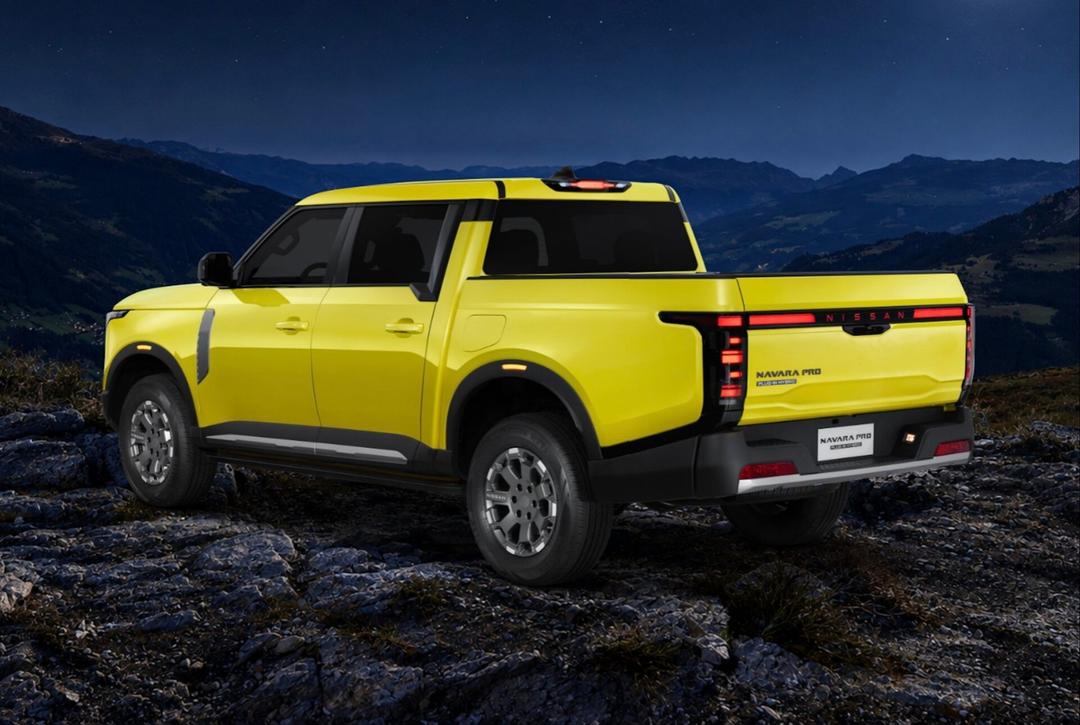
The Navara Pro is a boxy double cab with a three-slot LED light signature inspired by the D21 Hardbody, an illuminated Nissan badge and a full-width LED light bar at the rear. Colours are Pearl White, Obsidian Black Pearl, Stardust Metallic Gray and Retro Yellow Pearl. Inside are leather seats, a heated and ventilated six-way power driver seat, dual-zone climate control and a wireless phone charger.
Technology & Features
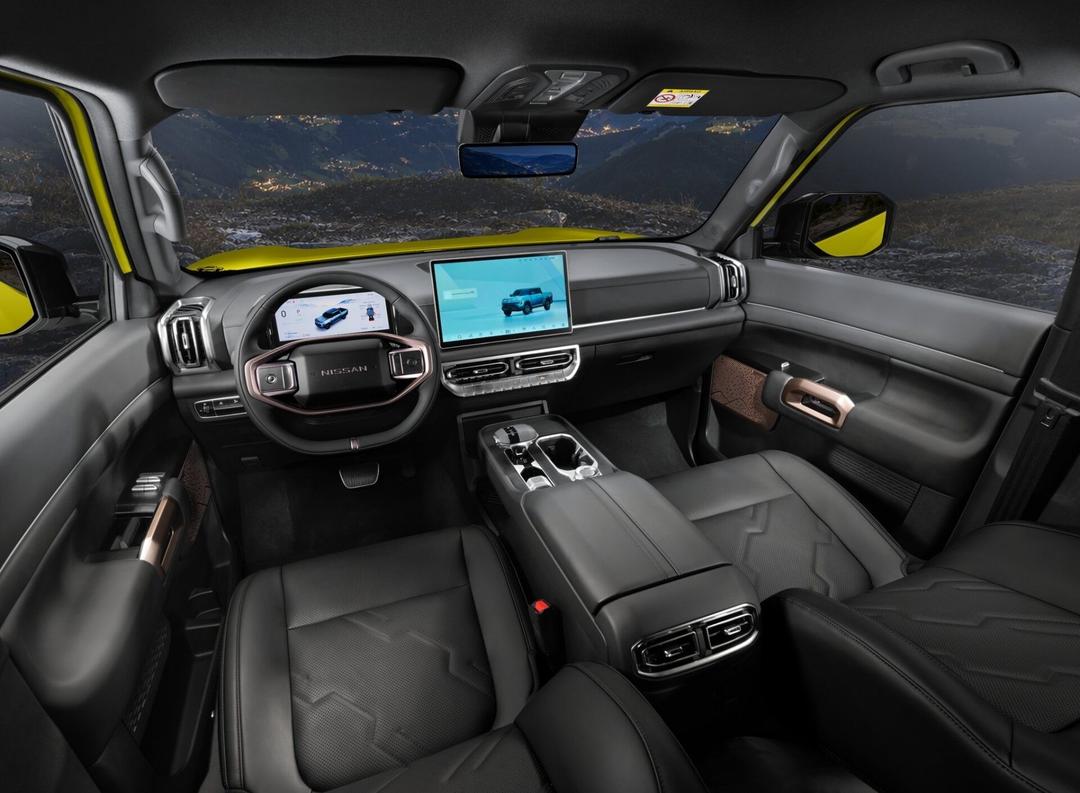
A 14.6-inch touchscreen with physical shortcut buttons and a 10-inch digital cluster make up the cockpit. The VL has a six-speaker audio system; the LE adds a 12-speaker Focal 5.1 system, the electronic locking rear differential and power-operated bed features (running boards, tonneau cover, cargo-box door and step).
Safety & ADAS
Both versions carry six airbags, ProPILOT with traffic jam assist, intelligent forward collision warning with emergency braking, lane keep assist, high beam assist, hill descent control and the 3D Around View Monitor.
| ADAS LEVEL | Level 2 (ProPILOT adaptive cruise with steering assist) |
|---|---|
| ADAS FEATURES | ProPILOT, forward collision warning, AEB, lane keep assist, high beam assist, hill descent control, 360° camera |
Available Versions
| VERSION | POWER | TORQUE | 0-100 | TOP SPEED | DRIVETRAIN | BATTERY | EV RANGE | COMBINED RANGE | PRICE | KEY DIFFERENCES |
|---|---|---|---|---|---|---|---|---|---|---|
| VL 4x4 PHEV | 350 hp (Nissan Mexico figure) | 350 Nm (electric motor) | — | — | 4WD | 20.24 kWh | 75 km (NEDC) | 1,150 km (local test) | PHP 2,448,000 (~$38,400) | Six-speaker audio, 2,445 kg curb weight; regular price PHP 2,498,000 |
| LE 4x4 PHEV | 350 hp (Nissan Mexico figure) | 350 Nm (electric motor) | — | — | 4WD | 20.24 kWh | 75 km (NEDC) | 1,150 km (local test) | PHP 2,648,000 (~$41,600) | Focal 12-speaker audio, rear locking differential, power bed features, 2,485 kg; regular price PHP 2,698,000 |
Pricing & Availability
In the Philippines the introductory prices run until 31 December 2026 according to CarGuide.PH (Nissan Philippines does not state an end date on its site) and include a PHP 50,000 discount; from 1 January the VL costs PHP 2,498,000 (~$39,200) and the LE PHP 2,698,000 (~$42,300). In Mexico, where it launched on 8 October 2026, the LE costs MXN 899,900 and the Platinum MXN 969,900. Dollar figures use ECB rates of 12 November 2026 (USD 1 = PHP 63.727; MXN 1 = $0.0535).
Specifications differ by market. Australia and New Zealand, the first right-hand-drive markets, get the Navara Pro in 2027 with a 2.0-litre turbo petrol engine and a preliminary 300 kW and 800 Nm; battery, range and prices are to be announced. Chinese press lists the Chinese-market Frontier Pro PHEV above 402 hp with up to 135 km CLTC electric range, figures that do not apply to the Philippine car.
How It Compares
Rivals are for contrast, not a like-for-like cross-shop, because they sell in other markets and cycles differ. The BYD Shark offers 430 hp and 90 km WLTP electric range against the Navara Pro's 350 hp (Nissan Mexico figure) and 75 km NEDC, but its towing rating is 2,500 kg, 1,000 kg below Nissan's 3,500 kg. The Chery Stockman has 469 hp and 3,495 kg towing, and no price has been announced.
- 3,500 kg towing and 4L low range with a locking rear differential on the LE
- 20.24 kWh battery with 75 km NEDC electric range and V2L sockets
- From PHP 2,448,000 (~$38,400) with a home wall charger and 3 years of connected services
- 14.6-inch screen, ProPILOT and 360-degree camera on both versions
- No 0-100 km/h time, top speed or DC charging figure published
- 75 km is an NEDC figure, usually higher than real-world electric range
- Introductory prices reportedly end on 31 December 2026 (CarGuide.PH) and rise by PHP 50,000
The Navara Pro PHEV brings plug-in power, 3,500 kg towing and a full 4x4 system to the Philippine pickup market from PHP 2,448,000 (~$38,400). The VL covers the basics; the LE is the one to pick for the locking differential and the Focal audio. Buyers should wait for a combined fuel-use figure and a 0-100 km/h time before judging the running costs.