
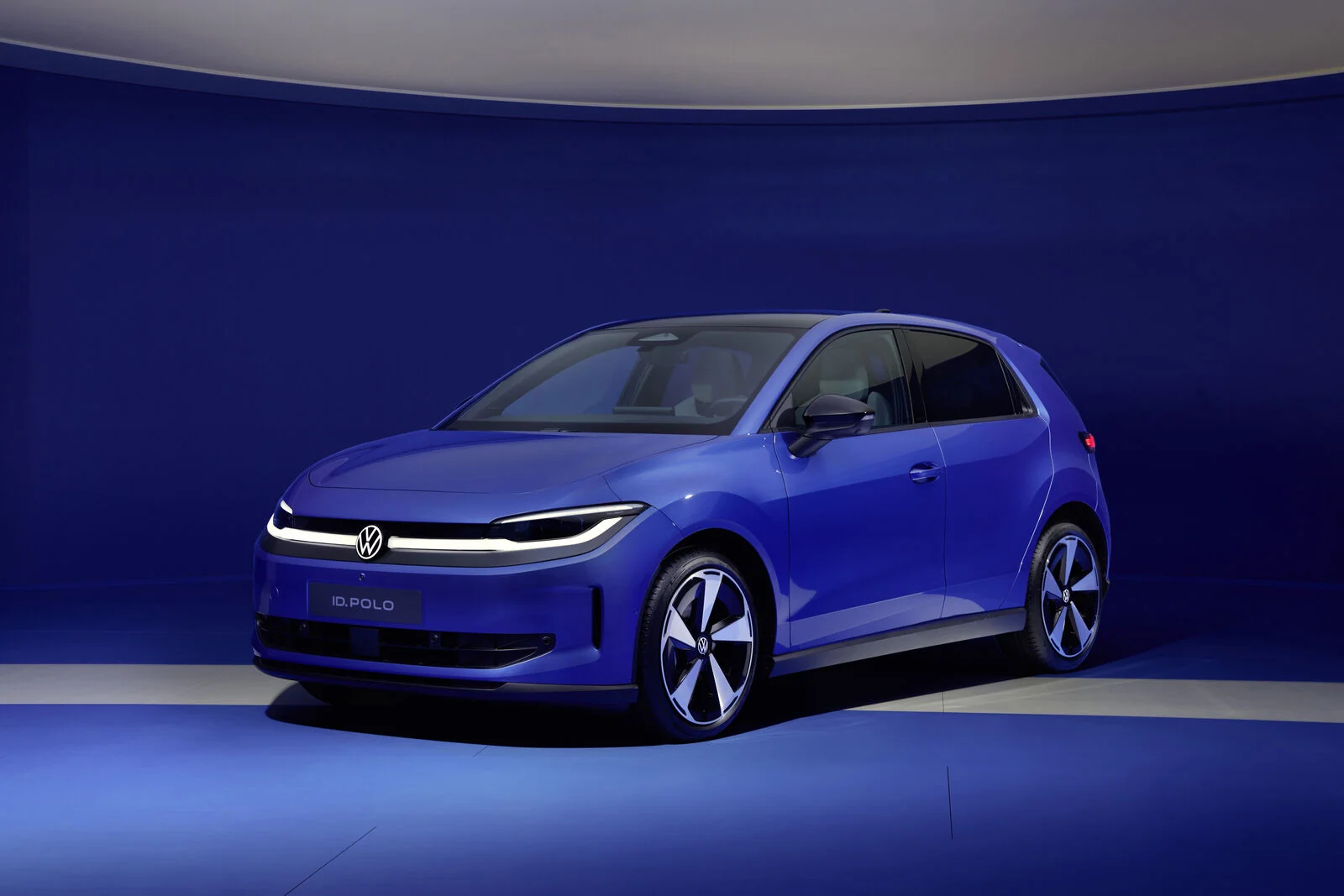
Volkswagen has finally built the affordable electric car European buyers have been asking for since the ID.3 launched at nearly double the price. The ID.Polo is a compact five-door hatchback that revives the Polo name for the electric era, built on an evolved version of VW's MEB platform called MEB+. It had its world premiere in Hamburg on April 29, 2026, with the base Trend trim reaching order books in Germany, the UK, France and the Netherlands starting in the second half of July 2026 at €24,995 — roughly $29,300 at current exchange rates. Volkswagen is positioning the ID.Polo as a genuine city-and-commuter EV rather than a halo model, with three power tiers, two battery chemistries and a driving position deliberately borrowed from the combustion Polo it effectively replaces in VW's European electric lineup. It shares its MEB+ underpinnings with the recently revealed ID.Cross crossover and the sportier ID.Polo GTI, both covered separately, but this article focuses on the standard ID.Polo hatchback.
Performance & Specs
The entry-level ID.Polo Trend uses an 85 kW (116 PS / 114 hp) front-mounted motor mated to a 37 kWh usable lithium-iron-phosphate (LFP) battery, good for a WLTP range of up to 334 km and a 0-100 km/h sprint in 11.0 seconds — leisurely by EV standards, appropriate for a budget city car. Volkswagen also offers a 99 kW (135 PS / 133 hp) tune of the same 37 kWh pack for buyers who want a bit more punch without stepping up to the larger battery, and a range-topping 155 kW (211 PS / 208 hp) motor paired with a 52 kWh nickel-manganese-cobalt (NMC) pack that cuts the 0-100 km/h time to 7.4 seconds and pushes WLTP range to 454 km. All versions are strictly front-wheel drive; VW has not fitted an all-wheel-drive option to the standard ID.Polo. Volkswagen's own naming for the drive unit family, APP290, references a peak torque figure of 290 Nm shared across the single-motor lineup, with power output the main differentiator between tunes.

| Powertrain | Single-motor FWD BEV |
|---|---|
| Power | 85 kW (116 PS / 114 hp) |
| Torque | 290 Nm |
| 0–100 km/h | 11.0 s |
| Battery | 37 kWh usable (LFP) |
| Range | 334 km WLTP |
| POWERTRAIN TYPE | BEV (Battery Electric Vehicle) |
|---|---|
| HORSEPOWER | 85 kW (116 PS / 114 hp), up to 155 kW (211 PS / 208 hp) on the top motor |
| ACCELERATION | 11.0 s (0-100 km/h, Trend) – 7.4 s (top 155 kW motor) |
| TOP SPEED | 160 km/h (99 mph) |
| DRIVETRAIN | FWD (single front motor, all versions) |
| BATTERY | 37 kWh usable LFP or 52 kWh usable NMC |
| ELECTRIC RANGE | Up to 334 km WLTP (37 kWh) / up to 454 km WLTP (52 kWh) |
| COMBINED RANGE | — (pure BEV, not applicable) |
Dimensions & Practicality

| Length | 4,053 mm |
|---|---|
| Width | 1,816 mm |
| Height | 1,530 mm |
| Wheelbase | 2,600 mm |
At 4,053 mm long and riding a 2,600 mm wheelbase, the ID.Polo is a genuine supermini in footprint but Volkswagen says the compact MEB+ drive modules free up noticeably more cabin space than a combustion Polo of the same exterior size, since there's no transmission tunnel or engine bay to package around. The boot holds 441 litres with the rear seats up, expanding to 1,243 litres with them folded flat — a strong figure for the segment and well ahead of most combustion superminis. Volkswagen has not published a separate frunk figure for the ID.Polo, and given the compact front-motor packaging it is likely omitted or negligible, so we're not listing one. Five occupants fit inside, with VW emphasizing rear legroom as a strong point of the MEB+ architecture versus the outgoing combustion Polo.
| LENGTH | 4,053 mm |
|---|---|
| WIDTH | 1,816 mm |
| HEIGHT | 1,530 mm |
| WHEELBASE | 2,600 mm |
| CARGO VOLUME | 441 L (1,243 L seats folded) |
Charging & Battery
Volkswagen split the ID.Polo's battery lineup in two: an entry-level 37 kWh usable LFP pack for the Trend and lower-power Life/Style configurations, and an optional 52 kWh usable NMC pack for buyers who want the 454 km WLTP figure and the quicker 155 kW motor. Both chemistries support 11 kW AC home/public charging as standard. On DC fast chargers, the 37 kWh pack tops out at 90 kW, taking roughly 23 minutes to go from 10-80%, while the larger 52 kWh pack accepts up to 105 kW DC and completes the same 10-80% top-up in about 24 minutes — a modest architecture by 800V-flagship standards, but consistent with what VW has fitted across the rest of the MEB family. The choice of LFP for the base pack keeps cost down and should help long-term durability for buyers who charge daily, at the expense of slightly lower peak DC charging speed than the NMC pack delivers.
| BATTERY | 37 kWh usable LFP or 52 kWh usable NMC |
|---|---|
| AC CHARGING | 11 kW |
| DC FAST CHARGING | Up to 90 kW (37 kWh) / up to 105 kW (52 kWh) |
| DC 10-80% TIME | ~23 min (37 kWh) / ~24 min (52 kWh) |
Design & Interior
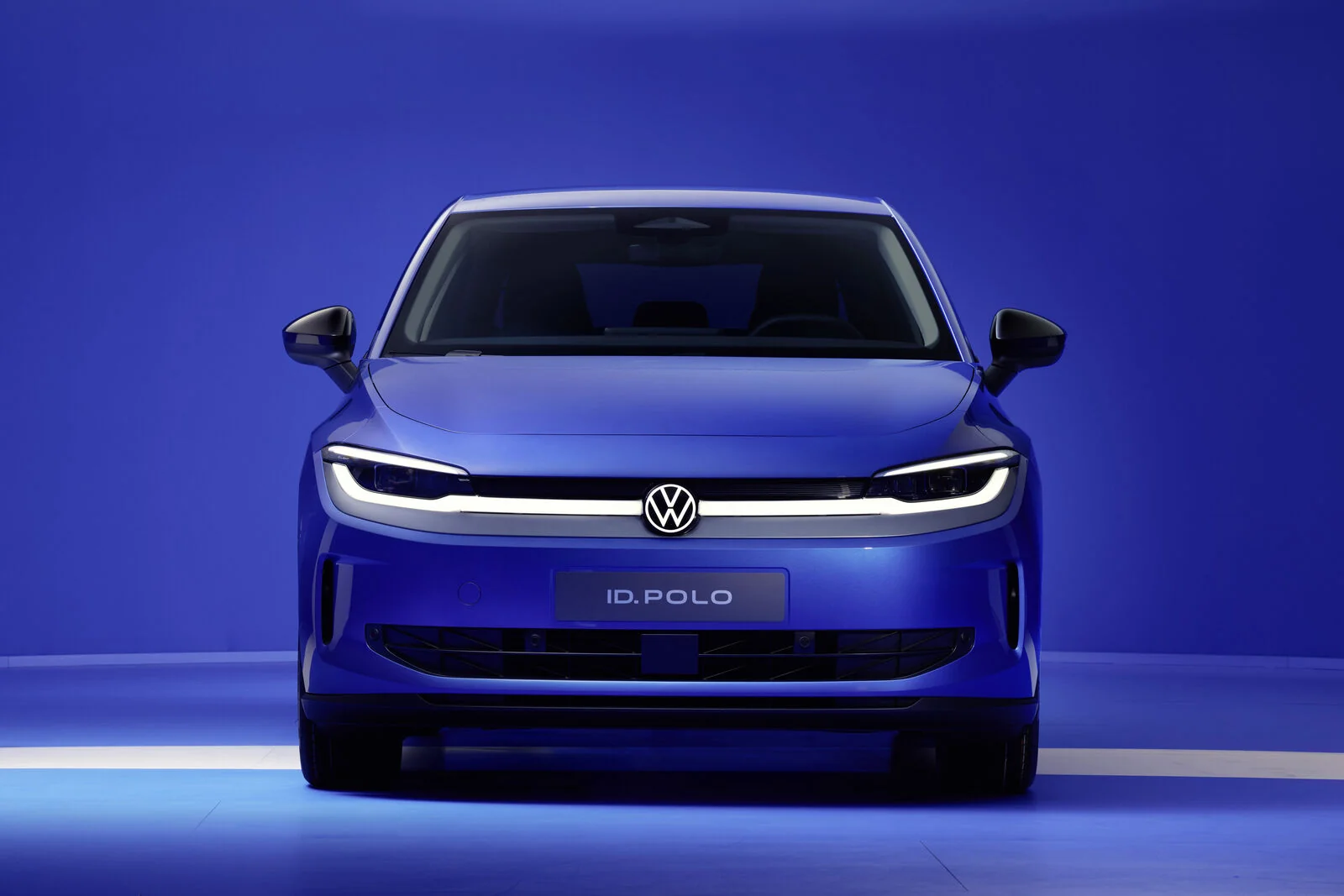
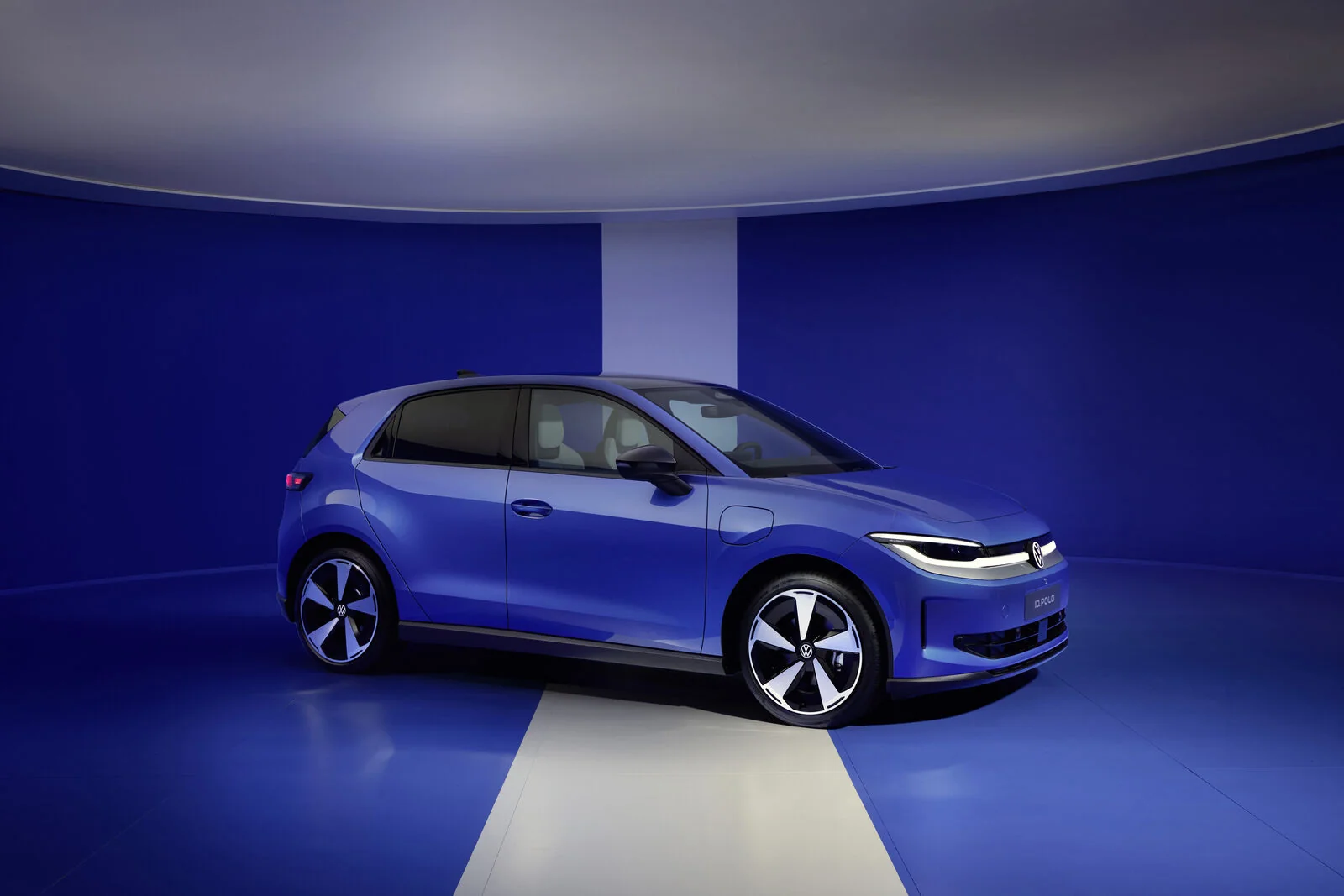
Volkswagen deliberately styled the ID.Polo to read as a Polo rather than as another generic ID.-family pod, with a C-pillar VW says is inspired by the original Golf and a rounded, friendly front end that avoids the slab-fronted look of some MEB siblings. LED headlights with automatic main-beam control are standard from launch, while the Style grade adds IQ.LIGHT LED matrix headlights with an illuminated light strip and 3D LED tail-light clusters, plus an illuminated VW badge front and rear. Inside, the base cabin uses a leatherette multifunction steering wheel and cloth upholstery, while Style-grade cars step up to sport comfort seats with ambient background lighting, two-zone automatic climate control, heated seats and steering wheel, and VW's ID.Light ambient strip that now extends into the front door panels rather than stopping at the dashboard. A 425-watt Harman Kardon sound system with ten speakers and a subwoofer, plus 12-way electrically adjustable front seats with pneumatic massage function, headline the options list on the range-topping trims. It's a notably richer interior offer than VW has historically put in a Polo-sized car, reflecting the model's role as the brand's new EV entry point rather than a stripped-out budget special.
Technology & Features
The ID.Polo debuts Volkswagen's next-generation digital cockpit for compact cars: a 26 cm (10-inch) digital instrument display paired with a 33 cm (13-inch) Innovision touchscreen that VW describes as having a tablet-like appearance with sharper graphics than the outgoing MEB infotainment stack. Voice control, Apple CarPlay and Android Auto come standard, along with inductive smartphone charging on higher grades. Software-wise, VW has folded in one-pedal driving as a standard feature and rolled out Travel Assist 3.0, its partial-automation package, as an available upgrade that now recognizes red lights and stop signs in addition to maintaining lane position and following distance on adaptive cruise. The car is built on a genuinely new cockpit architecture rather than a reskin of the ID.3/ID.4 setup, which VW is positioning as the template for its next wave of MEB+ models including the ID.Cross.
Safety & ADAS
The ID.Polo ships with an SAE Level 2 driver-assistance suite as standard from the Life grade, including Adaptive Cruise Control, Front Cross Traffic Assist and Park Distance Control at the front, plus a rear-view camera. Side Assist (blind-spot monitoring) and Lane Assist are listed on the car's specification sheet alongside the standard package. The more advanced Connected Travel Assist, which adds automatic traffic-light and stop-sign recognition to the lane-and-distance-keeping functions, is an optional upgrade rather than standard equipment on every grade. Volkswagen has not yet published a Euro NCAP crash-test result for the ID.Polo as of this writing, so we're not citing a star rating until the car has actually been tested.
| ADAS LEVEL | L2 (SAE Level 2 partial automation) |
|---|---|
| ADAS FEATURES | Adaptive Cruise Control, Front Cross Traffic Assist, Lane Assist, Side Assist, front Park Distance Control, rear camera, optional Travel Assist 3.0 with traffic-light recognition |
Available Versions
| VERSION | POWER | TORQUE | 0-100 | TOP SPEED | DRIVETRAIN | BATTERY | EV RANGE | COMBINED RANGE | PRICE | KEY DIFFERENCES |
|---|---|---|---|---|---|---|---|---|---|---|
| Trend | 114 hp | 290 Nm | 11.0s | 160 km/h | FWD | 37 kWh | 334 km | — | $29,300 | Entry trim, LED headlights, cloth seats, 37 kWh LFP only |
| Life/Style (37 kWh) | 133 hp | 290 Nm | 9.8s | 160 km/h | FWD | 37 kWh | 334 km | — | $34,200 | Adds ACC, front PDC, Cross Traffic Assist; higher-power motor on same battery |
| Launch Edition (52 kWh) | 208 hp | 290 Nm | 7.4s | 160 km/h | FWD | 52 kWh | 454 km | — | $39,600 | Largest battery, IQ.LIGHT matrix LED, Harman Kardon audio, massage seats |
Pricing & Availability
Volkswagen opened initial order books for the ID.Polo on April 29, 2026, the same day as its Hamburg world premiere, but that first wave covered only a pricier 155 kW / 52 kWh Launch Edition. Production started June 3, 2026 at VW's Martorell plant in Spain. The affordable version the brand had promised — the 37 kWh Trend at €24,995 (about $29,300) — joined the configurator in Germany in the second half of July 2026, with the Life and Style grades on the same 37 kWh battery listed from €29,195 (about $34,200). UK order books opened separately on July 31, 2026, with Trend pricing from £23,945 and Launch Edition trims from £25,555 to £32,995 ahead of regular series-production sales starting September 10, 2026. Volkswagen has not published a single unified delivery date for every battery/trim combination as of this writing; the Launch Edition and early Life/Style orders are shipping first, with the cheaper Trend variant's delivery slot still working through the order queue.
How It Compares
Against our own catalog, the ID.Polo lands squarely in the middle of the hatchback-EV pack on price while trailing most of it on power and range. The BYD Seagull undercuts it by nearly $18,000 but offers far less range and a fraction of the power — a genuine budget runabout rather than a direct rival. The MG4 EV is the closer value comparison: cheaper than the ID.Polo Trend, with more power and slightly more range, making the VW's case rest on badge, build quality and dealer network rather than the spec sheet. The Chevrolet Bolt EV is the nearest in price and actually beats the ID.Polo Trend on both power and range, underlining that Volkswagen's real advantage here isn't outright numbers but a European-tuned chassis, a much richer standard-and-optional feature set once you step up to Life/Style trim, and a fast-charging network that's more mature across Europe than most Chinese-brand alternatives currently offer there.
- Genuinely affordable Volkswagen EV starting under €25,000, filling a long-standing gap below the ID.3
- Strong 441/1,243-litre cargo capacity for the segment, thanks to the transmission-free MEB+ packaging
- Two battery/three power tiers let buyers pick between cheap-and-short or pricier-and-454 km-WLTP without changing model
- Base Trend's 334 km WLTP range and 90 kW DC charging cap trail newer Chinese hatchback EVs at similar or lower prices
- The genuinely cheap 37 kWh Trend trim arrived months after the pricier Launch Edition, and VW hasn't confirmed a single delivery date across all trims yet
The ID.Polo is the affordable European EV Volkswagen should have built years ago, and on the fundamentals — cargo space, interior quality once you're in Life/Style trim, and a familiar Polo-like driving position — it delivers. It's aimed squarely at first-time EV buyers and city/commuter drivers who want a badge they trust more than a spec sheet that wins on paper, and for that audience the Trend's €24,995 starting price is a genuinely important number for the European market. Buyers chasing maximum range or charging speed per dollar will find sharper value in the segment's Chinese entrants, and the staggered rollout of trims and batteries means shoppers need to check exactly which combination is actually available before ordering. Recommended for value-conscious European buyers who want an EV that feels like a normal car first and a tech showcase second.