

The AITO M8, the large three-row SUV from the Huawei-backed AITO brand, has been updated with larger batteries, a rear-steering chassis and Huawei's Qiankun ADS 5 driver-assistance system as standard on every version. Pre-sales opened in China on 30 September 2026 at CNY 389,800 (about $58,100 at 6.7048 CNY per US dollar), which is CNY 30,000 above the CNY 359,800 starting price of the car it replaces. The line-up now includes both range-extended (EREV) and battery-electric (BEV) versions on an 800-volt architecture, in five-seat and six-seat layouts. Seres claims up to 830 km of CLTC range for the BEV and up to 1,435 km of combined range for the EREV. The pre-sale price is not a final launch price, and Seres has not yet published a per-version price list, so every price below refers to the starting figure only. The sources do not say which version the starting figure applies to, and one Chinese outlet reports that the BEV price has not been announced. The update also arrives under a new arrangement, announced on 15 September 2026, in which Seres leads product definition, design, marketing, retail and service, with Huawei Terminal providing technical support; CnEVPost notes that the updated M8 itself was jointly designed and developed by Seres and Huawei.
Performance & Specs
The EREV versions pair a 1.5-litre turbocharged range extender rated at 118 kW (158 hp) with a 170 kW front motor and a 227 kW rear motor. The engine acts purely as a generator for the battery, so the car is driven by its two electric motors only. Adding the two motors gives 397 kW, or about 532 hp (kW x 1.341); this is the combined peak of the motors rather than a separately certified system figure. The BEV versions carry a 160 kW front motor and a 227 kW rear motor, a combined 387 kW or about 519 hp. These motor peak outputs appear in the MIIT type-approval filing, as reported by CnEVPost, ifeng and Autohome; Seres had not published a spec sheet with a certified system output at the time of writing, so the 532 hp and 519 hp figures are our own sums, not official figures. The filing lists a front and a rear motor for the BEV, but Autohome also mentions a rear-drive BEV, so the sum may not apply to every BEV version.
Seres has not announced a 0-100 km/h time or a torque figure for the updated car. The filing lists a top speed of 200 km/h for all versions. The two powertrains share the same 227 kW rear motor, and the EREV's 10 kW stronger front motor (170 kW against 160 kW) makes it the more powerful of the two on paper by 397 kW to 387 kW, a difference of about 13 hp. Buyers should therefore choose between them on range, charging habits and running costs rather than on performance. The headline hardware changes are in the chassis: the update adds rear-wheel steering (reported as plus or minus 8 degrees), a dual-chamber air suspension and dual-valve continuously variable dampers. For a car that is 5,190 mm long, that combination should help both ride quality and low-speed manoeuvring, although we have not tested it and Seres has not published turning-circle data.

| Powertrain | EREV, dual electric motors |
|---|---|
| Range extender | 1.5T, 118 kW (158 hp), generator only |
| Motors | 170 kW front + 227 kW rear |
| Combined motor output | 397 kW (532 hp) |
| Battery | 75.408 kWh (or 56.036 kWh) |
| Combined range | Up to 1,435 km |
| POWERTRAIN TYPE | EREV (1.5T range extender) and BEV, both with front and rear electric motors |
|---|---|
| RANGE EXTENDER | 1.5T, 118 kW (158 hp) |
| HORSEPOWER | EREV 397 kW (532 hp) combined motors; BEV 387 kW (519 hp) combined motors |
| ACCELERATION | Not announced |
| TOP SPEED | 200 km/h (type-approval filing) |
| DRIVETRAIN | Dual-motor, front 170 kW (EREV) or 160 kW (BEV) plus rear 227 kW |
| BATTERY | EREV 56.036 / 75.408 kWh; BEV 97.644 / 120.04 kWh |
| ELECTRIC RANGE | BEV up to 830 km CLTC (120.04 kWh); EREV electric-only range not confirmed |
| COMBINED RANGE | EREV up to 1,435 km |
Dimensions & Practicality

| Length | 5,190 mm |
|---|---|
| Width | 1,999 mm |
| Height | 1,795 mm |
| Wheelbase | 3,105 mm |
| Track (front / rear) | 1,716 / 1,727 mm |
The dimensions are unchanged: 5,190 mm long, 1,999 mm wide and 1,795 mm tall on a 3,105 mm wheelbase, which puts the M8 in the same class as the Li Auto L8 and the larger L9. Buyers can choose a five-seat or a six-seat layout, and the six-seat version carries three zero-gravity seats. The type-approval filing lists staggered wheel and tyre combinations, 255/50 R20 and 275/50 R20 or 265/45 R21 and 285/45 R21, with a front track of 1,716 mm and a rear track of 1,727 mm. Seres has not published total cargo volumes or kerb weights for the updated versions, so we leave those out rather than carry over figures from the earlier car; Autohome reports only that the front trunk of the rear-drive BEV grows to 210 L (149 L before).
| LENGTH | 5,190 mm |
|---|---|
| WIDTH | 1,999 mm |
| HEIGHT | 1,795 mm |
| WHEELBASE | 3,105 mm |
| SEATS | 5, or 6 (six-seat version with three zero-gravity seats) |
| WHEELS / TYRES | 255/50 R20, 275/50 R20, 265/45 R21, 285/45 R21 (staggered) |
Charging & Battery
Every version of the updated M8 uses an 800-volt architecture, and the batteries are larger than before. The EREV is offered with a 56.036 kWh lithium iron phosphate pack and a 75.408 kWh ternary lithium pack; the largest EREV pack on the car before the update was 53.4 kWh according to AITO's website. The BEV comes with a 97.644 kWh and a 120.04 kWh ternary pack. Seres quotes up to 830 km of CLTC range for the BEV, which corresponds to the 120.04 kWh battery. Autohome lists CLTC ranges of 830, 800, 708 and 675 km across the BEV versions, with 708 km the longest for the 97.644 kWh pack.
Seres has not yet published a DC peak power or a 10-80% charging time for the updated cars, so we do not quote one; an 800-volt platform is what makes fast charging possible, but the actual speed depends on the packs and the charger. The same is true of the electric-only range of the EREV. Reported figures differ by source and by test cycle (CLTC against WLTC), so we are not publishing an EREV electric range until Seres confirms one. The combined figure of up to 1,435 km, which counts a full battery and a full fuel tank, is consistent across all the sources we checked.
| BATTERY | EREV 56.036 kWh (LFP) / 75.408 kWh (ternary); BEV 97.644 / 120.04 kWh (ternary) |
|---|---|
| VOLTAGE | 800 V |
| BEV RANGE | Up to 830 km CLTC (120.04 kWh); up to 708 km (97.644 kWh, per Autohome) |
| EREV COMBINED RANGE | Up to 1,435 km |
| DC FAST CHARGING | Not announced |
Design & Interior
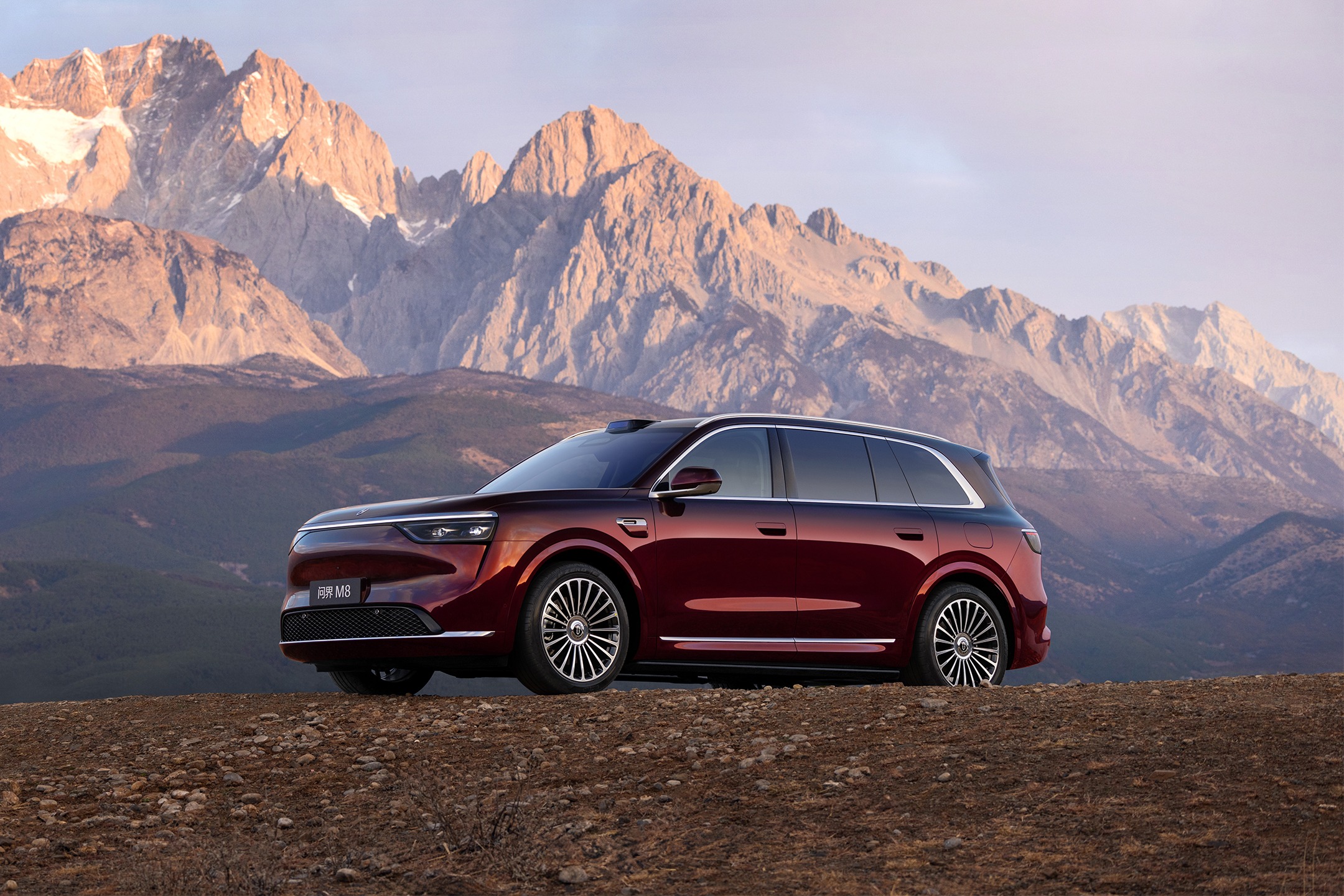
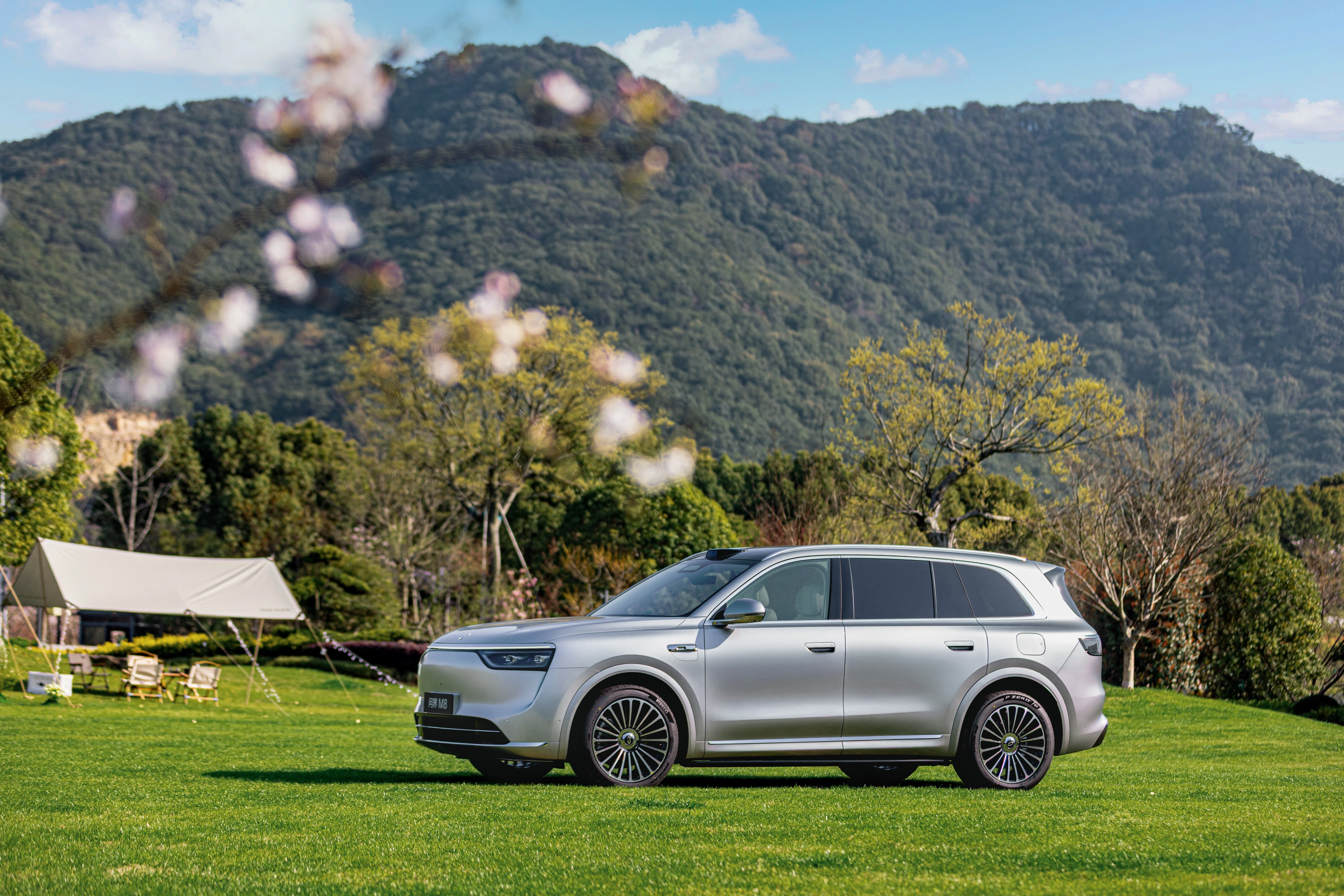
The body size carries over, but the update is not purely technical. Chinese reports (CNMO on the type-approval filing, Autohome) say the lower grille changes from horizontal trim to a dense honeycomb mesh and that two new exterior paints and two new cabin colour schemes are added. Wheels are 20 or 21 inches according to the type-approval filing. The six-seat version is equipped with three zero-gravity seats, according to CnEVPost. The photos in this article show the version sold before the update, so they do not show these changes.
Seres has not released a full equipment list for the updated cars, so we limit this section to what has been reported: the update keeps both the five-seat and six-seat layouts, and CnEVPost says Seres put CNY 1.5 billion into the upgrade, covering exterior styling, the cabin, space, smart features, powertrains and the chassis. Autohome adds a 21-inch 4K ceiling-mounted rear screen and a 25-speaker audio system.
Technology & Features
The software and sensor story is the update's centrepiece. Huawei's Qiankun ADS 5 is standard on every version, supported by what Seres calls an omnidirectional sensor-fusion system. According to Chinese reports the car carries four LiDARs, a single 896-line main unit and three solid-state units for the sides and rear, plus 38 sensors in total. Every version is described as L3-ready: the electrical and compute architecture is designed for Level 3 automated driving, but Level 3 itself has not been launched on the car. Chinese outlets note that actual Level 3 functions will wait for regulation and for a later over-the-air update, so today the system should be treated as advanced Level 2 driver assistance with the driver responsible at all times.
The corporate backdrop matters too. In mid-September 2026 Seres and Huawei announced a restructured partnership in which Seres leads product definition, design, brand marketing, retail and service, while Huawei Terminal provides technical support. Chinese outlets describe the updated M8 as the first new AITO model to reach pre-sale under that arrangement, and Seres announced the price with a poster rather than a launch event, according to ifanr.
Safety & ADAS
All versions get ADS 5, and the four-LiDAR sensor suite is described as standard across the range. The architecture is designed for Level 3, but until regulators approve it and Seres delivers the software the car is a driver-supervised Level 2 system. Seres has not published crash-test ratings for the updated car.
| ADAS LEVEL | L2+ driver assistance today; L3-ready architecture (no L3 functions released yet) |
|---|---|
| ADAS FEATURES | Qiankun ADS 5, four LiDARs (one 896-line, three solid-state), 38 sensors, omnidirectional sensor fusion, rear-wheel steering |
Available Versions
| VERSION | POWER | TORQUE | 0-100 | TOP SPEED | DRIVETRAIN | BATTERY | EV RANGE | COMBINED RANGE | PRICE | KEY DIFFERENCES |
|---|---|---|---|---|---|---|---|---|---|---|
| EREV 56.036 kWh | 532 hp (motor sum) | — | — | 200 km/h | Dual-motor | 56.036 kWh LFP | — | — | From CNY 389,800 | 1.5T range extender 118 kW; motors 170 kW front, 227 kW rear |
| EREV 75.408 kWh | 532 hp (motor sum) | — | — | 200 km/h | Dual-motor | 75.408 kWh ternary | — | 1,435 km | From CNY 389,800 | Largest EREV pack; 1,435 km is the headline combined range |
| BEV 97.644 kWh | 519 hp (motor sum) | — | — | 200 km/h | Dual-motor | 97.644 kWh ternary | 708 km (CLTC, per Autohome) | — | From CNY 389,800 | Motors 160 kW front, 227 kW rear (filing) |
| BEV 120.04 kWh | 519 hp (motor sum) | — | — | 200 km/h | Dual-motor | 120.04 kWh ternary | 830 km | — | From CNY 389,800 | Longest range; 830 km CLTC |
Pricing & Availability
Pre-sales opened on 30 September 2026 with a starting price of CNY 389,800 for the line-up; the sources do not say which version it applies to. At 6.7048 CNY per US dollar that is about $58,100; CnEVPost converted the same figure to $57,880, so the dollar value moves with the exchange rate. The CNY 30,000 increase over the previous CNY 359,800 starting price is about 8 percent. Seres has not published prices for individual versions, battery sizes or seat layouts, and a pre-sale price is not a final launch price, so the entry price of a specific version is not yet known. A Chinese outlet reported deliveries for late 2026, but we could not find a date from Seres itself, so the delivery start is not confirmed.
The M8 is sold in China. No export or international launch has been announced as of October 2026. Cumulative M8 deliveries exceeded 180,000 as of 6 August 2026, according to CnEVPost. Because Seres has not released a version-by-version price list, shoppers cannot yet tell what a 75.408 kWh EREV or a 120.04 kWh BEV will cost against the CNY 389,800 entry figure. The larger packs and the 830 km and 1,435 km headline ranges are the ones to watch when final prices are published, since the starting price may not cover the largest batteries.
How It Compares
The Li Auto L8 is the closest EREV rival, a five-seat flagship with 420 kW (563 hp), a 430 km CLTC electric range and 1,670 km combined, priced at CNY 369,800 to 429,800 at retail. It is more powerful than the M8 EREV and starts about CNY 20,000 lower, but it is a five-seater only, and the M8 offers a six-seat layout with a combined range of up to 1,435 km. On the battery-electric side the NIO ES8 in its six- and seven-seat form offers 520 kW (697 hp) and 635 km of CLTC range at CNY 406,800 to 446,800 including the battery, which compares with the M8 BEV's claimed 830 km; the M8's CNY 389,800 pre-sale starting figure is lower than the ES8's entry price, but it is not confirmed to apply to the BEV. The larger AITO M9 REV, at CNY 479,800 and above with 497 kW (667 hp), shows what the extra money buys inside the same brand: 667 hp, a 5,285 mm body and a slightly shorter combined range than the M8's 1,435 km claim, with 1,405 km. The EV ranges here are CLTC, which is more generous than WLTP, and the combined figures are manufacturer claims for a full tank and a full charge, so they should only be compared with each other.
- Up to 830 km CLTC for the BEV and up to 1,435 km combined for the EREV, on an 800-volt architecture
- Qiankun ADS 5 with four LiDARs and an L3-ready architecture is standard on every version
- Five-seat and six-seat layouts in a 5,190 mm body, with rear-wheel steering and an air suspension that are new on this update
- The pre-sale price of CNY 389,800 is CNY 30,000 above the previous starting price, and the final launch prices are not announced
- No Level 3 functions yet, and no confirmed EREV electric range, charging power, 0-100 km/h time or cargo volume for the updated cars
The updated M8 is a hardware-heavy refresh: bigger batteries, rear-wheel steering, an air suspension and a four-LiDAR ADS 5 suite as standard, at a starting price CNY 30,000 higher than before. The claimed 830 km CLTC for the BEV and 1,435 km combined for the EREV are strong numbers for a three-row SUV, but the picture is incomplete until Seres publishes a price list, an EREV electric range and charging data. Family buyers in China who want a six-seat flagship with Huawei's driver assistance have a compelling option, and should wait for the final launch pricing before committing.