

The second-generation Dacia Spring is a four-seat battery-electric (BEV) city car that Dacia revealed on 8 September 2026 and opened for orders in France the same day. Dacia says the new car keeps only the name of the model it replaces: it sits on Renault Group's new RGEV small platform, is 15 cm longer and 18 cm wider than before, and is built in Europe at the Novo Mesto plant in Slovenia. A single 60 kW (82 PS, about 80 hp) motor drives the front wheels, a 27.5 kWh usable LFP battery gives up to 250 km WLTP, and the whole range is priced below €20,000 before government aid. In France the Expression trim costs €17,900 and the Journey €19,400 on Dacia's official price list. The car is on Dacia's stand at the Paris Motor Show, which opens to the press on 12 October 2026.
Performance & Specs
Dacia gives the new Spring one powertrain across the range: a motor rated at 60 kW (82 PS, about 80 hp) and 175 Nm, a 0-100 km/h time of 12.1 seconds and a top speed of 130 km/h. PS is the metric horsepower, about 1.4 percent smaller than the imperial hp used here. These are city-car numbers by design, and Dacia describes the output as matched to the way owners really use the car: its connected-car data from the first generation shows an average trip of 34 km a day at an average speed of 34 km/h, with 75 percent of owners charging at home.
The battery is a lithium iron phosphate (LFP) pack of 27.5 kWh usable capacity; Dacia does not publish a gross figure. Range is up to 250 km on the WLTP combined cycle, and Dacia quotes WLTP consumption of 12.7 kWh/100 km for the Journey and 12.9 kWh/100 km for the Expression. As a sanity check, 27.5 kWh over 250 km is about 11.0 kWh/100 km at the battery, and the 12.7 kWh/100 km figure is about 15 percent higher, which is the normal size of charging losses. At a regulated French electricity price of about €0.20/kWh, Dacia estimates running costs at about €2.5 per 100 km. The press materials do not split the 250 km figure by trim, so treat it as the best case.
Weight is where the car makes its case: from 1,212 kg, which Dacia calls one of the lightest all-electric models in its segment. A turning circle of 4.95 m, an electric parking brake and rear parking radar on every trim, and a reversing camera on the Journey are aimed at city use. The front-wheel-drive layout comes from the independent outlet Electrifying; Dacia's own release does not describe the drive layout.

| Powertrain | Single-motor FWD BEV |
|---|---|
| Power | 60 kW (82 PS / 80 hp) |
| Torque | 175 Nm |
| 0–100 km/h | 12.1 s |
| Battery | 27.5 kWh usable LFP |
| Range | Up to 250 km WLTP |
| POWERTRAIN TYPE | Battery electric (BEV), single motor |
|---|---|
| HORSEPOWER | 60 kW (82 PS / 80 hp) |
| TORQUE | 175 Nm |
| ACCELERATION | 0-100 km/h in 12.1 s |
| TOP SPEED | 130 km/h |
| DRIVETRAIN | FWD (per Electrifying) |
| BATTERY | 27.5 kWh usable LFP |
| WLTP RANGE | Up to 250 km |
| WLTP CONSUMPTION | 12.7 kWh/100 km (Journey), 12.9 kWh/100 km (Expression) |
| KERB WEIGHT | From 1,212 kg |
Dimensions & Practicality

| Length | 3,855 mm |
|---|---|
| Width | 1,722 mm (1,953 mm with mirrors) |
| Height | 1,519 mm |
| Wheelbase | 2,492 mm |
| Boot | 337 L / 1,283 L seats folded |
The new Spring is a 3.85 m four-seat hatchback, and the boot is the number Dacia pushes hardest: up to 337 litres, which the company says is the best in the electric segment A and more than some cars of the class above, and 1,283 litres with the 50/50 split rear bench folded. The boot floor is removable and made of two independent parts, so the load space can be divided. Dacia says the Spring remains the only segment A car with a front trunk ("frunk"), an optional 18-litre compartment under the bonnet that is meant for the charging cable; it costs €150 in France.
Dacia's dimension drawing gives a length of 3,855 mm, a width of 1,722 mm without mirrors (1,953 mm with them), a height of 1,519 mm and a wheelbase of 2,492 mm, with overhangs of 741 mm at the front and 622 mm at the rear. Dacia's own text rounds the width to 1.74 m. Up to three YouClip mounting points come as standard (one on the passenger side of the console, two in the boot) for accessories such as a cup holder, a shopping-bag hook or a portable lamp, and the optional Charge Pack includes vehicle-to-load (V2L) preparation, so the car can power small devices such as a bike battery or a coffee machine.
| LENGTH | 3,855 mm |
|---|---|
| WIDTH | 1,722 mm without mirrors (1,953 mm with mirrors) |
| HEIGHT | 1,519 mm |
| WHEELBASE | 2,492 mm |
| CARGO VOLUME | 337 L (1,283 L seats folded) |
| FRUNK | 18 L (option) |
| SEATS | 4 |
| TURNING CIRCLE | 4.95 m |
Charging & Battery
Every Spring has a 6.6 kW AC on-board charger. Dacia's figures for a 15-80 percent charge are 9 hours on a household socket, 5 hours 40 minutes on a reinforced socket and 2 hours 55 minutes on a 7 kW wallbox, so most owners can recover the range overnight without installing dedicated equipment. The optional Charge Pack, priced at €500 in France and restricted to the Journey, raises AC charging to 11 kW and adds a 50 kW DC charger. With it, 15-80 percent takes 1 hour 55 minutes on an 11 kW three-phase wallbox or a 22 kW public point and 28 minutes at a 50 kW fast charger.
A 50 kW peak is modest by 2026 standards, but it is in proportion to a 27.5 kWh battery, and it gives the car a fast-charging option that the standard 6.6 kW AC charger cannot match. Dacia's own description of the car's job is commuting and everyday leisure trips, with one charge a week enough for most users. A home charging cable (mode 2, 6.5 m) is a €300 option in France rather than standard equipment.
| BATTERY | 27.5 kWh usable LFP (gross not stated) |
|---|---|
| AC CHARGING | 6.6 kW standard; 11 kW with Charge Pack |
| DC FAST CHARGING | 50 kW (Charge Pack, Journey only) |
| DC 15-80% TIME | 28 min |
| AC 15-80% TIME | 9 h (household socket), 5 h 40 min (reinforced socket), 2 h 55 min (7 kW wallbox), 1 h 55 min (11 kW three-phase, Charge Pack) |
Design & Interior
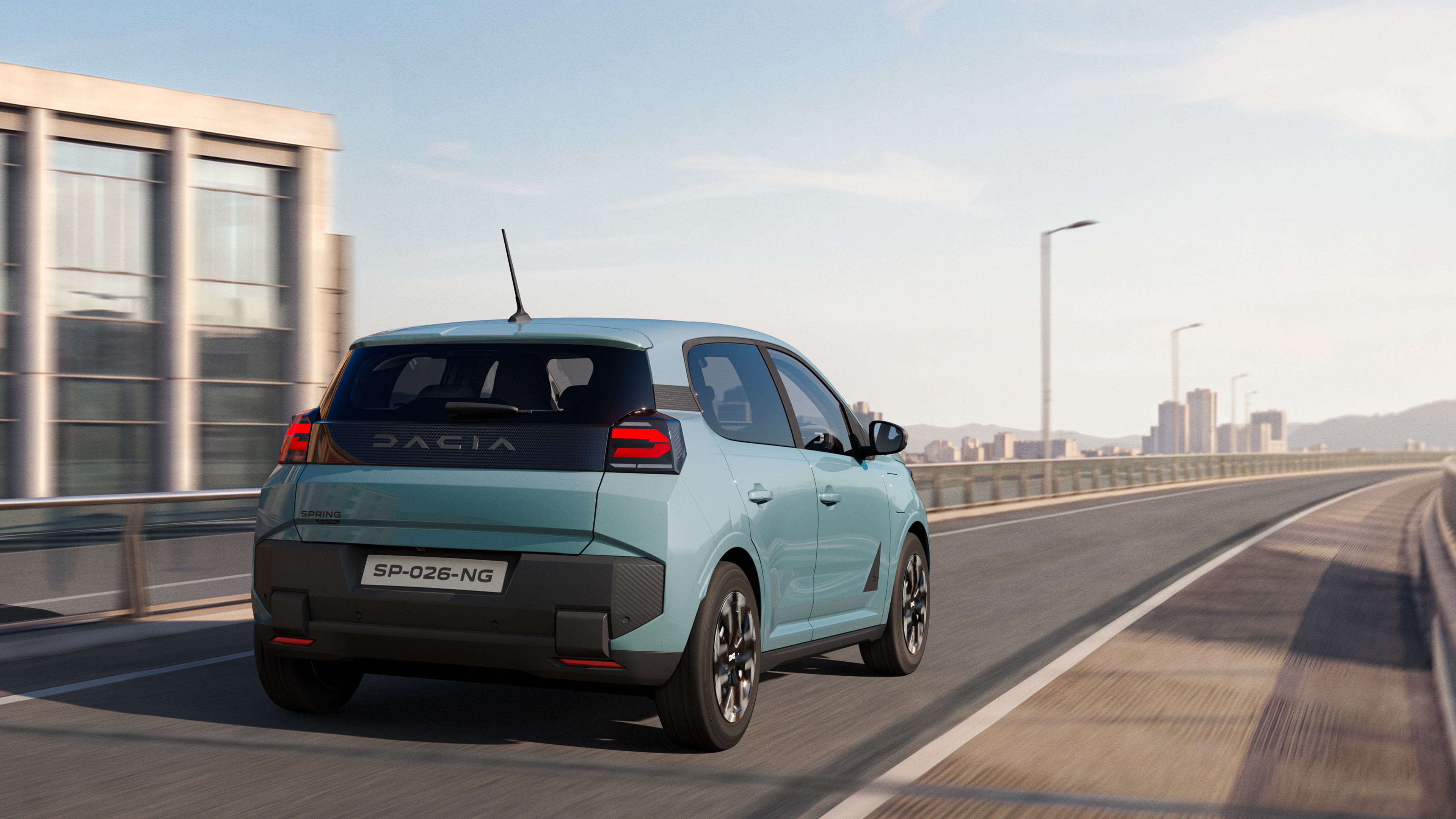
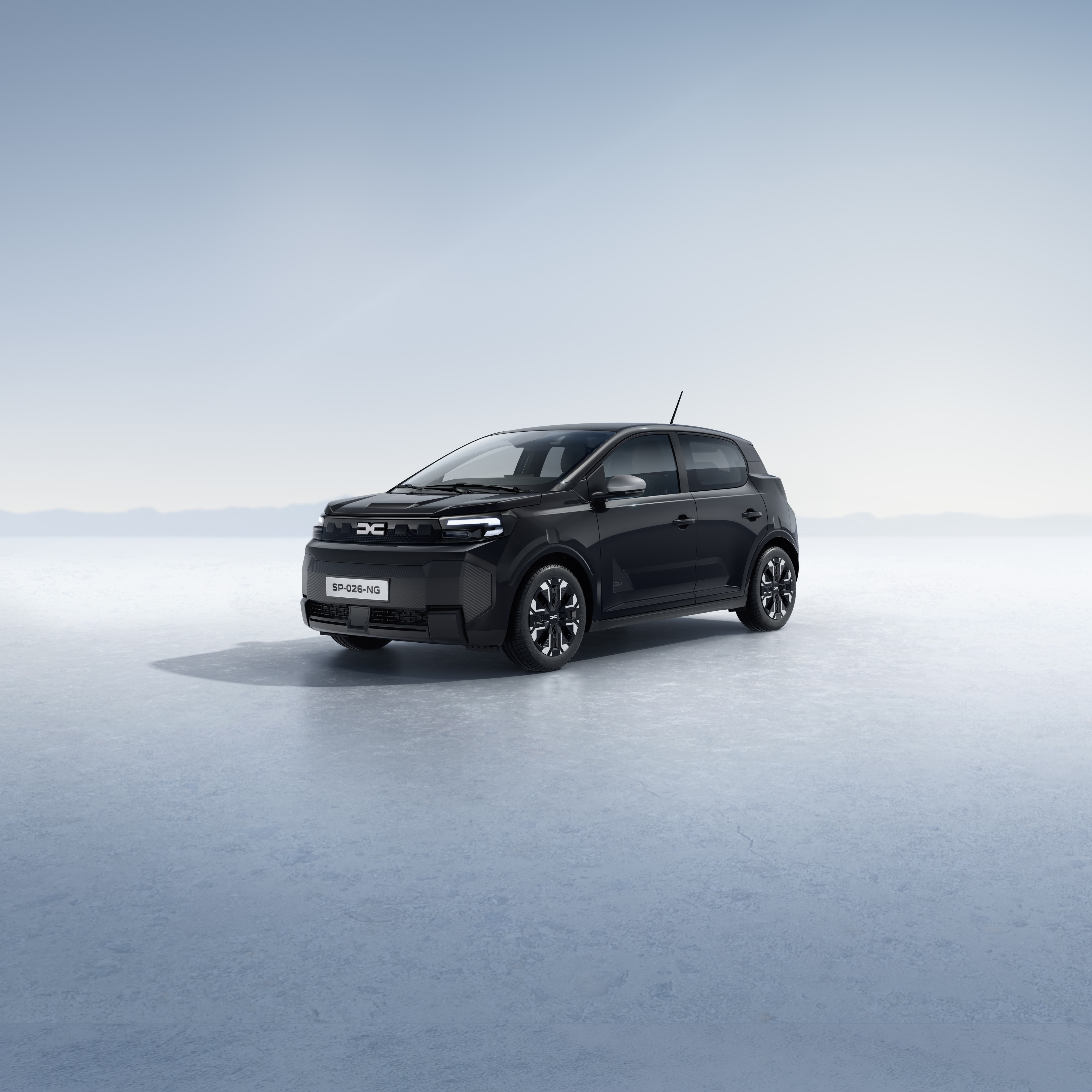
The design is deliberately blocky: vertical front and rear faces, a short high bonnet, pronounced wheel arches and shoulders above the rear wheels give a compact, sturdy stance. Black bands link the headlights at the front and the tail lights at the rear and emphasise the width, and the light signature is inspired by the Dacia Link emblem. Dacia saved cost here as well: only the upper part of each light signature is lit by LED diffusers and the lower part, angled at 45 degrees, simply reflects it, and the DACIA lettering is moulded into the rear band instead of being added as separate letters. The bumpers carry wide protection zones in grained black plastic that is coloured through, so scratches show less. Dacia offers four colours: Agave, Gris Schiste, Noir Etoile and Blanc Glacier.
Inside, the dashboard follows horizontal lines. A 7-inch digital instrument cluster is standard, and the 10.1-inch central touchscreen sits within easy reach of driver and passenger. The upholstery has a bluish tone that echoes the Agave colour. The Expression has 15-inch steel wheels with hubcaps, manual air conditioning, electric front windows and mirrors, remote central locking, a height-adjustable driver's seat, fabric upholstery and the Media Control system. The Journey adds 16-inch steel wheels, a hands-free key card, a reversing camera, Media Nav Live with the 10.1-inch screen, a second USB-C port, a parcel shelf and part-TEP (synthetic leather) upholstery. Heated front seats are a €250 option on the Journey.
Technology & Features
The Expression uses Media Control: the car has no central screen, but a cradle on top of the dashboard holds the driver's smartphone, which runs the free Dacia Media Control app (now usable in portrait format) and shows media and call information on the 7-inch cluster. The Journey's Media Nav Live adds a 10.1-inch touchscreen, wireless Apple CarPlay and Android Auto, and 8 years of connected navigation with real-time traffic and up-to-date European maps. Connected services include an app store, scheduled charging, cabin pre-conditioning and vehicle location. On every trim the steering wheel adjusts for height and reach and the driver's seat for height and backrest angle.
Safety & ADAS
Dacia fits 22 driver-assistance systems to the Spring, according to its order-opening release, and adds its My Safety button, which lets the driver switch selected systems into a personal configuration with one press each time the car starts. The release does not list the individual systems, and no Euro NCAP rating for the new Spring had been published in the sources we read, so this article does not state a crash-test result.
| ADAS LEVEL | Not stated by Dacia; 22 driver-assistance systems |
|---|---|
| ADAS FEATURES | My Safety personal-settings button, rear parking radar (all trims), reversing camera (Journey), electric parking brake |
Available Versions
| VERSION | POWER | TORQUE | 0-100 | TOP SPEED | DRIVETRAIN | BATTERY | EV RANGE | COMBINED RANGE | PRICE | KEY DIFFERENCES |
|---|---|---|---|---|---|---|---|---|---|---|
| Spring Expression | 80 hp | 175 Nm | 12.1s | 130 km/h | FWD | 27.5 kWh | 250 km | — | €17,900 | 15-inch steel wheels, manual air conditioning, Media Control, rear radar; 12.9 kWh/100 km WLTP |
| Spring Journey | 80 hp | 175 Nm | 12.1s | 130 km/h | FWD | 27.5 kWh | 250 km | — | €19,400 | 16-inch wheels, 10.1-inch Media Nav Live, reversing camera, key card; Charge Pack available; 12.7 kWh/100 km WLTP |
Pricing & Availability
Dacia France's price list (tariff no. 2230-03, applicable from 1 October 2026, prices including VAT and before aid and options) shows the new Spring Expression at €17,900 and the Journey at €19,400. The options listed for the new car are metallic or special paint at €550, the home charging cable at €300, the Charge Pack (11 kW AC and 50 kW DC) at €500, heated front seats at €250 on the Journey and the front trunk at €150. Dacia's press release puts the whole range below €20,000 and the Expression below €18,000 before government aid, and says it is eligible for EV purchase aid because it is built in Europe, in Slovenia. In France the "Coup de Pouce" bonus for private buyers ranges from €3,620 to €6,180 depending on the buyer's reference taxable income. The same French list still carries the previous-generation Spring, which is a different car with a 24.3 kWh battery, from €16,900.
Orders opened in France on 8 September 2026, and Dacia has not published a delivery date in the material we read. In the UK, Dacia expects the full range to cost under £18,000 before any government grant, with final UK prices and specifications to be announced separately, and Electrifying reports UK sales starting in early 2027. We found no announcement of the new Spring for Israel, where Dacia is sold by the importer Freesbe, and no official German price list. Dacia has not stated what the Spring will cost in other markets.
How It Compares
The Spring is the cheapest of the four on paper and the weakest on battery and range. The Leapmotor T03 asks €1,000 more in Germany but has a 37.3 kWh battery, 265 km WLTP and 94 hp, while the Geely E2 Pro offers 114 hp and 252 km from a 35 kWh battery for €21,490 in Belgium. The BYD Dolphin Surf Boost has the most range at 322 km WLTP, but costs €24,140 in Spain, €6,240 more than the Spring Expression in France. Those prices come from three different countries and different dates, so they show positioning rather than a like-for-like test, and Dacia's boot claim is its own. The Spring's argument is a European-built body with four real seats, a large boot and a low price, not performance or range.
- Low price: €17,900 for the Expression and €19,400 for the Journey in France before aid, with the range below €20,000
- Large boot for the class: 337 L, 1,283 L with the seats folded, plus an optional 18 L front trunk
- Light at 1,212 kg and efficient at 12.7 kWh/100 km WLTP, and built in Europe, at Novo Mesto in Slovenia
- Modest performance and range: 80 hp, 12.1 s to 100 km/h, 130 km/h top speed and up to 250 km WLTP
- DC fast charging (50 kW) needs the €500 Charge Pack, which is only available on the Journey
The new Dacia Spring is a straightforward electric city car: a light 80 hp hatchback with up to 250 km WLTP, four seats and the largest boot Dacia can claim in the segment, at €17,900 in France. The Expression is the value pick for urban commuters who charge at home, while the Journey with the Charge Pack is the better choice for anyone who wants a screen, a camera and 50 kW DC charging. The trade-off is clear: rivals offer more power and range for a few thousand euros more, and the Spring will not suit long motorway trips. For short daily journeys at a low price it is a strong offer.