
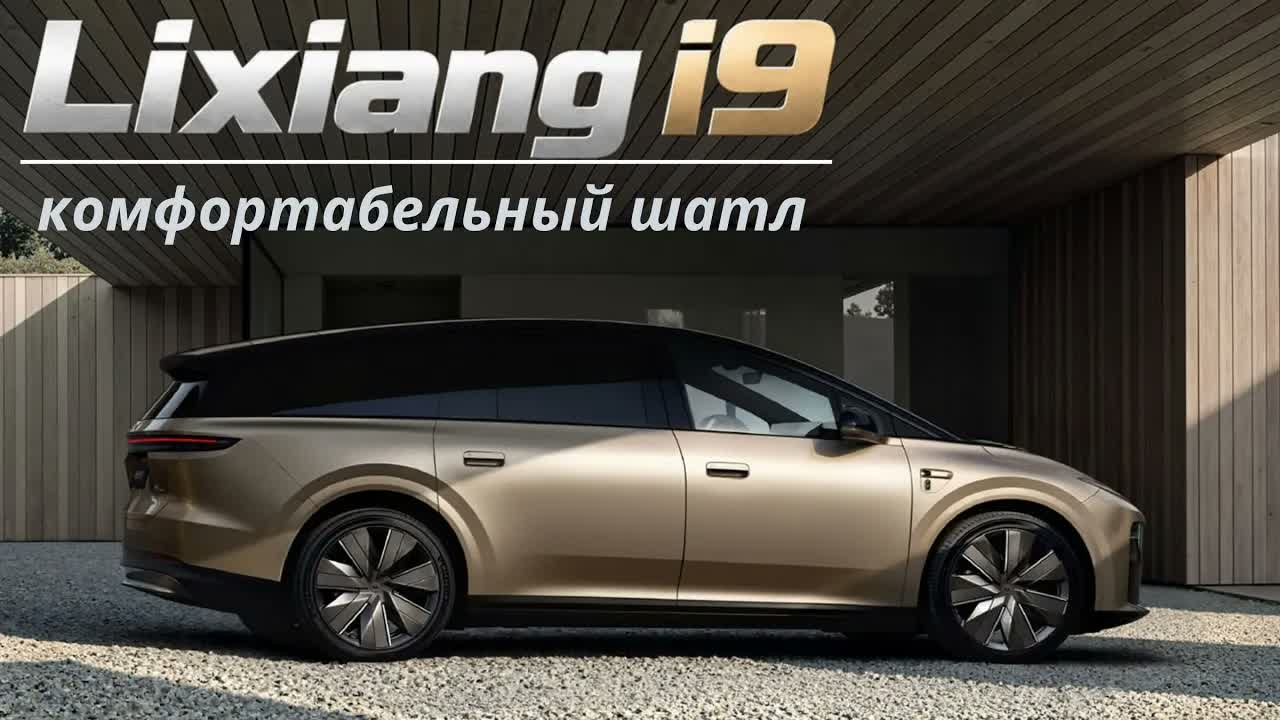
Russian-language partner reviewer Sergey Gilevich spent 15 minutes and 54 seconds with the Li Auto i9 in a video uploaded on 26 October 2026, and the question in his title, "does rationality beat design?", gets a clear answer by the end. He says he does not like the exterior, says only a very self-confident entrepreneur could have signed off on it, and still describes the i9 as an outstanding machine, because every design choice serves cabin space and hard specifications for the money. The i9 is Li Auto's largest SUV to date and the flagship of its pure-electric (BEV) line: a six-seat, 5,225 mm long dual-motor all-wheel-drive car with a 101 kWh battery, a 705 km CLTC range rating and 400 kW (536 hp) of system power. Li Auto launched it in China on 16 September 2026 in a single Home version at CNY 369,800, which is about $55,150 at 6.7048 yuan to the dollar, close to the "$55 thousand" Gilevich quotes on camera. This article leads with what he found and checks his claims against Li Auto's published figures and independent launch coverage.
What Gilevich Found: Space, Seats and a Plain Exterior
The video is filmed mostly in a Li Auto showroom. Gilevich opens by saying he has not yet driven the i9 and that test drives start the next day, so the first half is a walkaround and cabin tour, while the closing section gives ride, steering and noise impressions and the video includes road footage. The video does not say when or where that driving was done, so his driving remarks should be read as one reviewer's impressions and not an instrumented test. His starting point is the earlier Li i8, which he calls the softest crossover he has ever tested, softer in his view than the Mercedes EQS SUV that held that title for him, than the Livis and than the L9, and before driving the i9 he speculates that it might turn out to be the most comfortable crossover he has ever tested.
Space is the headline. Sitting in the second row with the seat slid all the way back, Gilevich still has about a fist of free space ahead of his knee, and he says he has never seen that kind of knee room in a car 5.2 metres long. The second-row seats slide, recline into a zero-gravity position, and he describes the third row as a pair of seats for two people, not a bench, comfortable enough to rest in and with room for long trips if a small cushion is added. In the driver's seat he finds the ergonomics clearly better than in the previous L-series, and side support has appeared, although he walks back to an L9 Livis to compare and says its seat is still more comfortable, with pronounced bolsters that are soft and not hard buckets. He praises the long seat cushion, the zero-gravity mode and a massage that he calls impressive, and says the music from the top-version sound system, which he puts at about 30 speakers, is good for the money.
The rear cabin is where the i9 differs from the L-series. A single button turns the second row into what Gilevich calls an office or study; a table clips into a bracket as on the Xiaomi he reviewed earlier, and a pop-up rear screen with what he calls an excellent picture drops from the ceiling. The glass roof has two opacity settings, though it takes a moment to react. There is a fridge below, a small screen at the back that now shows widgets such as a camping mode, and two ways of making a bed from inflatable accessories: a filler that closes the gap in front of the seats, or a mattress laid over the whole area to give a flat surface. He says the filler is sold as an accessory, while simply folding the seats does not give a flat floor. Gilevich says first- and second-row seats have ventilation, heating and massage, the third row has heating only, and the steering wheel is heated. He notes that Li Auto has finally added Apple CarPlay.
His complaints are specific and small. He calls the steering wheel rim ordinary leather and not the smooth Nappa he would expect, pointing out that the synthetic leather in the rear feels smoother. The main surfaces everywhere else, in his words, are excellent for the price, the dashboard top has a suede-like finish that he says gives the flagship a more expensive look, and the bottom of the doors is trimmed in the same materials. He is bothered by a piece of bare plastic low in the rear cabin, which he reads as evidence of how hard Li Auto squeezed costs to hit the price, and he says he hopes the company did not economise on the suspension, because this is a flagship. He also says the instrument cluster is gone in favour of one large panoramic screen and an advanced head-up display projector, and that the interior mirror is replaced by a camera display with a picture so good he says you could film reviews with it.
The ride verdict at the end of the video cuts against his opening speculation. Gilevich says he does not know exactly why, but the i9 does not ride softer than the i8. It is still a soft car and pleasant to drive in his words, yet slightly firmer than the i8 and the Mercedes EQS. His guess, which is a guess and not something Li Auto has said, is that the company decided to firm up all of its 2026 cars a little and add handling, after seeing good sales of the firmer i6 and weak sales of the very soft i8. City steering is good for a car this size, in his view slightly better than in the i8, and noise levels are good for the price.
Performance & Specs
The i9 is a dual-motor all-wheel-drive BEV. The Chinese type-approval filing lists a 150 kW front motor and a 250 kW rear motor, and CarNewsChina identifies the front unit as an asynchronous induction motor and the rear as a permanent-magnet synchronous motor, for a combined 400 kW (536 hp), the 400 kW being what Li Auto and CnEVPost both quote, with 660 Nm of torque and 0-100 km/h in 4.9 seconds. Gilevich quotes 4.9 seconds as well, but he says 490 horsepower, which does not match Li Auto's 400 kW (536 hp), so the official figure is used here. The filing also lists a top speed of 200 km/h and a kerb weight of 2,745 or 2,780 kg depending on configuration.
Steering and suspension are standard on the single version. The car has rear-wheel steering, which Gilevich says turns the rear wheels by 7 degrees (Chinese launch coverage gives angles between 7 and 10 degrees, so treat the exact figure as unconfirmed), and steer-by-wire with no mechanical column link, which he praises and shows by turning the wheel only about half a turn. Li Auto lists a minimum turning diameter of 10.6 metres. Autohome reports dual-chamber, dual-valve air suspension with continuously variable dampers, on double wishbones at the front and a five-link layout at the rear. Gilevich also says Li Auto now builds its own chips, battery cells, electric motors, electrical system, operating system and driver-assistance software, which he describes as a shift from a company that "assembled its cars like Lego".

| Powertrain | Dual-motor AWD BEV (front induction, rear permanent-magnet) |
|---|---|
| Power | 400 kW (536 hp) |
| Torque | 660 Nm |
| 0–100 km/h | 4.9 s |
| Battery | 101 kWh ternary lithium |
| Range | 705 km CLTC |
| POWERTRAIN TYPE | BEV (battery-electric) |
|---|---|
| HORSEPOWER | 400 kW (536 hp) combined; 150 kW front, 250 kW rear |
| TORQUE | 660 Nm |
| ACCELERATION | 0-100 km/h in 4.9 s |
| TOP SPEED | 200 km/h (type-approval filing) |
| DRIVETRAIN | AWD, dual motor |
| BATTERY | 101 kWh ternary lithium |
| ELECTRIC RANGE | 705 km CLTC (21-inch wheels) |
| CLTC CONSUMPTION | 15.1 kWh/100 km |
Dimensions & Practicality

| Length | 5,225 mm |
|---|---|
| Width | 1,970 mm |
| Height | 1,752 mm |
| Wheelbase | 3,168 mm |
| Turning diameter | 10.6 m |
The i9 measures 5,225 mm long, 1,970 mm wide and 1,752 mm high on a 3,168 mm wheelbase, which CnEVPost puts at 140 mm longer in the body and 118 mm longer between the axles than the Li i8. The layout is 2+2+2: two front seats, two second-row captain's chairs and a two-seat third row that slides and reclines electrically, according to Chinese launch coverage, and Sina reports that a 1.75 m adult can sit upright in the back row. Gilevich's own space test points the same way. A boot volume in litres does not appear in the sources read for this article, and the video shows the rear load area and a front trunk without giving a capacity for either, so no cargo figure is given here.
Gilevich tests the practical side by folding the rear seats and finds no flat floor, but he adds that there is no room to lie down there anyway, so he sees the folded space as a den for a child at best. The point of the car, in his reading, is sitting, working and resting in the second row in its office layout, with a bracket-mounted table he says works as a portable mini-office, and that is consistent with the "Home" name Li Auto gives the version.
| LENGTH | 5,225 mm |
|---|---|
| WIDTH | 1,970 mm |
| HEIGHT | 1,752 mm |
| WHEELBASE | 3,168 mm |
| SEATS | 6 (2+2+2) |
| TURNING DIAMETER | 10.6 m |
| KERB WEIGHT | 2,745 or 2,780 kg (type-approval filing) |
| WHEELS | 265/45 R21 standard fitment; 265/40 R22 optional (as on the car in the video) |
Charging & Battery
The i9 carries a 101 kWh ternary lithium battery rated for 5C charging on an 800 V platform, and Li Auto says ten minutes on a suitable DC charger adds up to 500 km of range, a figure CnEVPost, CarNewsChina and Autohome all repeat. Peak charging power and a 10-80% time are not stated in the launch coverage that agrees across outlets, so neither is given here. The first cars use CATL cells, with Li Auto planning to move to its own 5C cells, and the type-approval filing names both Sunwoda and a CATL-affiliated supplier. Gilevich says the battery is now Li Auto's own production, and that the company held an online livestream to prove its city range figure.
Li Auto rates the i9 at 705 km CLTC, which Autohome says applies to the 21-inch wheel setup, and quotes a CLTC energy consumption of 15.1 kWh/100 km. That is about 5% above the 14.3 kWh/100 km that 101 kWh and 705 km imply on a battery-to-wheel basis, the normal gap for charging losses. The car in the video rides on the optional 22-inch wheels, and some Chinese outlets, citing the pre-launch type-approval filing, say the larger wheels come with a lower range figure of 680 km, but Li Auto's own launch material read for this article does not confirm it. Gilevich recommends the 21-inch wheels with 45-profile tyres over the 22-inch 40-profile setup on his test car. CLTC is the most generous of the common test cycles, so real motorway range will be lower.
| BATTERY | 101 kWh ternary lithium, 5C |
|---|---|
| AC CHARGING | Not stated in the sources read |
| DC FAST CHARGING | 800 V, 5C; up to 500 km added in 10 min (Li Auto claim) |
| DC 10-80% TIME | Not stated in the sources read |
Design & Interior
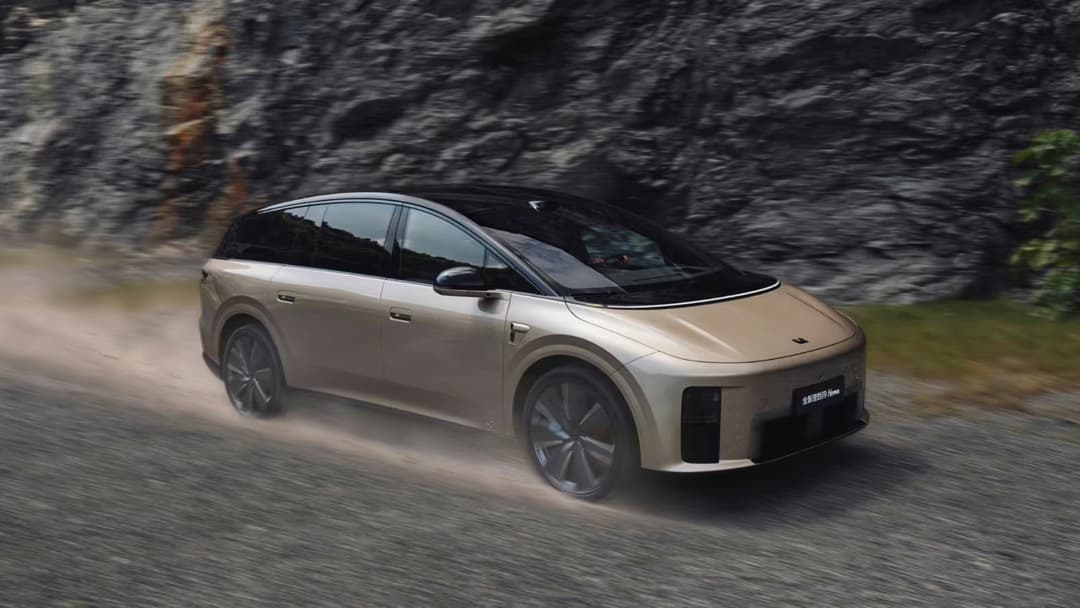
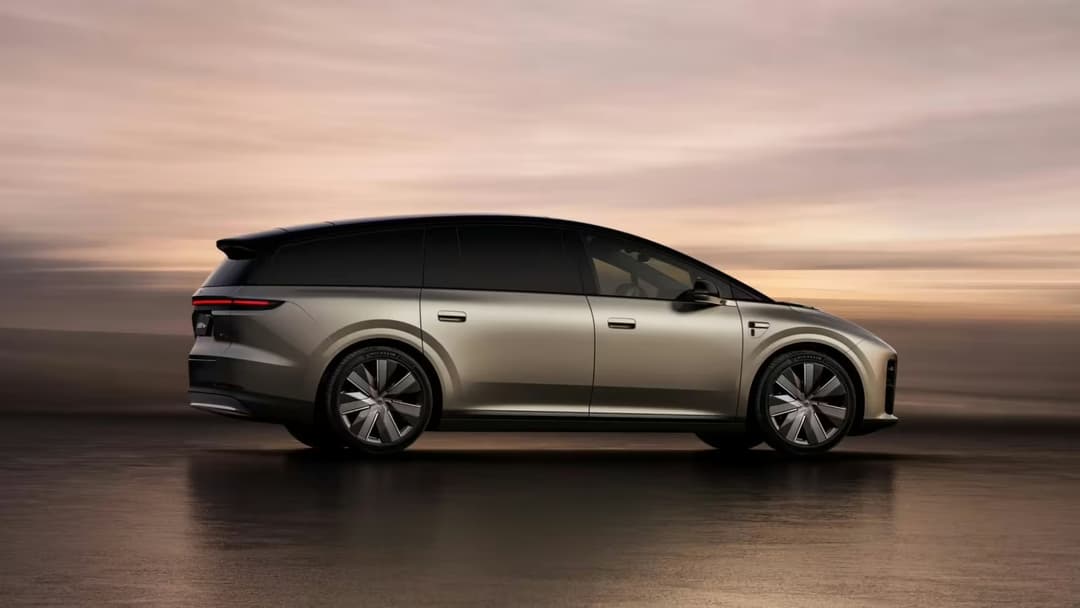
Gilevich does not hide his opinion of the exterior. In his words, the more he dislikes the design, the more outstanding the car is, and he explains it as a deliberate trade: the tall body and the long, almost flat roofline are the price of record interior space for a car of this size, and he says he understands why Li Auto did it. The i9 reads as a large wagon or minivan in profile, with a full-width light strip across the nose and a claimed drag coefficient of 0.215 Cd. Li Auto offers three wheel designs, two in 21 inches and one 22-inch seven-star design, and Gilevich tells buyers that those who like this look are very happy people, because the shape is what gives the car its top specifications for the money.
Inside, he says the dashboard and seats are practically the same design as the L-series, with the flagship gaining a suede-like top surface and a large single screen in place of the old twin displays. The seats are diamond-quilted in a soft synthetic leather, the roof lining is fully covered, and the 29-speaker, 9.3.6-channel sound system is rated by CarNewsChina and Autohome at 4,960 W peak. Gilevich says the touch quality is at the level you would expect for the money almost everywhere he puts his hand, apart from the steering wheel and the bare plastic piece he flags.
Technology & Features
The 29-inch 6K panoramic display and a 21-inch 4K rear screen that slides 120 mm fore and aft run on Qualcomm's Snapdragon 8797 cockpit chip, according to TechNode and Autohome. Gilevich calls the picture on the large screen "absolute top" and says the rear ceiling screen is just as good, and the central screen also carries the climate and seat controls for the rear rows. He points out that the small display at the back has gained widgets, that Apple CarPlay has been added and that the camera mirror shows a clear image. Li Auto's launch coverage also lists a 10-litre electric fridge that cools and heats, and Gilevich notes that there is a fridge below the console.
Safety & ADAS
Li Auto says the i9 has 11 airbags, including a side curtain airbag 3,112 mm long, a 2,000 MPa one-piece door ring and a redundant power supply. Gilevich calls the safety package maximum-grade, quotes a body stiffness of about 50,000 N·m, a number that was not confirmed in the launch coverage read for this article, and recalls last year's argument after the Li i8 was crashed head-on into a Dongfeng truck, which Dongfeng called staged. He found a real accident instead, an i6 that hit a concrete mixer head-on, and shows it as evidence of the structure, though it is not a crash-test rating and the i9 itself has no independent rating yet.
For driver assistance, CnEVPost reports that the standard car has one Mach M100 chip and a forward-facing lidar, and that a CNY 30,000 option (about $4,470) called the embodied-intelligence package adds a second chip, taking the total to 1,280 TOPS, and three further lidars, for four in all, running Li Auto's Mach VLA model. Gilevich did not test the system on camera, so its performance is not covered here.
| ADAS LEVEL | Assisted driving on Li Auto's Mach M100 chip (not tested in the video) |
|---|---|
| ADAS FEATURES | One forward lidar standard; optional package with a second Mach M100 chip (1,280 TOPS total) and four lidars; Mach VLA driving model; 11 airbags |
Available Versions
| VERSION | POWER | TORQUE | 0-100 | TOP SPEED | DRIVETRAIN | BATTERY | EV RANGE | COMBINED RANGE | PRICE | KEY DIFFERENCES |
|---|---|---|---|---|---|---|---|---|---|---|
| Home (BEV) | 536 hp | 660 Nm | 4.9s | 200 km/h | AWD | 101 kWh | 705 km | — | CNY 369,800 ($55,150) | Only version at launch; six seats, air suspension, rear steering and steer-by-wire standard |
Pricing & Availability
Li Auto launched the i9 in China on 16 September 2026 at a unified national retail price of CNY 369,800 (about $55,150 at 6.7048 yuan to the dollar), with deliveries starting the same week, according to the company's launch release. The Home version is the only one offered, and the price is about CNY 30,000, or 8.8%, above the Li i8 AWD at CNY 339,800, per CnEVPost. The driver-assistance package is a separate CNY 30,000 option on CnEVPost's account. Outlets quote different dollar figures because they use different exchange rates, from about $54,400 to $55,100, and Gilevich's "$55 thousand" lines up with the ECB-based figure used here. All prices are Chinese retail prices in yuan and are not export prices.
The i9 is sold in China only. Li Auto has entered Egypt, Kazakhstan and Azerbaijan and signed distributors in Saudi Arabia and the UAE for its L-series range-extender models, but it has not announced an i9 export version, and the launch coverage read for this article mentions none, so availability outside China is unconfirmed as of October 2026.
How It Compares
The rival figures are Chinese launch specifications and prices from CarNewsChina and from our own coverage of each model, converted at the same 6.7048 yuan to the dollar, so model years and trims differ from the i9's; the XPENG G9 card is the top 680 4WD Max trim of a lineup priced from CNY 248,800 to 278,800. On these numbers the i9 does not win on specifications. All three rivals have more power than its 400 kW (536 hp): the G9 gives 423 kW (567 hp) and 680 km for about $13,600 less, the ZEEKR 7X Ultra AWD 585 kW (784 hp) and 715 km for about $14,900 less, and the Xiaomi YU7 Max 508 kW (681 hp) and 760 km for about $6,000 less. Only the G9 has a shorter CLTC rating than the i9's 705 km. What the extra money buys is size and layout: all three rivals are five-seat cars in their standard layout, so the i9's six-seat cabin with an office-style second row and a bracket-mounted table, the same idea Gilevich showed in his Xiaomi review, is something the price table does not capture.
- Gilevich says the i9 has record cabin space for a 5.2 m car, with about a fist of room ahead of his knee in the slid-back second row
- Zero-gravity second-row seats with an office layout, a ceiling screen, a table, a fridge and a 29-speaker sound system in a single Home version at CNY 369,800 (about $55,150)
- 536 hp, 4.9 s to 100 km/h, a 705 km CLTC rating and a 5C battery that Li Auto says adds up to 500 km in 10 minutes
- Gilevich dislikes the exterior design and finds bare plastic low in the rear cabin and an ordinary leather steering wheel rim on a flagship
- Gilevich found the ride slightly firmer than the Li i8 and the Mercedes EQS, not the softer car he had hoped for
- Li Auto has not published a boot volume, and the optional driver-assistance package with the extra lidars costs about $4,470 more
Gilevich's verdict is that the i9 is a rational car wrapped in an unloved shape, and the published figures support part of the rational half: a six-seat BEV with 536 hp, a 5C battery and a long list of rear-cabin features for CNY 369,800, although the three rivals above offer more power for less money in five-seat bodies. His complaints about the plastic and the steering wheel are small. The ride is his one surprise: he speculated that the i9 might be the softest crossover he had tested and then found it slightly firmer than the i8 and the Mercedes EQS, which he guesses is Li Auto's 2026 tuning, and since his ride and noise remarks are one reviewer's impressions, buyers who put softness first should test drive it. Buyers who want a mobile lounge for a family or for chauffeured travel should put it at the top of the list, and buyers who care first about looks or price may prefer the XPENG G9 or ZEEKR 7X.