

Hyundai has launched the 2027 Palisade High Roof in South Korea, a new flagship variant that raises the SUV's roofline by 240mm while still clearing standard underground parking structures. Unveiled on August 25, 2026 alongside two other new trims, Black Ink and XRT, the High Roof is billed as Korea's first SUV-based "high-roof" model from a domestic automaker, borrowing the concept from Hyundai Motor Group's own Kia Carnival Hi-Limousine minivan. The headline story for this generation is the powertrain lineup that comes with it: alongside the familiar gasoline turbo engine, Hyundai now offers the High Roof with its 2.5L T-GDI self-charging hybrid system, producing a combined 329 hp (245 kW / 334 PS). Pricing for the Palisade High Roof Hybrid starts at roughly $56,700 in Korea, climbing to about $59,000 for the top 7-seat VIP configuration. The three new trims target buyers who want a Palisade with more presence, more cabin theater, and now, more efficiency than the standard V6 or turbo-gas versions.
Performance & Specs
The Palisade Hybrid pairs a turbocharged 2.5-liter four-cylinder engine with two electric motors: a 13 kW (17 hp) starter-generator motor and a 54 kW (72 hp) drive motor, backed by a small 1.65 kWh battery pack. The gasoline engine alone makes 258-262 hp depending on market certification (Korea's emissions certification for the High Roof Hybrid lists 262 hp), while the combined system output is rated at 329 hp (245 kW / 334 PS) and 339 lb-ft (460 Nm) of torque, routed through a conventional 6-speed automatic rather than a CVT or dual-clutch unit. Both FWD and AWD layouts are offered. Hyundai's own published figure for the standard-weight Palisade Hybrid is a 7.3-second 0-100 km/h run, but the High Roof body adds roughly 155-170kg of curb weight for its reinforced roof structure, glass, and extra equipment (2,250-2,270kg vs 2,080-2,115kg for the standard Hybrid), so real-world acceleration will be a touch slower; Hyundai has not published a separate certified figure for the High Roof body specifically as of this writing.

| Powertrain | 2.5L T-GDI self-charging hybrid |
|---|---|
| Power | 245 kW (334 PS / 329 hp) combined |
| Torque | 460 Nm (339 lb-ft) |
| 0–100 km/h | ~7.3s (standard-weight rating) |
| Battery | 1.65 kWh (self-charging, no plug) |
| Transmission | 6-speed automatic |
| POWERTRAIN TYPE | Self-charging hybrid (HEV) — 2.5L T-GDI + dual electric motors |
|---|---|
| HORSEPOWER | 329 hp combined (245 kW / 334 PS); engine alone 258-262 hp |
| TORQUE | 460 Nm (339 lb-ft) |
| ACCELERATION | ~7.3s 0-100 km/h (standard-weight Hybrid rating; High Roof not separately rated) |
| DRIVETRAIN | FWD or AWD |
| BATTERY | 1.65 kWh (self-charging) |
| TRANSMISSION | 6-speed automatic |
Dimensions & Practicality

| Length | ~5,065 mm |
|---|---|
| Width | 1,980 mm |
| Height (High Roof) | 2,005 mm |
| Wheelbase | 2,970 mm |
| Roof raised by | 240 mm vs. standard Palisade |
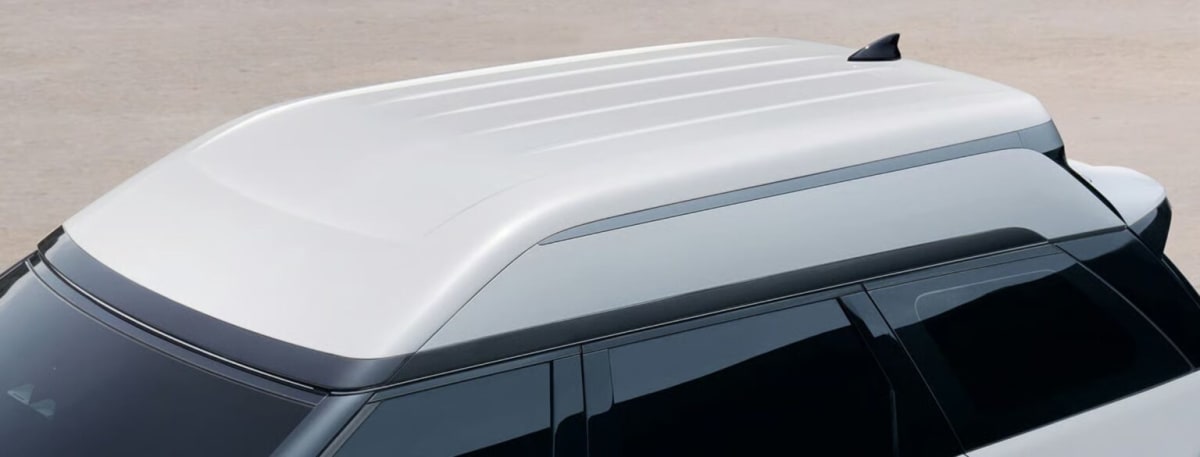
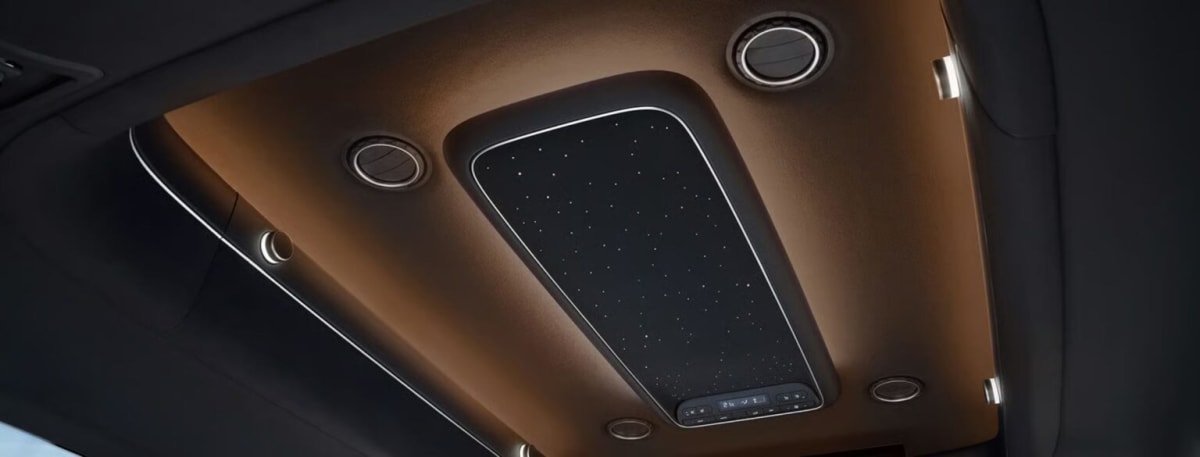
The party trick of the High Roof is that its 240mm-taller roofline still keeps the SUV under 2,005mm overall, which Hyundai says is short enough to clear typical Korean underground parking garages. Inside, that extra height goes almost entirely into headroom for the second and third rows rather than length or width, which are unchanged from the standard Palisade's 2,970mm wheelbase. The custom roof structure houses pop-up LED reading lights, dedicated climate vents, and a climate control panel for rear passengers, on top of the "Starry Sky" ambient headliner. Cargo volume behind the third row on the standard Palisade is about 541 liters (19.1 cu ft), rising to roughly 1,311 liters (46.3 cu ft) with the third row folded and 2,455 liters (86.7 cu ft) with both rear rows down; Hyundai has not published a separately measured cargo figure for the High Roof body, but since the change is purely vertical, load-floor capacity should track closely with the standard model.
| LENGTH | ~5,065 mm |
|---|---|
| WIDTH | 1,980 mm |
| HEIGHT | 2,005 mm (High Roof) |
| WHEELBASE | 2,970 mm |
| SEATING | 7 or 9 seats, 3 rows |
| CARGO VOLUME | ~541 L behind 3rd row / ~2,455 L max (standard Palisade figures) |
Charging & Battery
The Palisade High Roof Hybrid is a conventional, self-charging hybrid — there is no plug and no external charging of any kind. The 1.65 kWh battery is topped up exclusively through regenerative braking and the engine's integrated starter-generator motor while driving, the same setup used on the standard Palisade Hybrid launched in 2025. That keeps ownership simple (no home wallbox, no public charger hunting) at the cost of any pure-electric driving range, which this powertrain does not offer. Hyundai's own figures for the lighter standard-weight Hybrid put combined fuel economy at 14.1 km/L (about 7.1 L/100km) in FWD form and 12.5 km/L (about 8.0 L/100km) with AWD, both on 18-inch wheels; the High Roof's added weight and standard 21-inch wheels will likely push both figures down somewhat, though Hyundai has not certified a separate number for this body style yet.
| BATTERY | 1.65 kWh hybrid battery (not plug-in) |
|---|---|
| EXTERNAL CHARGING | None — self-charging hybrid only |
| FUEL ECONOMY (COMBINED) | 14.1 km/L FWD / 12.5 km/L AWD (standard-weight Hybrid rating) |
Design & Interior
Visually, the High Roof keeps the standard 2027 Palisade's vertical LED daytime running lights and full-width grille up front, but its silhouette is unmistakable from the side: a body-colored roof extension with aluminum-style inserts sits above the beltline like a raised camper shell, paired with blacked-out window surrounds and standard 21-inch alloy wheels wrapped in Pirelli tires. Inside, the cabin leans hard into a chauffeur-driven, VIP-shuttle feel. The signature touch is the "Starry Sky" headliner, a fiber-optic starfield pattern set into the rear roof panel with ambient lighting around its edges, evoking the kind of glass-roof theater usually reserved for far pricier limousines. The optional VIP Package 2 goes further, adding a second-row center console with dual wireless phone charging pads, temperature-controlled cup holders, an integrated air purifier with UV-C sterilization, plush floor mats, and second-row massaging seats (also available on the Black Ink trim). Front-seat materials and layout carry over from the standard Palisade Calligraphy, with the cognac-and-black leather scheme seen in Hyundai's launch photography and a curved dual-display dashboard.
Technology & Features
The centerpiece tech feature is a 21.4-inch display built into the rear roof structure, large enough to run a proper streaming home screen with Netflix, Disney+, YouTube, Wavve, Tving, SPOTV NOW and LG Channels apps, plus screen mirroring from a phone. It's paired with pop-up LED reading lights and dedicated rear climate controls integrated into the custom roof liner. Up front, the Preview Electronically Controlled Suspension reads the road ahead using the front camera and navigation data, adjusting damping before the car reaches bumps or corners rather than reacting after the fact — a feature Hyundai brought over from its more premium Genesis-adjacent chassis tech. The 2027 model year also standardizes a panoramic curved display across the wider Palisade lineup and adds a more sophisticated ADAS suite even on the entry-level Exclusive trim, a meaningful equipment bump versus the outgoing model year.
Safety & ADAS
Hyundai's SmartSense driver-assist suite is standard across the 2027 Palisade range, and the High Roof gains Highway Driving Assist 2 (HDA 2) with navigation-based smart cruise control as part of the model year's safety upgrade. HDA 2 manages following distance and speed on curved highways and can execute automatic lane changes when the driver holds the wheel and signals. Forward collision-avoidance assist is also standard. Hyundai frames the intelligent safety package as base equipment across the new High Roof, Black Ink, and XRT trims rather than an optional extra reserved for the flagship.
| ADAS LEVEL | L2+ (Hyundai SmartSense) |
|---|---|
| ADAS FEATURES | HDA 2, navigation-based Smart Cruise Control, Forward Collision-Avoidance Assist, standard across 2027 trims |
Available Versions
| VERSION | POWER | TORQUE | DRIVETRAIN | BATTERY | PRICE | KEY DIFFERENCES |
|---|---|---|---|---|---|---|
| Black Ink Hybrid | 329 hp | 460 Nm | FWD / AWD | 1.65 kWh | $46,000 | Calligraphy-based, stealth black exterior accents and 21-in wheels, Preview ECS, second-row massaging seats |
| High Roof Hybrid (9-seat) | 329 hp | 460 Nm | FWD / AWD | 1.65 kWh | $56,700 | 240mm-taller roof, 21.4-in rear screen, Starry Sky headliner, 21-in wheels, Preview ECS |
| High Roof Hybrid (7-seat VIP) | 329 hp | 460 Nm | FWD / AWD | 1.65 kWh | $59,000 | Same High Roof cabin with 2nd-row captain's-chair VIP layout; top of the 2027 Palisade range |
Pricing & Availability
The 2027 Palisade lineup went on sale in South Korea on August 25, 2026, immediately across gasoline and hybrid powertrains. Within the hybrid range, the entry Exclusive trim starts around $36,700, rising through the new Black Ink Hybrid at roughly $46,000, up to the High Roof Hybrid, which starts near $56,700 for the 9-seat layout and tops out around $59,000 for the 7-seat VIP configuration — making the High Roof Hybrid 7-seat the single most expensive Palisade Hyundai has ever sold in Korea. The gasoline-powered High Roof, Black Ink, and XRT trims are also available (from roughly $37,700 for XRT gasoline up to about $52,400-$54,600 for High Roof gasoline), but as of this writing they're outside the hybrid-only scope of this article. All three new trims are currently confirmed for the Korean domestic market only.
How It Compares
The Palisade High Roof Hybrid doesn't have a like-for-like same-segment rival on freshmotors.net — our catalog skews heavily toward Chinese EVs, PHEVs and EREVs, and there's no other conventional-hybrid three-row family SUV in the database yet. But it's worth a value contrast: at roughly the same $50,000-$59,000 money, a 2023 Li Auto L8 offers a similarly premium three-row EREV cabin with 449 hp and a much longer 1,315km combined range, while a 2026 Aito M8 sits almost dead-even on price with more electrified drivetrain hardware for similar power. The 2026 Denza N9 undercuts the Palisade's top price while delivering nearly triple the horsepower as a PHEV. None of these are direct cross-shops for a Korean-market buyer — the Palisade's real-world rivals are the Kia Carnival Hi-Limousine and Toyota's hybrid three-row SUVs — but the contrast shows how much electrified performance the same budget buys from China's newest three-row SUVs.
- Genuinely useful 240mm roof gain that still clears standard underground parking, unlike a body-on-frame lift kit
- 329 hp hybrid system with no plug to manage and real fuel-economy gains over the gasoline Palisade
- Rear cabin tech (21.4-in screen, Starry Sky headliner, massaging VIP seats) rivals far pricier chauffeur-driven SUVs
- ~155-170kg heavier than the standard Hybrid, with no separately published 0-100 time or fuel economy figure yet for the High Roof body
- Korea-exclusive for now, with no confirmed export plans for High Roof, Black Ink, or XRT
The Palisade High Roof Hybrid is a smart, narrow-purpose flagship: it solves the real problem of wanting minivan-grade headroom in an SUV body that still fits in a normal parking structure, and it does so with a genuinely stronger, more efficient hybrid powertrain rather than just a taller roof bolted onto the old gas-only formula. At $56,700-$59,000 it's priced like a near-luxury three-row SUV, and the interior tech backs that up. The catch is that Hyundai hasn't yet proven out the High Roof's real-world efficiency or performance separately from the lighter standard Hybrid, and for now this remains a Korea-only special. For Korean buyers who want the most spacious, most tech-loaded Palisade money can buy, this is it; everyone else will need to wait and see if Hyundai brings any of this west.