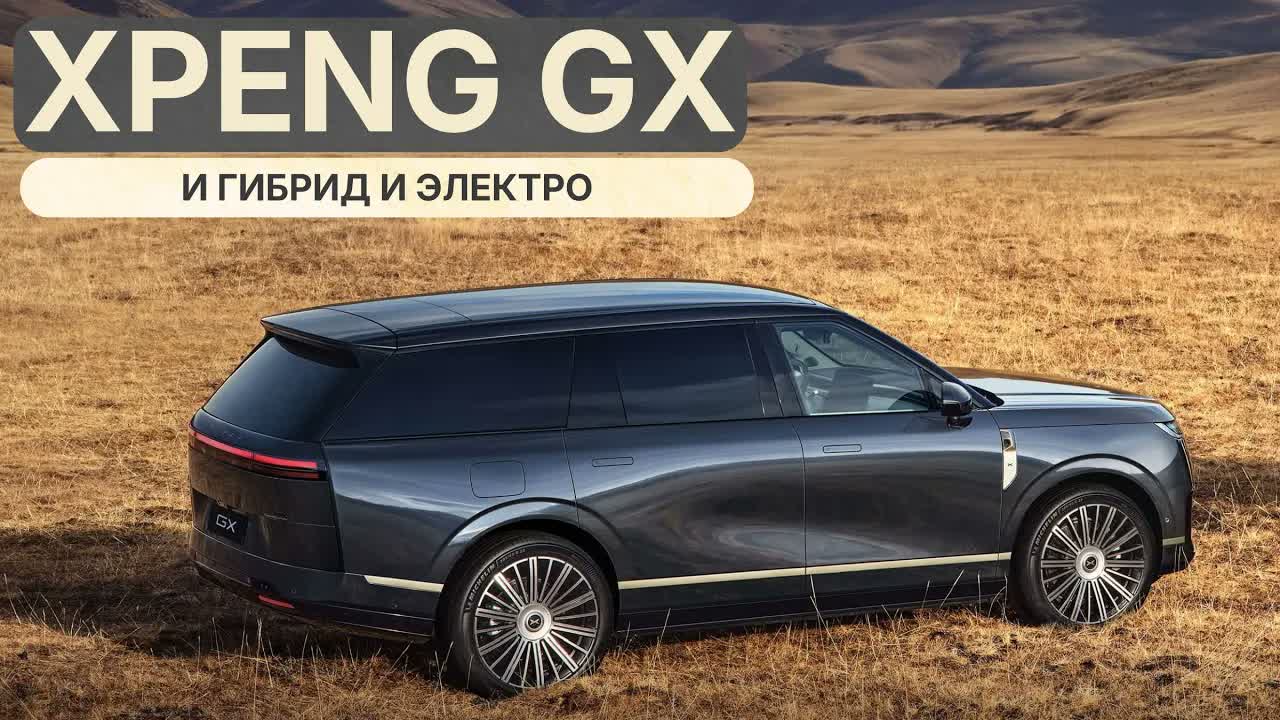
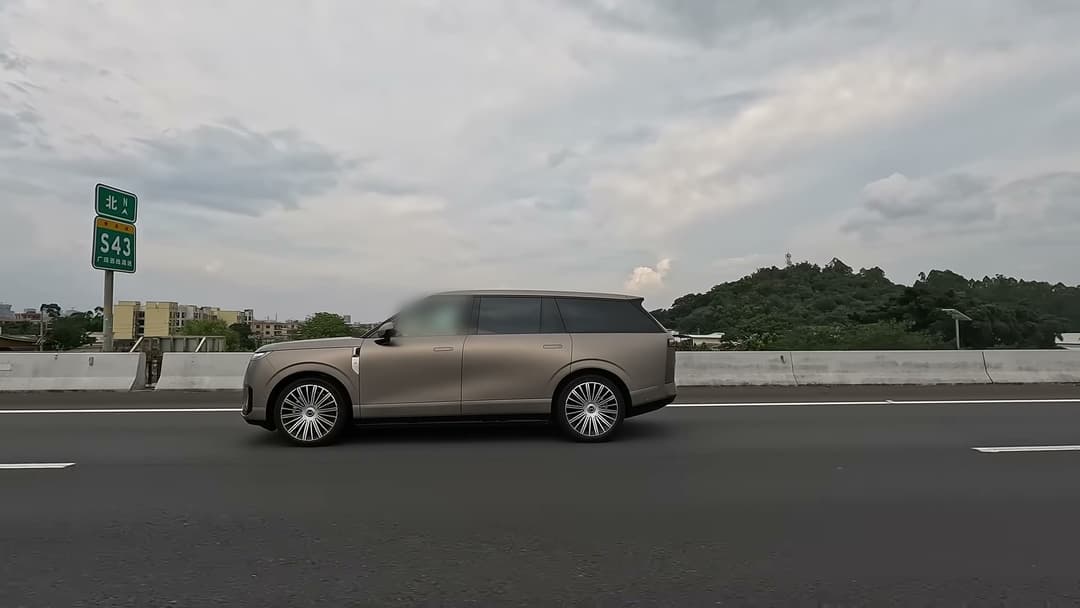
The XPeng GX (Xiaopeng GX) is the brand's first full-size, three-row flagship: a 5,265 mm, six-seat SUV that went on sale in China on 20 May 2026 as either a battery-electric car (BEV) or an extended-range hybrid (EREV). Partner reviewer Sergey Gilevich spent a day with a pure-electric GX, the 110 kWh Ultra Flagship, in Guangzhou, driving it through the old city, on motorways and to a 360 kW charger, and his road test is the basis for this report. The headline is not the range but the steering: on the Ultra Flagship trims, the only ones that have it, the GX uses a front steer-by-wire system with no mechanical link to the wheels, and Gilevich, who drove that car, says it feels like a BMW 7 Series. XPeng's release says rear-wheel steering is standard on every trim, though the configurator lists it only on the Flagship. The price is the second surprise. The official list runs from CNY 279,800 (~$42,000) to CNY 359,800 (~$54,000), far below the CNY 399,800 (~$60,000) that was floated at the April pre-sale. Below, his findings are labelled as his, and the figures come from XPeng's own pages and independent outlets.
Performance & Specs
Buyers choose between two powertrain families on one body. The BEV comes as a rear-drive car with a 270 kW (367 PS / 362 hp) motor and a 91.9 kWh LFP battery rated at 665 km CLTC, or as the all-wheel-drive Ultra Flagship, which adds a 160 kW front motor for 430 kW (585 PS / 577 hp), a 110 kWh ternary battery and 750 km CLTC. The EREV pairs a 1.5-litre turbocharged petrol engine, used only as a generator, with a 160 kW front and 210 kW rear motor for 370 kW (503 PS / 496 hp), 695 Nm and a 4.98-second 0-100 km/h time. Its 63.3 kWh LFP battery gives 430 km CLTC on electricity alone and 1,585 km combined, and the top speed is 200 km/h. Gilevich quotes 4.7 seconds for the 110 kWh BEV, which matches third-party spec tables. XPeng publishes no torque figure for the BEV trims, so those cells stay empty in the table below.

| Powertrain | Dual-motor AWD BEV (Ultra Flagship 750) |
|---|---|
| Power | 430 kW (585 PS / 577 hp) |
| 0–100 km/h | 4.7 s |
| Battery | 110 kWh NMC |
| Range | 750 km CLTC |
| EREV | 370 kW (503 PS / 496 hp), 63.3 kWh, 1,585 km |
| POWERTRAIN TYPE | BEV (RWD or AWD) or EREV (AWD) |
|---|---|
| HORSEPOWER | 270 kW (367 PS / 362 hp) RWD BEV / 430 kW (585 PS / 577 hp) AWD BEV / 370 kW (503 PS / 496 hp) EREV |
| TORQUE | 695 Nm (EREV system); not published for the BEV |
| ACCELERATION | 4.98 s (EREV) / 4.7 s (AWD BEV) 0–100 km/h |
| TOP SPEED | 200 km/h (EREV) |
| DRIVETRAIN | RWD (665 BEV trims), AWD (750 BEV and all EREV trims) |
| BATTERY | 91.9 kWh LFP / 110 kWh NMC (BEV), 63.3 kWh LFP (EREV) |
| ELECTRIC RANGE | 665 or 750 km (BEV, CLTC) / 430 km (EREV, CLTC) |
| COMBINED RANGE | 1,585 km (EREV, CLTC) |
Driving Impressions
Gilevich drove the Ultra Flagship BEV for about six hours and called its steer-by-wire the standout. With no physical link, XPeng tunes the steering entirely in software, and he describes an almost perfect, highly informative joystick, with no difference he could feel from a BMW 7 Series, at a price where he did not expect it. Combined with the rear-wheel steering, it makes the long SUV easy to place in town. He found the ride neither hard nor soft, similar to a long-wheelbase BMW X5, and did not tire of it even on Guangzhou's sunken manhole covers and bridge joints, despite 40-series tyres on his test car. Structural noise from the suspension was lower than in a 2025 Li Auto L9, he says. Handling is better than average up to about 80 km/h for the size, but above 130 km/h it begins to wander, as the 2025 Li L9 Ultra did, and he notes that the GX is much cheaper than that car. Regeneration is strong, and power does not fall away even with a low battery. He did not test the driver-assistance system.
Dimensions & Practicality

| Length | 5,265 mm |
|---|---|
| Width | 1,999 mm |
| Height | 1,800 mm |
| Wheelbase | 3,115 mm |
| Turning radius | 5.4 m |
At 5,265 mm long on a 3,115 mm wheelbase, the GX is a true full-size flagship, yet the 5.4 m turning radius lets it fit a Guangzhou car park. The cabin is a six-seat 2+2+2 layout. The second row has captain's chairs with leg rests and massage, and the right-hand seat adds a zero-gravity mode. In the third row headroom and seat-back angle suited the reviewer, but knee room was tight for a 187 cm adult. Third-row seats are heated, have a massage function and fold electrically into a flat load floor. Cargo space is 673 litres with all six seats up and 1,748 litres with the third row folded, and the BEV also has a 109-litre front trunk that the EREV lacks.
| LENGTH | 5,265 mm |
|---|---|
| WIDTH | 1,999 mm |
| HEIGHT | 1,800 mm |
| WHEELBASE | 3,115 mm |
| SEATING | 6 seats (2+2+2) |
| CARGO VOLUME | 673 L (1,748 L with third row folded) |
| FRUNK | 109 L (BEV only) |
Charging & Battery
The GX uses LFP batteries in the 91.9 kWh BEV and the EREV and a ternary (NMC) pack in the 110 kWh car; CALB is reported as the supplier, but XPeng does not name one. XPeng quotes 5C charging for the AWD BEV that adds 525 km in 12 minutes, and lists 10 to 80 percent in at least 11.7 minutes on the configurator. Gilevich tested the big-battery BEV at an XPeng 360 kW liquid-cooled charger, starting at 15 percent. The screen reached 95 percent after about 24 minutes. He compares it with the BYD Datang he reviewed earlier, which he says charged about 2.5 times faster, in roughly 9 to 10 minutes. That is his own comparison, made on a larger battery, not a lab test. The EREV has a 60-litre tank and accepts 92-octane petrol.
| BATTERY | 91.9 kWh LFP / 110 kWh NMC (BEV), 63.3 kWh LFP (EREV) |
|---|---|
| ARCHITECTURE | 800V, 5C |
| DC FAST CHARGING | 360 kW charger used in the test |
| DC 10-80% TIME | 11.7 min or more (XPeng configurator) |
Design & Interior
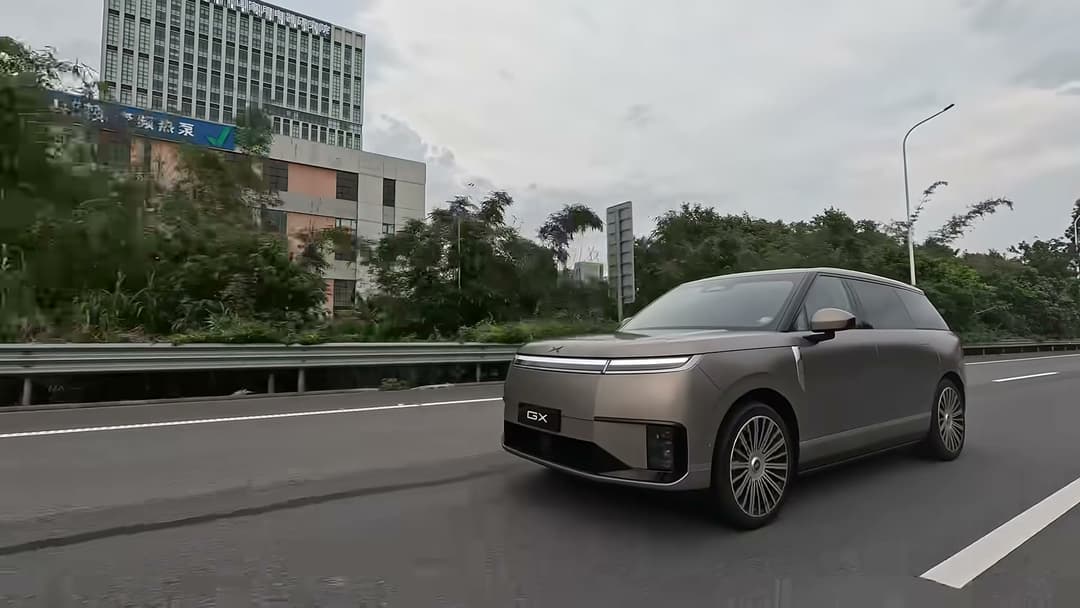
The GX has a boxy, upright shape in the Range Rover mould, with a light bar across the nose and a full-width tail-light bar. Inside, XPeng has spent the budget carefully. The steering wheel is wrapped in a notably smooth, cool leather, and the seats are pleasant. Almost the whole cabin is trimmed in soft material all the way down to the floor, and the headliner is Alcantara-style. Gilevich is frank about the level of the dashboard top and door cards: he puts them at about the standard of a Geely Galaxy M9 or a BMW X3, simpler than the leather elsewhere, and says the screens are not top-tier panels. He also dislikes the dotted ambient lighting that shines through the door leather. He sums up the equipment level as premium by Chinese standards and ultra-luxury by European ones.
Technology & ADAS
The centre console holds a wide touchscreen, a driver display and a head-up display with navigation, which the reviewer rates as average in picture quality. In the rear there is a dedicated seat-massage and entertainment screen, and the reviewer's car had a 33-speaker sound system and a roof glass that switches between clear and opaque at the touch of a button. Driver assistance runs on XPeng's own Turing AI chips, one in the Max trim (750 TOPS), two in the Ultra SE (1,500 TOPS) and three in the Ultra and Ultra Flagship (2,250 TOPS). XPeng's release credits its second-generation VLA model, which Chinese outlets call XNGP VLA 2.0; the system is reported to rely on cameras, and the configurator lists no LiDAR. Gilevich said he is not testing autonomous driving in his reviews for now, so this test says nothing about how well it works.
| ADAS LEVEL | XNGP with second-generation VLA (not tested by the reviewer) |
|---|---|
| ADAS FEATURES | Turing AI chips (750 to 2,250 TOPS), reported camera-based with no LiDAR listed, rear camera image on the head-up display |
Available Versions
| VERSION | POWER | TORQUE | 0-100 | TOP SPEED | DRIVETRAIN | BATTERY | EV RANGE | COMBINED RANGE | PRICE | KEY DIFFERENCES |
|---|---|---|---|---|---|---|---|---|---|---|
| BEV Max 665 | 362 hp | — | — | — | RWD | 91.9 kWh | 665 km | — | CNY 279,800 (~$42,000) | One Turing chip (750 TOPS); entry trim |
| BEV Ultra SE 665 | 362 hp | — | — | — | RWD | 91.9 kWh | 665 km | — | CNY 299,800 (~$45,000) | Two Turing chips (1,500 TOPS) |
| BEV Ultra 665 | 362 hp | — | — | — | RWD | 91.9 kWh | 665 km | — | CNY 319,800 (~$48,000) | Three Turing chips (2,250 TOPS) |
| BEV Ultra Flagship 750 | 577 hp | — | 4.7s | — | AWD | 110 kWh | 750 km | — | CNY 359,800 (~$54,000) | Dual motor, three Turing chips, steer-by-wire; the type Gilevich tested |
| EREV Max 1585 | 496 hp | 695 Nm | 4.98s | 200 km/h | AWD | 63.3 kWh | 430 km | 1,585 km | CNY 289,800 (~$43,500) | One Turing chip (750 TOPS); entry EREV |
| EREV Ultra SE 1585 | 496 hp | 695 Nm | 4.98s | 200 km/h | AWD | 63.3 kWh | 430 km | 1,585 km | CNY 309,800 (~$46,500) | Two Turing chips (1,500 TOPS) |
| EREV Ultra 1585 | 496 hp | 695 Nm | 4.98s | 200 km/h | AWD | 63.3 kWh | 430 km | 1,585 km | CNY 329,800 (~$49,500) | Three Turing chips (2,250 TOPS) |
| EREV Ultra Flagship 1585 | 496 hp | 695 Nm | 4.98s | 200 km/h | AWD | 63.3 kWh | 430 km | 1,585 km | CNY 359,800 (~$54,000) | Top EREV, three Turing chips, steer-by-wire (per configurator) |
Pricing & Availability
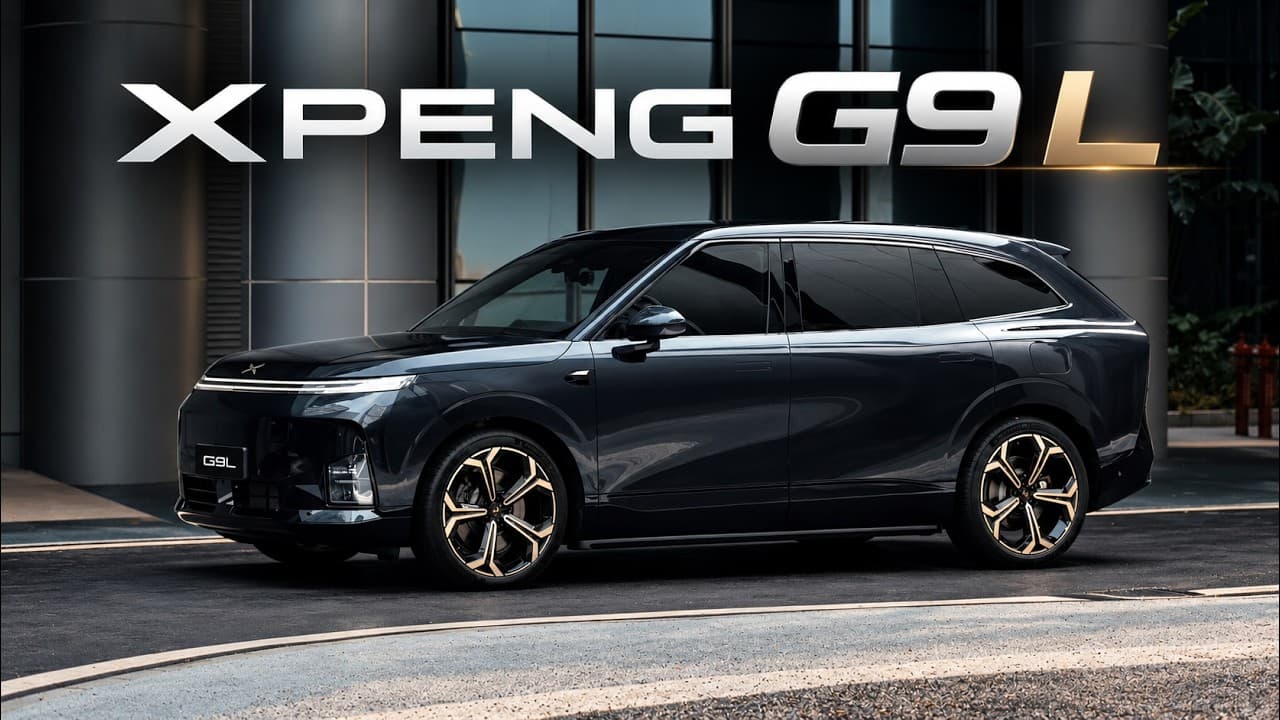
The GX went on sale in China on 20 May 2026 with eight trims, four BEV and four EREV. XPeng's official price list runs from CNY 279,800 (~$42,000) for the entry BEV to CNY 359,800 (~$54,000) for the two flagships. At launch XPeng also advertised limited-time prices CNY 10,000 lower, from CNY 269,800 (~$40,500), for orders placed by 30 June; reports in August still quoted that figure, so check with a dealer whether it still applies. The April pre-sale price had been CNY 399,800 (~$60,000). XPeng reported 24,863 firm orders in the first 12 hours and says cumulative deliveries passed 30,000 by 22 October, with 7,224 delivered in September. Overseas, XPeng has been shipping the GX to the Middle East and Africa since August, with nearly 4,000 Middle East orders reported in October but no price or launch date announced. XPeng launched the G9L in Europe at the Paris Motor Show on 12 October, but has not announced the GX for Europe.
How It Compares
The GX's strongest argument is price against the six-seat flagships already in our catalog. The Li Auto L9 Ultra costs about $27,000 more at CNY 459,800 (~$69,000), and the Denza N9 starts about $10,500 higher at CNY 350,000 (~$52,500) but has far more power at 912 hp. Gilevich's own benchmark was the BYD Datang, which our catalog lists from $37,000: he found it softer, quicker to charge and steadier above 130 km/h. What the GX offers that those cars do not, in his view, is the steer-by-wire steering paired with rear steering, particularly in town.
- On the Ultra Flagship, steer-by-wire plus rear steering make a 5.3 m SUV easy to place and, per the reviewer, feel like a BMW 7 Series
- BEV up to 750 km or EREV with 1,585 km combined, on one six-seat body
- Firm but composed air-suspension ride with low structural noise for the money
- Official list price starts at CNY 279,800 (~$42,000)
- Starts to wander above 130 km/h, and rear-seat knee room is tight in the third row
- Dashboard top and door cards are mid-tier (Galaxy M9 or BMW X3 level)
- Charges much slower than a BYD Datang in the reviewer's comparison
- Driver assistance untested by the reviewer; steer-by-wire is Flagship-only and the GX is not yet confirmed for Europe
The XPeng GX is one of the most interesting flagships to come out of China this year. On the Ultra Flagship, the steer-by-wire front axle and rear steering make a five-metre, six-seat SUV feel agile, the air suspension gives a firm but comfortable ride, and XPeng offers both a 750 km BEV and a 1,585 km EREV from CNY 279,800, though steer-by-wire is reserved for the CNY 359,800 flagship. The compromises are honest: it wanders a little at motorway speed, the dash materials are simpler than the leather elsewhere, and BYD's flagship out-charges it. For buyers who want chassis technology and space for the money, it is hard to ignore.