

BYD has updated its smallest electric SUV in China. The 2027 BYD Yuan UP Feichi Edition went on sale on 17 September 2026 with five trims, a new top battery and a reworked cabin. The headline change is a 51.13 kWh LFP Blade battery that lifts the CLTC range to 501 km, while the 32 kWh (301 km) and 45.12 kWh (401 km) packs stay in the line-up. Every version still uses one front-mounted motor rated at 70 kW (95 PS, about 94 hp), so this is a city-and-commuter electric crossover rather than a performance car. Official prices run from ¥74,800 for the 301 KM Leading to ¥104,800 for the 501 KM Excellence, and a limited-time ¥5,000 “super replacement” subsidy brings that to ¥69,800-99,800 for buyers who qualify. Converted at about ¥6.8 to the US dollar, the range costs roughly $11,000 to $15,400, or $10,300 to $14,700 with the subsidy. The same car is sold abroad as the BYD Atto 2, although export versions use different batteries and motors.
Performance & Specs
The powertrain is unchanged across the five trims: a single permanent-magnet motor driving the front wheels, producing 70 kW (95 PS, about 94 hp) and 180 Nm of torque. BYD builds the car on its e-Platform 3.0 with a Blade battery integrated into the body structure and an eight-in-one electric drive unit. A note on units: PS is the metric horsepower and is about 1.4 percent smaller than the imperial hp, so 95 PS works out at roughly 94 hp, which matches 70 kW multiplied by 1.341. Chinese coverage does not give an official 0-100 km/h time or a top speed for the Feichi Edition, so neither is quoted here. With 94 hp the car is built for efficiency and urban driving, not for outright acceleration.
The real choice is the battery. The 301 KM version uses a 32 kWh pack, the 401 KM versions a 45.12 kWh pack and the new 501 KM versions a 51.13 kWh pack, all LFP. The ranges are CLTC figures, the generous Chinese test cycle, so real-world numbers will be lower, particularly on a motorway or in winter. BYD publishes pack capacity, but not a usable-versus-gross split, so the kWh figures here are the capacities BYD and the press quote. Dividing 51.13 kWh by the 501 km rating gives about 10.2 kWh per 100 km on the CLTC cycle, a plausible figure for a compact, low-power crossover.

| Powertrain | Single-motor FWD BEV |
|---|---|
| Power | 70 kW (95 PS / 94 hp) |
| Torque | 180 Nm |
| 0–100 km/h | Not announced |
| Battery | 51.13 kWh LFP Blade (501 KM versions) |
| Range | 501 km CLTC |
| POWERTRAIN TYPE | Single-motor BEV, front-wheel drive |
|---|---|
| HORSEPOWER | 70 kW (95 PS / 94 hp), all trims |
| TORQUE | 180 Nm |
| ACCELERATION | Not announced |
| TOP SPEED | Not announced |
| DRIVETRAIN | FWD |
| BATTERY | 32 kWh / 45.12 kWh / 51.13 kWh LFP Blade |
| ELECTRIC RANGE | 301 / 401 / 501 km (CLTC) |
| COMBINED RANGE | — (pure BEV) |
Dimensions & Practicality

| Length | 4,310 mm |
|---|---|
| Width | 1,830 mm |
| Height | 1,675 mm |
| Wheelbase | 2,620 mm |
| Cargo | Up to 1,320 L (seats folded) |
At 4,310 mm long, 1,830 mm wide and 1,675 mm tall on a 2,620 mm wheelbase, the Yuan UP sits in the compact-crossover bracket, similar in footprint to cars such as the Hyundai Kona. It seats five, and the rear bench has a centre headrest and its own air vents. With the 4:6 split rear seats folded, Chinese coverage quotes a load volume of up to 1,320 L. BYD's marketing calls the car a near-A-segment trendy electric SUV, which fits a short, tall body built for tight city streets and easy parking. The suspension is a common talking point in the Chinese press, which reports a change from a torsion beam to an independent multi-link rear axle; because only some outlets mention it and BYD's own launch sheet does not list it, treat it as unconfirmed.
| LENGTH | 4,310 mm |
|---|---|
| WIDTH | 1,830 mm |
| HEIGHT | 1,675 mm |
| WHEELBASE | 2,620 mm |
| SEATS | 5 |
| CARGO VOLUME | Up to 1,320 L (seats folded) |
| FRUNK | None |
Charging & Battery
All three batteries use BYD's lithium iron phosphate Blade chemistry. Chinese and international coverage of the launch repeats the same claim for DC fast charging: roughly 30 minutes to go from 30% to 80% of the battery. BYD has not published a peak DC power figure for the Chinese-market car; one outlet that cites BYD's announcement lists 65 kW for the 401 KM and 501 KM versions, and another reports a lower figure, so the peak is treated as unconfirmed here. For comparison, the export-market Atto 2 with a 45 kWh battery is limited to 65 kW DC according to electrive. AC charging at home on a wallbox is the intended daily routine, and BYD's launch package includes a free installation service for a 7 kW home charger, worth ¥1,599, for customers who can install one within two years of delivery.
| BATTERY | 32 kWh (301 km) / 45.12 kWh (401 km) / 51.13 kWh (501 km), LFP Blade, CLTC |
|---|---|
| AC CHARGING | 6.6 kW reported for all trims (single outlet) |
| DC FAST CHARGING | Peak not officially published; 65 kW reported for 401/501 km versions (single outlet) |
| DC 30-80% TIME | About 30 minutes (as reported from BYD's launch information) |
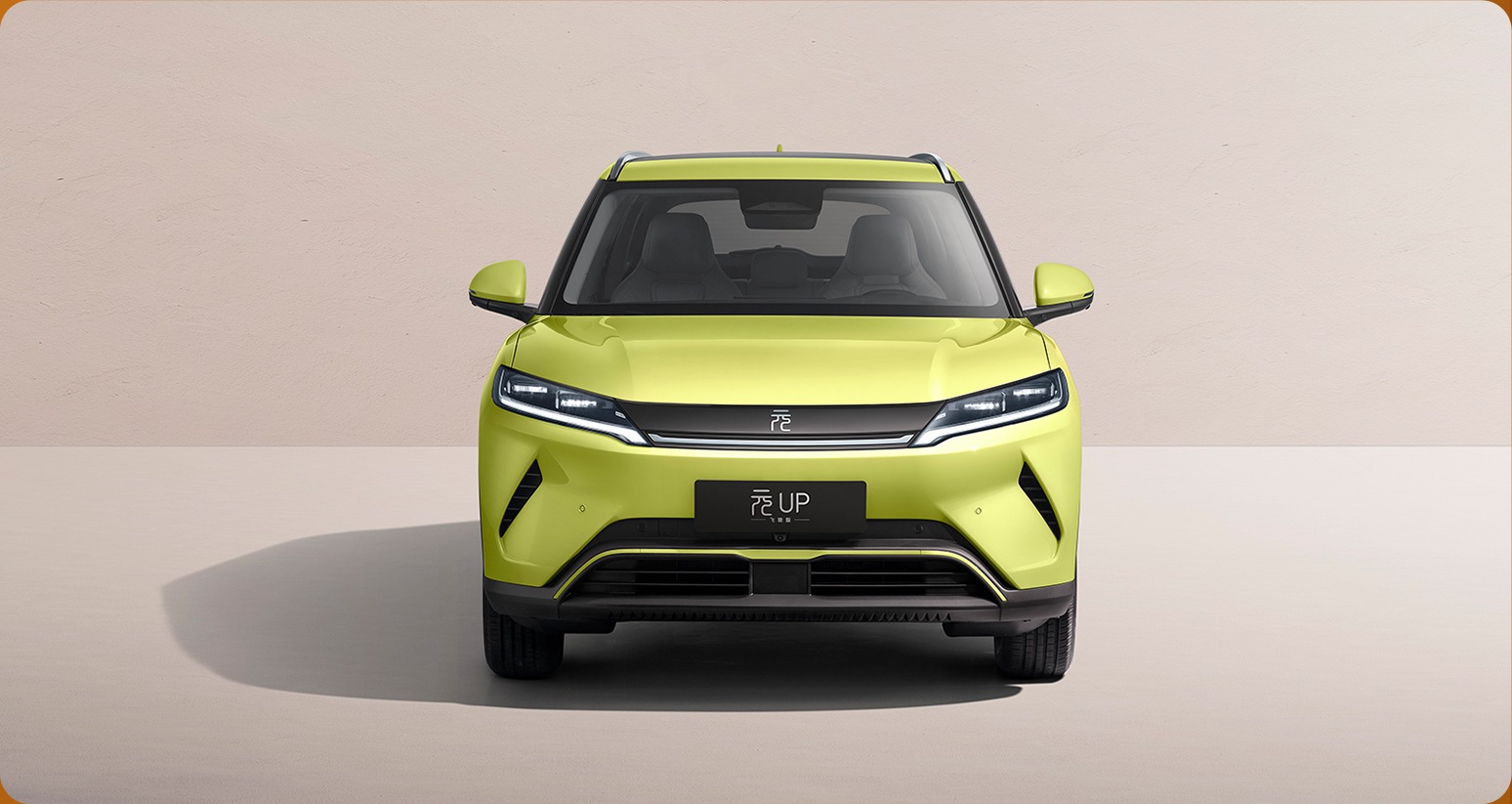
Design & Interior
The exterior keeps the compact SUV proportions and adds two new colours, Energetic Yellow and Oxygen Blue, to a six-colour palette that also includes white, grey, beige and a pale green. The top trims gain new 17-inch aluminium wheels with a low-drag design BYD calls Star Blade. Contrast black cladding and body-colour accent lines along the sills and bumpers give the car a playful look, consistent with the youth-oriented “trendy” marketing.
The cabin is where the update is most visible. BYD has fitted a new two-spoke leather steering wheel and moved the electronic shift lever from the centre console to the steering column, which frees space for a cooled 50 W wireless charging pad. The dashboard carries a 12.8-inch central touchscreen and an 8.8-inch fully digital instrument cluster. The front seats are heated and ventilated, the driver's seat adjusts six ways electrically, and the rear bench has a centre headrest and dedicated air vents. A panoramic sunroof with an electric sunshade, an NFC phone key and a sentry mode with dashcam recording complete the equipment list on equipped trims. Not every item is on every version, so check the trim table for your market before ordering.
Technology & Features
The infotainment system is BYD's DiLink 100 smart cockpit on the higher-spec versions, with an all-scenario voice assistant, phone mirroring and customisable themes. The 12.8-inch screen sits on a floating mount; Brazilian and Malaysian outlets describe it as rotatable. BYD also offers lifetime free over-the-air updates and basic data service, two years of free cloud services and two years of free in-car data (5 GB per month) as part of the launch package. Vehicle-to-load discharge, which turns the battery into a mobile power station, is reported as standard.
Safety & ADAS
BYD says the body uses a high-strength cage structure with the Blade battery, and lists a wide-temperature heat pump among the safety and efficiency hardware. A 360-degree surround-view system is standard on all five trims. The driver-assistance system is branded God's Eye C. BYD's launch sheet shows highway navigation assist with automatic ramp entry and exit, large-curve handling, automatic lane changes, cone avoidance and courteous yielding, plus parking functions including automated valet parking, remote parking assist and parking assist. Safety features listed include curve over-speed warning, front cross-traffic alert and braking, lane-departure assist and blind-spot monitoring. Reports differ on how widely God's Eye C is fitted: some Chinese outlets say it is carried across the range, one says it is standard from the 401 KM Vitality upward, another describes it as optional on the entry trims, and BYD offers a parking-damage guarantee for cars equipped with it. Confirm the exact equipment on the trim you plan to buy.
| ADAS LEVEL | Level 2 assisted driving (God's Eye C on equipped trims; SAE level not stated by BYD) |
|---|---|
| ADAS FEATURES | Highway navigation assist, automatic lane change, AVP, RPA, APA, curve over-speed warning, front cross-traffic alert and braking, lane-departure assist, blind-spot monitoring, 360° camera (standard) |
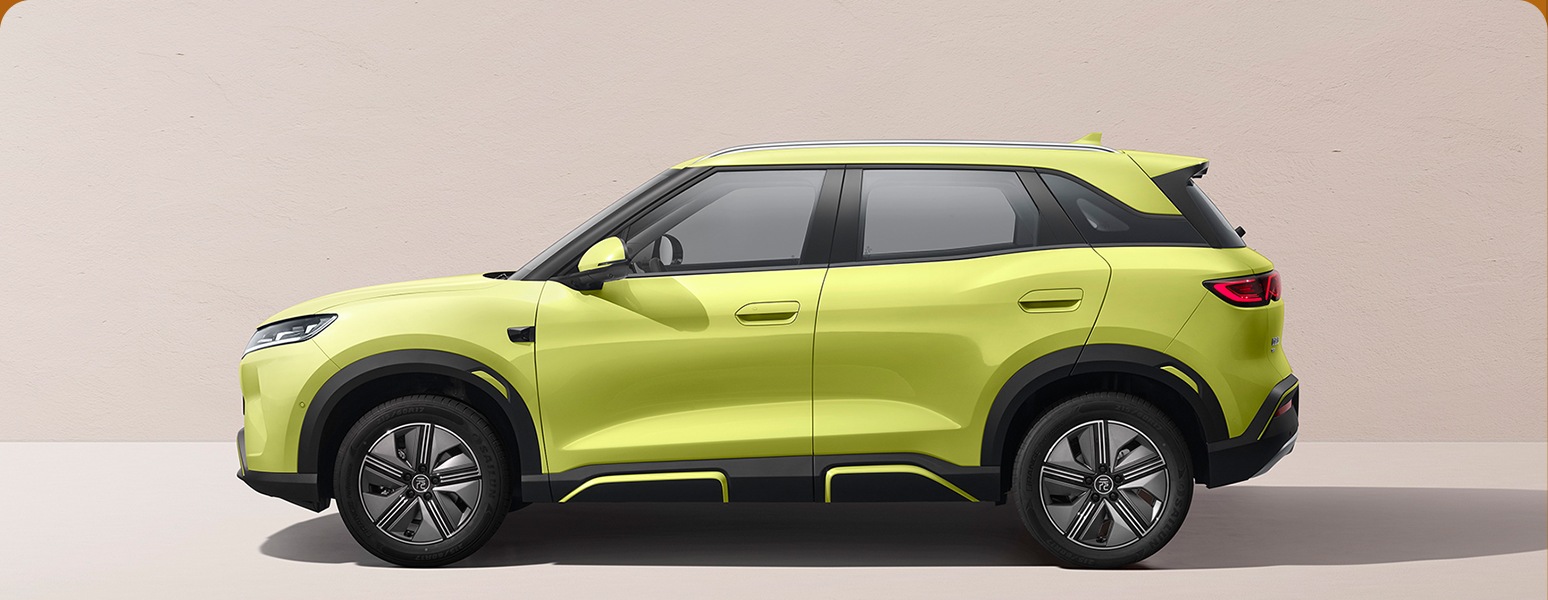
Available Versions
| VERSION | POWER | TORQUE | 0-100 | TOP SPEED | DRIVETRAIN | BATTERY | EV RANGE | COMBINED RANGE | PRICE | KEY DIFFERENCES |
|---|---|---|---|---|---|---|---|---|---|---|
| 301 KM Leading | 94 hp | 180 Nm | — | — | FWD | 32 kWh | 301 km | — | $11,000 (¥74,800) | Entry trim; ¥69,800 with the subsidy |
| 401 KM Leading | 94 hp | 180 Nm | — | — | FWD | 45.12 kWh | 401 km | — | $12,000 (¥81,800) | Larger battery; ¥76,800 with the subsidy |
| 401 KM Vitality | 94 hp | 180 Nm | — | — | FWD | 45.12 kWh | 401 km | — | $13,200 (¥89,800) | Mid-level trim; ¥84,800 with the subsidy |
| 501 KM Beyond | 94 hp | 180 Nm | — | — | FWD | 51.13 kWh | 501 km | — | $13,900 (¥94,800) | New 501 km pack; ¥89,800 with the subsidy |
| 501 KM Excellence | 94 hp | 180 Nm | — | — | FWD | 51.13 kWh | 501 km | — | $15,400 (¥104,800) | Top trim; ¥99,800 with the subsidy |
Pricing & Availability
The 2027 Yuan UP Feichi Edition launched in China on 17 September 2026 with five trims priced at ¥74,800, ¥81,800, ¥89,800, ¥94,800 and ¥104,800 (about $11,000 to $15,400 at ¥6.8 to the dollar). BYD is also running a limited-time ¥5,000 super replacement subsidy, which cuts the range to ¥69,800-99,800 (about $10,300 to $14,700). The subsidy requires an old-car registration from the buyer or a relative, and BYD's launch benefits, worth up to ¥11,199 in total, are tied to purchases invoiced between 17 September and 31 October 2026. They include zero-down financing, a 24-month interest-free loan on ¥58,000, a free 7 kW home-charger installation service, a six-year or 150,000 km whole-vehicle warranty for first private owners and lifetime warranty on the three core electric systems.
Outside China the car is sold as the BYD Atto 2, but the specification differs. In the UK the Atto 2 launched in August 2025 at £30,850 (Boost, 51.1 kWh, 130 kW) and £34,950 (Comfort, 64.8 kWh, 150 kW). France listed the 45 kWh version at €29,990 at launch, Australia prices the Dynamic at A$31,990 and the Premium at A$35,990 before on-road costs, and Israel sells the 64.8 kWh, 204 hp Comfort at ₪148,990 through the importer Shlomo Motors. Thailand lists 629,900-659,900 baht and Malaysia a single Premium at RM100,000. None of those markets has an announced price for the new 51.13 kWh Chinese-market version, so treat the export figures as a guide to the Atto 2 name, not to this update.
How It Compares
The Yuan UP's competition in China sits between about ¥65,000 and ¥115,000. The Leapmotor A10 undercuts it: its four trims run from ¥65,800 to ¥86,800, and the 53 kWh, 505 km CLTC version also costs less than the 501 KM Beyond at ¥94,800, though the A10 is shorter at 4,270 mm and its wheelbase is 2,605 mm against the BYD's 2,620 mm. The Changan Qiyuan Q05 is the more powerful alternative. Its 120 kW (161 hp) motor and 51.91 kWh pack deliver 506 km CLTC, and Changan quotes 30-80% in about 15 minutes, though it has a longer 2,735 mm wheelbase and starts at ¥79,900 for the 405 km version, with the 506 km trims priced higher. Against both, the BYD offers the lowest power but a compact body, a 360-degree camera on every trim and an export version, the Atto 2, that is already on sale in several markets. All three figures use the same CLTC cycle and Chinese prices, so the comparison is like for like.
- New 51.13 kWh battery gives up to 501 km CLTC from ¥94,800 (about $13,900), or ¥89,800 with the limited-time subsidy
- Updated cabin with a 12.8-inch screen, 8.8-inch digital cluster, 50 W wireless charger and column-mounted shifter
- Compact 4,310 mm body with a 2,620 mm wheelbase and up to 1,320 L of cargo with the seats folded; 360-degree camera standard on every trim
- Only 70 kW (94 hp) and 180 Nm on every trim, and no 0-100 km/h time or top speed published
- Peak DC charging power is not officially stated, and the 30-80% claim of about 30 minutes is slower than the 15-minute figure Changan quotes for the Qiyuan Q05
The Yuan UP update is a sensible fix for the car's most obvious weakness. The 51.13 kWh pack gives up to 501 km CLTC, the cabin gains a bigger screen, a digital cluster and a wireless charger, and prices still start at ¥74,800 (about $11,000). The trade-offs are a modest 94 hp that every trim shares, unconfirmed peak charging power and unclear ADAS fitment across the range. It suits city commuters who want a small BYD with more usable range. If you want performance or faster charging, look at the Qiyuan Q05 instead.