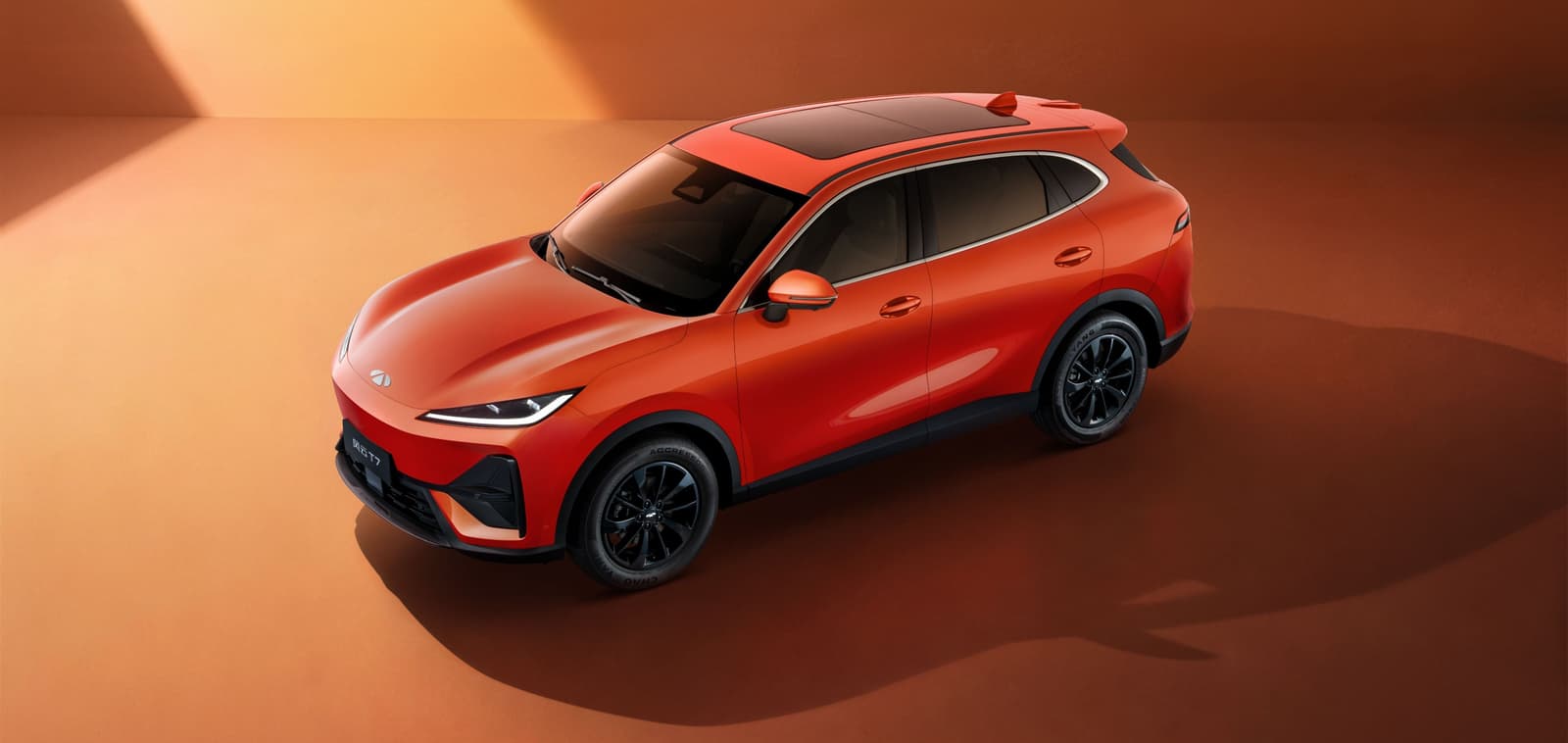
The 2027 GAC Aion i60 went on sale in China on September 15, 2026, ten months after the compact 5-seat crossover (4,685 mm long, 2,775 mm wheelbase) first launched in November 2025. The body stays the same; the update goes after range, charging and tech. The BEV gets a 77.65 kWh pack rated at 700 km CLTC (the 2026 top trim managed 650 km), the EREV gets a 45.37 kWh battery that lifts pure-electric range from 210 km to 350 km and combined range from 1,240 km to 1,738 km, and the cabin gains a 15.6-inch 2.5K screen, a 66 L front trunk and LiDAR-based driver assist on the upper versions. Seven versions are on sale, listed by GAC at CNY 111,600 to CNY 142,800; with the launch benefits prices run from CNY 103,600 (about $15,500) to CNY 134,800 (about $20,200), converted at 6.678 CNY per dollar (ECB rate of November 20, 2026). GAC Aion reported 20,181 i60 orders in September, and ChinaEVHome counts more than 83,000 deliveries from January to August 2026, with six straight months above 10,000 units. The Chinese Car Reviewer (CCR) video shows an export-spec car and quotes export prices of about $19,500 to $22,000, which are not comparable with China retail prices.
Performance & Specs
The Aion i60 lineup still splits into two powertrain families, and both are front-motor and front-wheel drive; none of the launch coverage lists an all-wheel-drive version. The BEV uses a front permanent-magnet motor rated at 165 kW (221 hp) on every version, according to ChinaEVHome; the 2026 cars used 150 kW (201 hp) on the 530 km trims and 165 kW on the 650 km trims. GAC describes the drive unit as an amorphous-alloy design with about 99% peak efficiency and quotes 12.3 kWh/100 km. The 56.68 kWh pack is rated at 520 km and the 77.65 kWh pack at 700 km on the CLTC cycle, and the reviewer reads a 160 km/h top speed off the spec sheet. The EREV (range-extender) pairs a 1.5-liter petrol generator with a 45.37 kWh LFP battery and a Huawei DriveONE motor in place of the previous drive unit (ChinaEVHome puts it at 160 kW, about 215 hp). GAC quotes 350 km of CLTC electric range, 1,738 km combined and 3.6 L/100 km with the battery depleted. GAC has not published 0-100 km/h times for the 2027 cars.

| POWERTRAIN TYPE | EREV FWD or single-motor BEV FWD |
|---|---|
| HORSEPOWER (BEV TOP) | 221 hp (165 kW) |
| HORSEPOWER (EREV) | Huawei DriveONE front motor (160 kW / about 215 hp per ChinaEVHome) + 1.5L generator |
| TORQUE (BEV) | Not confirmed for 2027 (240 Nm on the 2026 650 km trims) |
| TOP SPEED | 160 km/h (BEV, from the reviewer’s spec sheet) |
| DRIVETRAIN | Front-wheel drive (all trims) |
| BATTERY OPTIONS | 45.37 kWh (EREV) / 56.68 kWh / 77.65 kWh (BEV) |
| EV RANGE (CLTC) | 350 km (EREV) / 520 km / 700 km (BEV) |
| COMBINED RANGE (EREV) | 1,738 km (CLTC) |
Dimensions & Practicality

| Length | 4,685 mm |
|---|---|
| Width | 1,854 mm |
| Height | 1,660 mm |
| Wheelbase | 2,775 mm |
| Ground clearance | ~170 mm |
The i60 is sized as a compact crossover — the same class as the BYD Yuan Plus, Geely Galaxy E5 and Leapmotor B10 — with a sweet-spot 2,775 mm wheelbase that opens up genuine second-row space for taller adults. The reviewer, who is 186 cm tall, reports enough rear legroom and headroom behind his own seat position. Cargo measures 416 L with the rear bench up and 967 L with the 60/40 split bench folded, according to the reviewer’s export-spec cars. The 2027 car adds a 66 L drainable front trunk on the BEV (the reviewer estimated 60 to 70 L by eye), and a roof rack that GAC rates at 75 kg, which the reviewer says can carry a camper-style roof tent. The reviewer measured ground clearance at about 170 mm.
| LENGTH | 4,685 mm |
|---|---|
| WIDTH | 1,854 mm |
| HEIGHT | 1,660 mm |
| WHEELBASE | 2,775 mm |
| CARGO VOLUME | 416 L (967 L seats folded) |
| FRUNK | 66 L, drainable (BEV) |
| ROOF-RACK LOAD | 75 kg |
| WHEELS / TIRES | 18″ 215/55 R18 or 19″ 225/45 R19 (reviewer’s export cars) |
Charging & Battery
The 2027 i60 stays on LFP chemistry across all versions. The BEV comes with a 56.68 kWh CATL pack (520 km CLTC) or a 77.65 kWh GAC Magazine Battery 2.0 pack (700 km CLTC), and GAC claims 3C-class charging with 30-80% in about 13.7 minutes. The EREV’s larger 45.37 kWh battery (up from 29.2 kWh) supports 350 km of pure-electric running before the 1.5L generator starts, and a 50-liter petrol tank stretches combined range to 1,738 km. The reviewer says the fast charger takes about 15 to 20 minutes and the slow AC charger about 8 to 10 hours for the larger battery; those are his estimates, not GAC figures. Chinese coverage also notes the charging port has moved to the rear of the car.
| EREV BATTERY | 45.37 kWh LFP |
|---|---|
| BEV BATTERY (520) | 56.68 kWh LFP (CATL) |
| BEV BATTERY (700) | 77.65 kWh LFP (Magazine Battery 2.0) |
| AC CHARGING | About 8-10 h for the 700 km pack (reviewer’s estimate) |
| DC FAST CHARGING (BEV) | 30-80% in about 13.7 min (GAC claim) |
| FUEL TANK (EREV) | 50 L (92-octane) |
| FUEL ECONOMY (EREV) | 3.6 L/100 km (CLTC, battery depleted) |
Design & Interior
The i60’s exterior carries over unchanged from the 2026 car: a closed front fascia (EV-mode signature) with an illuminated AION-wordmark light bar and slim matrix LED headlamps, and a full-width LED tail-light strip across the tailgate. The reviewer points out the ADAS-engaged green light at the rear, together with a 360-degree camera and plenty of parking sensors. Inside, the main change is the 15.6-inch 2.5K central touchscreen, up from 14.6 inches, and the reviewer calls the materials basic for the price (leather-wrapped steering wheel with manual adjustment, no Alcantara). The flat rear floor (no driveshaft tunnel since it’s FWD-only) opens up genuine second-row foot-space, and the reviewer’s car has a panoramic glass roof with a sunshade, electrically adjusted front seats with heating and massage, a 50W wireless charger and a storage box in the armrest.
Technology & Features
The 2027 i60 adds a real driver-assist upgrade. The LiDAR versions carry a 192-line LiDAR, a Qualcomm 8650 chip and, per Tencent News, 27 sensors, running a one-stage end-to-end driving algorithm that GAC says shares its architecture with its L4 autonomous-driving system; Gasgoo reports that the 520 CATL LiDAR Edition offers WeRide-developed navigation assist on highways, urban and rural roads, plus memory parking and narrow-space parking. The 520 CATL Edition without LiDAR has integrated driving and parking assist, and the reviewer notes that the export car shows an official English interface with software updates, so no dealer-side flashing is needed. Gasgoo also lists automatic rear-collision braking and direct tire-pressure monitoring among the additions.
Safety & ADAS
Driver assistance on the i60 is now split into two tiers. The standard versions keep Level 2 assistance with a 360-degree camera and parking sensors, while the LiDAR versions (a 520 BEV and a 700 BEV) add the 192-line LiDAR and end-to-end navigation assist. Tencent News puts the cheapest LiDAR version at CNY 118,800 (about $17,800) with launch benefits.
| ADAS LEVEL | L2 (standard versions) / end-to-end navigation assist (LiDAR versions) |
|---|---|
| LiDAR | 192-line, LiDAR versions only |
| CHIP | Qualcomm 8650 (LiDAR versions) |
| SENSORS | 27 in total on LiDAR versions (Tencent News) |
| ALGORITHM | One-stage end-to-end, L4-derived architecture |
| ADAS FEATURES | 360° camera, parking sensors, automatic rear-collision braking; navigation assist and memory parking on LiDAR versions |
Available Versions
| VERSION | POWERTRAIN | BATTERY | EV / COMBINED RANGE | KEY DIFFERENCES |
|---|---|---|---|---|
| 530 CATL Standard | BEV | Not stated | 530 km | Entry BEV listed by Gasgoo and Sohu; carries the 530 km rating of the 2026 car |
| 520 CATL Edition | BEV | 56.68 kWh | 520 km | 66 L front trunk, 15.6″ 2.5K screen, integrated driving and parking assist |
| 520 CATL LiDAR Edition | BEV | 56.68 kWh | 520 km | 192-line LiDAR, Qualcomm 8650, end-to-end navigation assist, memory parking |
| 700 Long-Range Edition | BEV | 77.65 kWh | 700 km | Magazine Battery 2.0; the version the reviewer recommends |
| 700 LiDAR Edition | BEV | 77.65 kWh | 700 km | Long-range pack plus the LiDAR driver-assist package |
| 1738 EREV | EREV | 45.37 kWh | 350 / 1,738 km | Huawei DriveONE motor, 1.5L generator, ventilated, heated and massaging front seats, 50W wireless charging |
Gasgoo and the reviewer both count seven versions in total; the seventh is not itemized in the sources checked here. Per-version prices differ between Chinese outlets, so only the lineup-wide range is quoted below.
Pricing & Availability
The 2027 Aion i60 went on sale across mainland China on September 15, 2026 in seven versions: GAC lists them at CNY 111,600 to CNY 142,800 (about $16,700 to $21,400), and launch benefits bring the price range to CNY 103,600 to CNY 134,800 (about $15,500 to $20,200), per Gasgoo and Chinese outlets including Tencent News. The pre-update 2026 range started at CNY 102,800 for the 210 “Success at First Try” EREV, added on March 2, 2026 at a CNY 7,000 cut from the standard 210, and topped out at CNY 135,800 for the 650 Advanced BEV, so the 2027 entry price is CNY 800 higher while the long-range BEV and EREV versions move up in capability. Some outlets quote a CNY 106,800 “refresh” starting price for the launch period, so exact entry pricing may differ by version and date. Chinese media reported more than 5,000 orders in the first three hours, and GAC Aion announced 20,181 orders for September. Export-spec cars are already being quoted by parallel exporters: the reviewer’s prices run from about $19,500 to $22,000 for the 700 km and EREV versions.
How It Compares
The i60’s real edge over the segment is still the EREV option — none of the BYD Yuan Plus, Geely Galaxy E5 or Leapmotor B10 offer a range-extender variant, and the 2027 EREV’s 1,738 km combined range now stretches the gap. For pure BEV buyers, the 700 km CLTC rating is above the Yuan Plus’s 630 km and the Galaxy E5’s 610 km, and the LiDAR versions bring a driver-assist package that the 2026 i60 did not offer at all. The Yuan Plus counters with more power (up to 322 hp) and five-minute Flash Charging at BYD stations, but starts at about $17,900 in China against about $15,500 for the i60.
- Rare BEV+EREV powertrain choice from about $15,500 in China — uncommon in this price bracket
- 700 km CLTC BEV range, and an EREV with 350 km of electric range and 1,738 km combined
- LiDAR-based end-to-end driver assist available from about CNY 118,800 ($17,800), per Tencent News
- 15.6″ 2.5K screen and a 66 L drainable front trunk on the BEV
- 20,181 orders in September, and more than 83,000 deliveries from January to August 2026 (ChinaEVHome)
- FWD-only with no AWD option — competitor Leapmotor B10 offers RWD/AWD
- LiDAR and end-to-end assist are limited to the upper versions
- Overseas buyers get export-spec cars at roughly $19,500 to $22,000 through parallel exporters, well above the China price
- Boot space is a modest 416 L with the seats up
- The reviewer calls the cabin materials basic and says to avoid the 520 km version in favor of the 700 km one
The 2027 GAC Aion i60 is a targeted update rather than a new car, and it hits the right spots: a 700 km CLTC BEV, an EREV that can cover 350 km on electricity alone, a bigger screen, a front trunk and, for the first time, a LiDAR driver-assist option. Its unique BEV+EREV choice at around CNY 103,600 to CNY 134,800 has few direct rivals among Chinese compact crossovers at this price, and the sales figures (20,181 September orders, 83,000+ in the first eight months of 2026 per ChinaEVHome) show buyers agree. The compromises — FWD-only, basic materials and the best driver-assist hardware reserved for the upper versions — are the trade-offs for the low entry price. For Chinese buyers the 700 LiDAR BEV or the EREV are the versions to pick; export buyers should expect to pay a clear premium over the domestic price.