
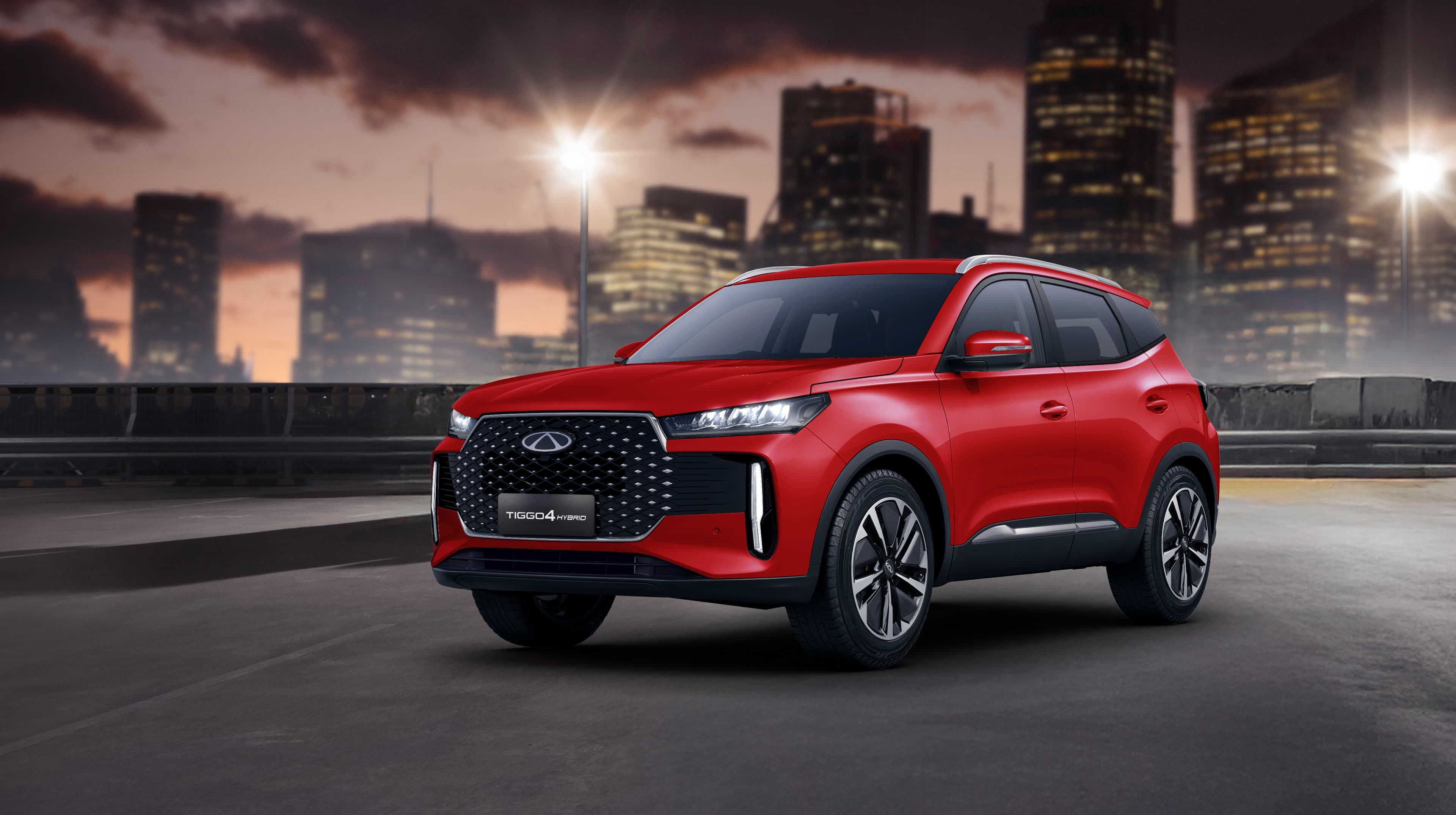
Chery has renamed its small SUV from Tiggo 4 Pro to simply Tiggo 4 for MY2026, and the headline addition is a full, non-plug-in hybrid variant built on the brand's fifth-generation Chery Super Hybrid (CHS) system. Landing in Australian showrooms from August 2025, the Tiggo 4 Hybrid pairs a naturally aspirated 1.5-litre petrol engine with a single electric motor and a small 1.83 kWh battery, driving the front wheels through a single-speed Dedicated Hybrid Transmission. Multiple independent Australian outlets have confirmed it as the country's cheapest new hybrid SUV, undercutting rivals like the Toyota Yaris Cross Hybrid and MG ZS Hybrid+ on price while claiming a theoretical driving range of around 1,000 km on a single 51-litre tank. The same CHS powertrain has since rolled out to the UK, Malaysia, and Indonesia, making this one of Chery's most widely exported hybrid nameplates.
Performance & Specs
The CHS system combines a 1.5-litre naturally aspirated four-cylinder petrol engine rated at 71 kW (96 PS / 95 hp) and 120 Nm with an electric motor producing 150 kW (204 PS / 201 hp) and 310 Nm, fed by a compact 1.83 kWh battery. Chery's own market materials in the UK and Malaysia — two independently sourced, cross-checked regions — both list a "total system output" of 204 PS (201 hp) and 310 Nm for the combined powertrain. Worth flagging honestly: that figure is numerically identical to the electric motor's own individual rating, not a simple sum of the 71 kW engine and 150 kW motor (which would work out to roughly 221 kW / 297 hp). In this single-speed DHT layout the electric motor does the bulk of the driving, with the petrol engine acting mostly as a generator and secondary support unit rather than adding its output directly at the wheels — a common trait of this style of power-split hybrid. Chery has not published a genuinely higher "true combined" figure, so 201 hp / 310 Nm is the number to use. Official 0-100 km/h is quoted at 9.4 seconds, with fuel use rated at 5.4 L/100km combined (Australian testers have recorded high-5s to low-6s L/100km in real-world driving) and CO2 emissions of 123 g/km. The hybrid hardware adds roughly 50 kg over the equivalent petrol Tiggo 4, with a Hybrid Ultimate tipping the scales at 1,494 kg tare.

| Powertrain | 1.5L petrol + e-motor HEV (CHS) |
|---|---|
| Power | 150 kW motor / 71 kW engine (201 hp combined) |
| Torque | 310 Nm |
| 0–100 km/h | 9.4 s |
| Battery | 1.83 kWh |
| Range | Up to 1,000 km (tank) |
| POWERTRAIN TYPE | Conventional hybrid (HEV), no plug-in charging |
|---|---|
| HORSEPOWER | 201 hp (150 kW motor / 71 kW engine) |
| ACCELERATION | 9.4 s (0-100 km/h) |
| TOP SPEED | Not officially published |
| DRIVETRAIN | FWD, single-speed Dedicated Hybrid Transmission |
| BATTERY | 1.83 kWh lithium-ion |
| FUEL ECONOMY | 5.4 L/100km combined (CO2: 123 g/km) |
| RANGE | Up to 1,000 km on a 51-litre tank |
Dimensions & Practicality

| Length | 4,330 mm |
|---|---|
| Width | 1,830 mm |
| Height | 1,655 mm |
| Wheelbase | 2,604 mm |
| Ground clearance | 180 mm |
The Tiggo 4 Hybrid is a genuinely small SUV — closer in footprint to a Toyota Yaris Cross than a RAV4 — but Australian reviewers have consistently praised its rear seat space and the "secure feeling of a larger vehicle" from behind the wheel, without the parking hassle that comes with it. Boot space is rated at 470 litres to the roof (VDA) with the rear seats up, competitive for the small-SUV class, though there's no separate frunk since the engine bay is fully occupied by the petrol engine and its ancillaries. The cabin uses synthetic leather trim on the range-topping Ultimate grade, and both trims get a flat load floor and 60:40 split-fold rear seats for longer items.
| LENGTH | 4,330 mm |
|---|---|
| WIDTH | 1,830 mm |
| HEIGHT | 1,655 mm |
| WHEELBASE | 2,604 mm |
| CARGO VOLUME | 470 L (seats up, VDA) |
| GROUND CLEARANCE | 180 mm |
Charging & Battery
There's no plug here — the Tiggo 4 Hybrid's 1.83 kWh lithium-ion battery is charged exclusively by the petrol engine and regenerative braking, and never needs to be plugged into an outlet or charger. That's the trade-off for its low price and simplicity relative to Chery's own plug-in Tiggo 7 and Tiggo 8 CSH models, which carry much larger batteries. Chery backs the battery pack with an 8-year, unlimited-kilometre warranty in Australia, one year longer than the 7-year, unlimited-kilometre warranty covering the rest of the vehicle. Combined with the 51-litre fuel tank and the car's claimed 5.4 L/100km combined consumption, Chery and independent Australian outlets both cite a theoretical range of around 1,000 km between refuels, one of the strongest range figures in the small-SUV hybrid segment.
| BATTERY | 1.83 kWh lithium-ion (hybrid-assist, not plug-in) |
|---|---|
| BATTERY WARRANTY | 8 years, unlimited km (Australia) |
| FUEL TANK | 51 L (91 RON unleaded minimum) |
| THEORETICAL RANGE | Up to 1,000 km |
Design & Interior
The Tiggo 4 Hybrid wears Chery's current family face — a large mesh-pattern grille flanked by slim LED headlights and vertical LED daytime running strips, with a "TIGGO4 HYBRID" script badge set into the grille itself to distinguish it from the petrol-only car. At the rear, a full-width light bar spelling out "CHERY" in illuminated lettering connects the taillights, a design cue borrowed from pricier SUVs in the segment. The Ultimate grade adds a panoramic glass roof, roof rails, and 17-inch alloy wheels finished in a darker two-tone pattern. Inside, both grades get a twin-screen dashboard layout — a digital instrument cluster ahead of the driver flows into a central touchscreen, framed by a leather-wrapped, flat-bottomed steering wheel with a chrome-accented "CHERY" badge. Ambient lighting strips run along the doors and dashboard on higher grades, and the Ultimate substitutes synthetic leather for cloth, adds heated front seats and a 6-way power-adjustable driver's seat, and throws in a wireless phone charger.
Technology & Features
Every Tiggo 4 Hybrid gets a 10.25-inch digital instrument cluster and a 10.25-inch central touchscreen (UK-market cars are specified with dual 12.3-inch displays), running Apple CarPlay and Android Auto, though without built-in satellite navigation. A voice command system handles climate and media functions, and Chery's ADAS suite — autonomous emergency braking, lane keep assist, lane departure warning, emergency lane keeping and an advanced speed assistance system — is standard on both trims rather than gated to the top grade. The Ultimate adds a 360-degree camera system on top of the standard reversing camera and parking sensors. Reviewers have flagged the driver-assistance calibration as occasionally over-sensitive, a common complaint about budget Chinese SUVs' first-generation ADAS tuning, though it's said to be tolerable rather than intrusive in daily driving.
Safety & ADAS
The petrol-powered Tiggo 4 Pro that preceded this MY2026 model earned a five-star ANCAP rating, with category scores of 88% for adult occupant protection, 87% for child occupant protection, 79% for vulnerable road users, and 85% for safety assist. As of September 2026, the Hybrid variant specifically has not been separately crash-tested and rated by ANCAP — it shares its body structure and airbag count with the rated petrol car, but Chery has not confirmed whether the added hybrid hardware changes the crash result, so treat the five-star rating as indicative rather than confirmed for the Hybrid specifically. Standard safety equipment includes seven airbags (dual front, front side, curtain, and a driver's knee airbag), autonomous emergency braking with vulnerable-road-user and junction detection, lane keep assist, lane departure warning, emergency lane keeping, and blind-spot monitoring with rear cross-traffic alert.
| ANCAP RATING | 5 stars (petrol Tiggo 4 Pro, 2023; Hybrid not separately rated as of Sept 2026) |
|---|---|
| ADAS FEATURES | AEB, LKA, LDW, ELK, blind-spot monitoring, rear cross-traffic alert, 360° camera (Ultimate) |
| AIRBAGS | 7 (dual front, front side, curtain, driver's knee) |
Available Versions
| VERSION | POWER | TORQUE | 0-100 | DRIVETRAIN | BATTERY | RANGE | PRICE | KEY DIFFERENCES |
|---|---|---|---|---|---|---|---|---|
| Hybrid Urban | 201 hp | 310 Nm | 9.4s | FWD | 1.83 kWh | Up to 1,000 km | $29,990 AUD | 17-inch alloys, 10.25-inch dual displays, dual-zone climate, reversing camera, cloth seats |
| Hybrid Ultimate | 201 hp | 310 Nm | 9.4s | FWD | 1.83 kWh | Up to 1,000 km | $34,990 AUD | Adds synthetic leather, 6-way power driver's seat, heated front seats, panoramic sunroof, 360° camera, wireless charger, ambient lighting |
Pricing & Availability
The Tiggo 4 Hybrid went on sale in Australia in August 2025, priced from $29,990 drive-away for the Urban and $34,990 drive-away for the Ultimate (Chery is currently offering a $2,000 cashback on both grades through 31 October 2026, or 0.70% finance as an alternative). That undercuts the equivalent petrol Tiggo 4 by roughly $6,000, and multiple independent Australian outlets, including CarExpert and EV Central, have called it the country's cheapest new hybrid SUV. The same underlying CHS powertrain and 1.5-litre/150 kW hybrid system has since been rolled out to other right-hand-drive markets: the UK gets it as the Tiggo 4 CSH, priced from £19,995 for the Aspire and £21,995 for the Summit, while Malaysia and Indonesia receive a closely related model badged Tiggo Cross, with the Malaysian Hybrid CSH variant priced from RM99,800. Chery has also confirmed a hybrid derivative of the Tiggo 4 Cross for South Africa, where local assembly at its new Rosslyn plant is set to begin in the second half of 2027.
How It Compares
Our own catalog has no direct same-powertrain rival for the Tiggo 4 Hybrid — it's a rare non-plug-in hybrid in a lineup dominated by Chinese plug-in hybrids and EVs, and its $29,990 figure is an Australian drive-away price rather than the China-market pricing used for the rest of our database, so these aren't an apples-to-apples currency comparison. Framed as a value contrast instead: plug-in hybrid small SUVs like the BYD Sealion 05 DM-i and BYD Song Pro DM-i undercut the Tiggo 4 Hybrid's Australian price on paper while offering more power and a genuine electric-only range, since they can be charged from a wall socket in addition to the engine — a real advantage for owners with home charging. The Tiggo 4 Hybrid's case rests on never needing a plug at all, a lower service and complexity profile, and being backed by an Australian dealer network, warranty, and after-sales support structure the Chinese-market-only rivals in our database don't have.
- Cheapest new hybrid SUV on sale in Australia, undercutting the equivalent petrol model by only around $6,000
- Strong real-world touring range thanks to a 51-litre tank and 5.4 L/100km combined economy — no plug required, ever
- Generous standard equipment for the price, including a full ADAS suite and dual digital displays on both grades
- Chery has not published a genuine combined system power figure distinct from the electric motor's own rating, and light, imprecise steering has been a consistent reviewer complaint
- The Hybrid variant hasn't been separately ANCAP crash-tested, and budget interior materials remain noticeable next to established rivals
The Tiggo 4 Hybrid is a straightforward pitch: a small SUV that drives like a hybrid should, costs about the same as a well-optioned petrol equivalent, and never asks its owner to find a charger. For buyers priced out of plug-in hybrids or EVs but still chasing lower running costs than a pure petrol car, that's a genuinely compelling proposition, especially backed by Chery's long warranty and rapidly growing dealer footprint across Australia, the UK, and Southeast Asia. It's not a class leader on refinement or outright efficiency, and the ambiguity around its true combined power output is a blemish on an otherwise transparent spec sheet. But as an honest, no-nonsense entry point into hybrid ownership, it's hard to beat at this price.