
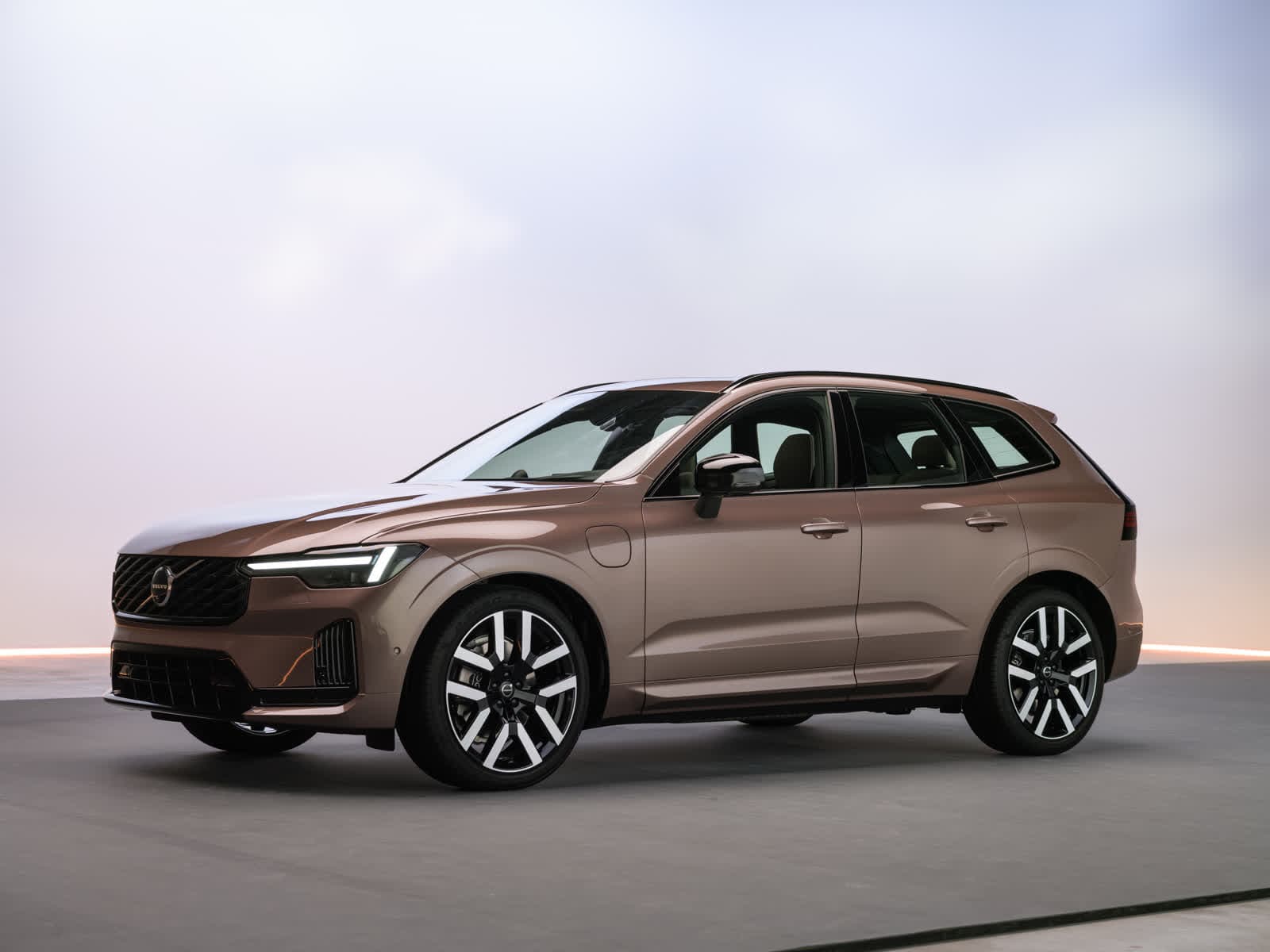
Volvo has more than doubled the battery in the plug-in hybrid versions of its two best-selling SUVs. The new Long-Range XC60 and XC90, announced on September 15, 2026, carry a 41.2 kWh battery (37.9 kWh usable), up from 18.8 kWh, together with a stronger 130 kW (177 PS, about 174 hp) rear electric motor. Volvo quotes up to 200 km of WLTP electric range for the XC60 and up to 160 km for the XC90 (a preliminary figure), roughly 2.5 times what the outgoing plug-ins managed. Order books opened the same day in selected markets. Volvo's global press release names no prices, but national price lists are already out: in Germany the XC60 T6 Long Range starts at EUR 69,990, the T8 at EUR 78,990 and the XC90 T8 at EUR 90,990, as reported by German outlets including ADAC and Auto Motor und Sport. German deliveries are due to begin in winter 2026, while the US receives the same cars as 2028 models in early 2027.
A Battery Twice the Size, Built Into the Floor
Volvo is pitching the Long-Range plug-ins as a way to cover most daily driving on electricity while keeping a petrol engine on board for longer trips. The battery is integrated into the floor, which Volvo says avoids a cargo-space penalty, and German outlets list the XC60's boot at 468 litres with the rear seats up. Against the outgoing 18.8 kWh pack (about 14.7 to 14.9 kWh usable), the new 41.2 kWh battery is 2.2 times larger. The combustion side changes as well: the 2.0-litre turbo petrol engines were reworked for Euro 7 and are less powerful than before. The XC60 T6's petrol engine is now rated at 180 PS (about 178 hp) and 280 Nm, down from roughly 243 PS (about 240 hp) and 350 Nm according to Swedish outlet Automotorsport, while the T8 uses a 250 PS (about 247 hp), 360 Nm engine. The bigger battery and the stronger rear motor, rated at 130 kW (177 PS, about 174 hp) and 309 Nm, make up the difference in system output.
Performance and Specs
The XC60 Long-Range comes in two states of tune sharing the same battery. The T6 AWD pairs a 180 PS (178 hp) petrol engine with the 130 kW rear motor for 262 kW (357 PS, about 352 hp) and 589 Nm of system torque, and reaches 100 km/h in 5.7 seconds. It also has the longest electric range in the line-up, up to 200 km WLTP, and about 1,250 km in total (Volvo Netherlands lists 1,253 km, while German outlets round to 1,200 km). The T8 AWD swaps in the 250 PS (247 hp) engine and adds a 52 kW (71 PS, about 70 hp) starter-generator, for 339 kW (461 PS, about 455 hp) and 100 km/h in 4.8 seconds. Its electric range is slightly lower, 186 to 189 km WLTP depending on market and specification, with about 1,230 km in total. The T8's system torque is not confirmed: ADAC lists 669 Nm while Paul Tan lists 759 Nm, so no figure is given here. The XC90 T8 uses the same 461 PS (455 hp) powertrain, reaches 100 km/h in 5.2 seconds and is rated at up to 160 km WLTP by Volvo (a preliminary global figure, with national listings showing 162 to 164 km) and about 1,100 km in total.

| Powertrain | 2.0L turbo petrol + 130 kW rear electric motor, AWD plug-in hybrid |
|---|---|
| Power (T8) | 339 kW (461 PS / 455 hp) system |
| Power (T6) | 262 kW (357 PS / 352 hp) system |
| 0–100 km/h | T6 5.7 s / T8 4.8 s |
| Battery | 41.2 kWh gross / 37.9 kWh usable |
| Electric range | Up to 200 km WLTP (XC60 T6) |
| Spec | XC60 T6 | XC60 T8 | XC90 T8 |
|---|---|---|---|
| System output | 262 kW (357 PS / 352 hp) | 339 kW (461 PS / 455 hp) | 339 kW (461 PS / 455 hp) |
| Petrol engine | 180 PS (178 hp), 280 Nm | 250 PS (247 hp), 360 Nm | 250 PS (247 hp) |
| Rear electric motor | 130 kW (177 PS / 174 hp), 309 Nm | 130 kW (177 PS / 174 hp), 309 Nm | 130 kW (177 PS / 174 hp) |
| System torque | 589 Nm | Not confirmed | Not confirmed |
| 0-100 km/h | 5.7 sec | 4.8 sec | 5.2 sec |
| EV range (WLTP) | Up to 200 km | 186-189 km | Up to 160 km (preliminary) |
| Total range (WLTP) | About 1,250 km | About 1,230 km | About 1,100 km |
| Battery | 41.2 kWh gross / 37.9 kWh usable | ||
Charging is AC-only in Europe. The on-board charger accepts up to 11 kW (ADAC lists 2.3 to 11 kW), which fills the 41.2 kWh pack in about four hours from a home wallbox, and the European cars have no DC fast-charging port. In the US, Volvo says a Level 2 charge takes under six hours (SlashGear puts it at about 5.7 hours) and has not said whether DC fast charging is offered. The US-market cars are sold as 2028-model-year T8 versions with 455 hp and a 0-60 mph time of 4.5 seconds for the XC60 and 4.9 seconds for the XC90. Their EPA ratings are 78 miles (about 125 km) of electric range for the XC60 and 73 miles (about 117 km) for the XC90, with combined ranges of 590 and 560 miles. The gap to the WLTP figures is the usual difference between the two test cycles, not a contradiction.
Dimensions and Practicality

| Battery | 41.2 kWh gross / 37.9 kWh usable |
|---|---|
| XC60 EV range (WLTP) | Up to 200 km (T6) / 186-189 km (T8) |
| XC90 EV range (WLTP) | Up to 160 km (preliminary) |
| XC60 boot, seats up | 468 L |
| AC charge time | About 4 hours, full charge (Europe) |
Volvo's release does not list new dimensions for the Long-Range versions, so the table above sticks to the battery, range and boot figures that have been published. The floor-mounted battery is the key packaging point: Volvo says it does not reduce cargo space, and German sources list the XC60's boot at 468 litres with the rear seats up and roughly 1,520 to 1,540 litres with them folded (ADAC and Auto Bild differ slightly).
Design and Exterior
The XC60 receives a mid-cycle refresh alongside the new powertrain. A wider grille runs into the headlights, which carry a simplified Thor's Hammer daytime-running-light graphic and upgraded Matrix LED units. The bonnet, front wings, front bumper and wheels are redesigned, and at the rear there are slimmer taillights with light guides, an updated tailgate and a cleaner bumper. The changes are evolutionary rather than a new generation. Volvo's release describes the XC60 changes in detail and does not spell out the XC90's exterior updates.
Interior and Technology
The XC60's cabin gets a new dashboard and door-panel design, new silvery trim below the 11.2-inch portrait touchscreen, visible ambient lighting and an optional Cardamom-coloured ventilated Nappa leather. The touchscreen runs Google Gemini as its voice assistant, a generative-AI system meant to handle more natural requests than fixed voice commands, and Volvo lists over-the-air updates. In Germany the equipment ladder is Core, Plus and Ultra. According to Auto Motor und Sport and Auto Bild, Harman Kardon audio is offered on the Plus and Ultra, while the Ultra adds a head-up display, a 360-degree camera with 3D view and a panoramic glass roof, so the panoramic roof is not standard on every trim.
Pricing and Availability
Volvo's global press release names no prices, but national price lists have appeared in several European markets. The figures below are list prices as reported by the outlets named, in each market's own currency. None has been converted, and Volvo has not published a US-dollar price.
- Germany (EUR, consumer list prices including VAT; reported by ADAC, Auto Motor und Sport, Auto Bild and Autonotizen): XC60 T6 AWD Long Range from EUR 69,990 (Core), EUR 75,990 (Plus) and EUR 79,990 (Ultra); XC60 T8 AWD Long Range from EUR 78,990 (Plus) and EUR 82,990 (Ultra); XC90 T8 AWD Long Range from EUR 90,990 (Core) up to EUR 100,590 (Black Edition Ultra).
- Sweden (SEK; Automotorsport and Vi Bilagare): XC60 T6 from SEK 669,000 (Core) to SEK 791,000 (Ultra Black Edition); XC60 T8 from SEK 766,000 (Plus) to SEK 841,000 (Ultra Black Edition); XC90 T8 at SEK 1,039,000 (Ultra) and SEK 1,069,000 (Ultra Black Edition). Vi Bilagare notes that the new cars are not Edition versions and lack features such as a heated steering wheel and headlight cleaning, and reports increases of SEK 100,000 (T6), SEK 117,000 (T8) and SEK 45,000 (XC90 Ultra) over the outgoing plug-ins, while noting that the versions are not fully comparable.
- Austria (EUR, including 20% VAT and NoVA; More Magazine): XC60 T6 from EUR 64,490 (Essential); XC60 T8 from EUR 75,490 (Plus); XC90 T8 from EUR 93,750 (Core) up to EUR 103,450 (Ultra Black Edition).
- France (EUR; Actu-Automobile): XC60 T6 from EUR 76,000 (Start Plus) and EUR 78,550 (Ultra); XC60 T8 Ultra at EUR 86,250; XC90 T8 Ultra at EUR 110,900.
- United Kingdom: no price announced. Auto Express expects sales to start before the end of 2026.
- United States: no MSRP and no order date announced; the 2028-model-year cars are due in early 2027.
- Australia: arrival is planned for the second quarter of 2027, with final pricing closer to introduction, according to Volvo Car Australia.
Order books opened on September 15, 2026 in selected markets that Volvo has not listed. Orders are confirmed in Germany (ADAC: orderable now) and France, price lists have been published in Sweden and Austria, and Volvo Netherlands already lists the technical data. Production starts later this autumn, first German deliveries are expected in winter 2026 (ADAC), and the Black Edition can be ordered from launch. The cars are sold as model year 2027 in Europe and Australia and as model year 2028 in the US. Volvo also continues to offer mild-hybrid versions of both SUVs.
How It Compares
The BMW X5 xDrive50e is the closest segment rival. It makes more power than the XC60 T8 (483 hp against 455 hp), but BMW's estimated electric range of 44 miles (about 71 km) is well short of the 78 miles (about 125 km) Volvo quotes for the US-spec XC60, and the X5 lists at $78,950 including destination in the US, where Volvo has not announced a price. The Volvo EX60 P10 AWD is the brand's own electric alternative, with 503 hp and up to 660 km of WLTP range against 186 to 189 km of electric range for the XC60 T8, and it lists from EUR 65,990 in Germany against EUR 69,990 for the cheapest XC60 Long Range. The catch is that the EX60 has no petrol engine to fall back on. US and German prices are in different currencies and markets and are not directly comparable.
Pros and Cons
- Up to 200 km of WLTP electric range on the XC60 T6, about 2.5 times the outgoing plug-ins according to Volvo
- The 41.2 kWh battery is integrated into the floor, and Volvo says cargo space is not reduced
- A real choice between the T6 (more electric range) and the T8 (461 PS / 455 hp and 4.8 seconds to 100 km/h) in the XC60
- Price lists are already published in Germany, Sweden, Austria and France, so buyers there can compare trims today
- AC-only charging in Europe, up to 11 kW and about 4 hours for a full charge, with no DC fast charging for a quick top-up on the road
- Swedish prices are higher than for the outgoing plug-ins (SEK 45,000 to 117,000 according to Vi Bilagare, though the versions are not fully comparable), and the new cars are not Edition versions
- US EPA ratings (78 miles for the XC60) are well below the WLTP figures, and there is no US price or order date yet
- The rollout is staggered: German deliveries start in winter 2026, the US in early 2027 and Australia in the second quarter of 2027, with UK pricing still to come
The Long-Range XC60 and XC90 are a real step forward for plug-in hybrids: 200 km of WLTP range on the XC60 T6 covers most daily driving on electricity, while the petrol engine removes range anxiety on longer trips. The trade-offs are AC-only charging and a staggered rollout, with German deliveries due in winter 2026, the US in early 2027 and no UK, US or Australian prices announced yet. For European buyers who can already see a price list, starting at EUR 69,990 in Germany, this is an easy shortlist candidate; elsewhere it is worth waiting for local pricing before deciding.