
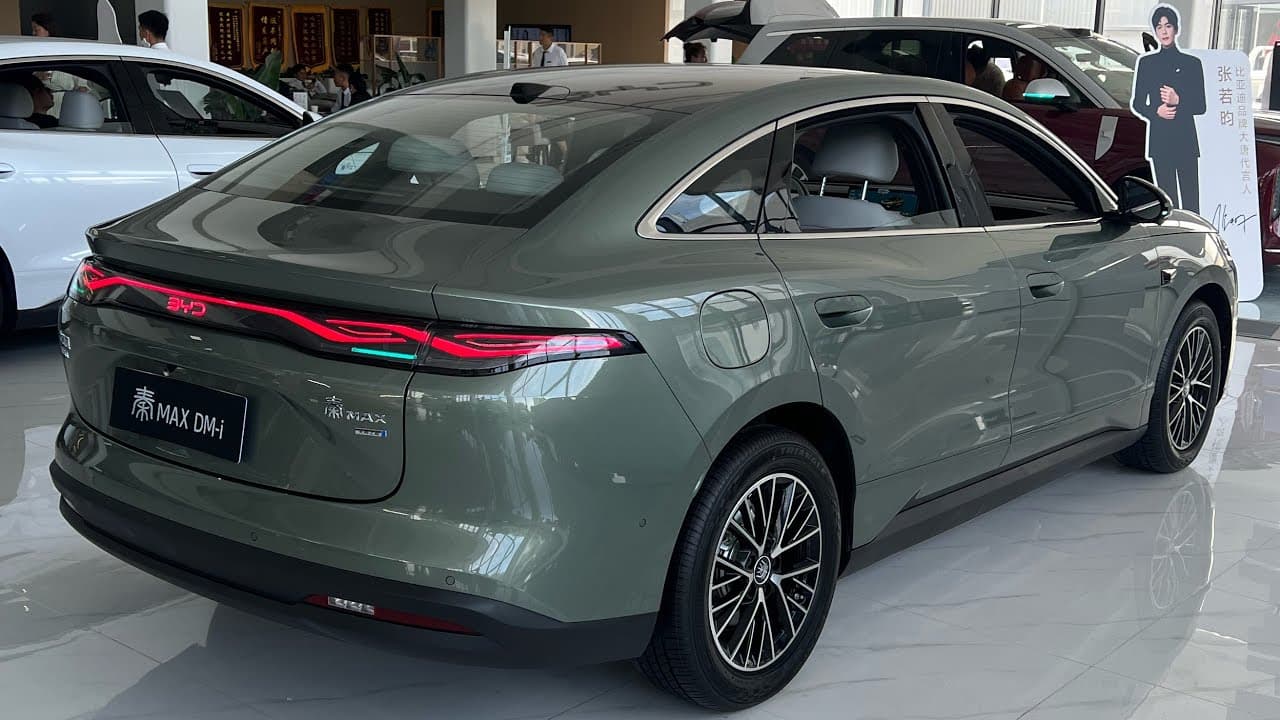
BYD's Qin family has a new flagship, and the plug-in hybrid version is the one with the headline numbers. The 2026 Qin Max DM-i went on sale in China on 13 August 2026 in four trims, priced from 99,900 yuan (about $14,700) to 129,900 yuan (about $19,100). It pairs a 1.5-litre naturally aspirated engine with a 175 kW (235 hp) front motor and two LFP battery options, 25.287 kWh or 34.275 kWh, which give 230 km or 320 km of CLTC electric range. BYD rates the combined range at up to 2,370 km on a full tank and a full charge, with fuel use of just 2.59 L/100 km once the battery is flat. At 4,866 mm long on a 2,820 mm wheelbase it is a proper B-segment sedan that sits above the Qin L in the Qin line-up and is aimed mostly at younger buyers. A pure-electric Qin Max EV launched alongside it from 109,900 yuan with a five-minute flash-charging headline, but this article covers the plug-in hybrid only.
Performance & Specs
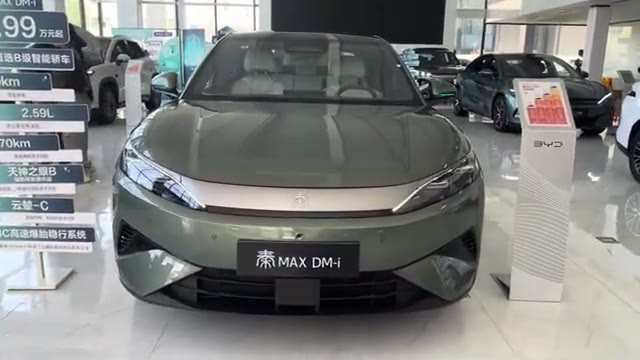
The DM-i system in the Qin Max is BYD's fifth-generation plug-in hybrid architecture. A 1.5-litre naturally aspirated four-cylinder makes 74 kW (99 hp) and 126 Nm, and a front-mounted electric motor delivers up to 175 kW (235 hp), so the car is front-wheel drive only. BYD quotes 0–100 km/h in 7.5 seconds and a top speed of 185 km/h for the DM-i versions, which is brisk for a family sedan that starts under $15,000 but nowhere near sports-car territory. The efficiency claim is the real story: 2.59 L/100 km on the NEDC cycle with the battery depleted, an unusually low figure for a car of this size. The reviewer who walked around the car in the source video read the same 320 km, 2.59 L and 2,370 km figures straight off the dealer's own price board, so the numbers match what showrooms are actually advertising.

| Powertrain | Plug-in hybrid (DM-i), front-wheel drive |
|---|---|
| Power | 175 kW (235 hp) motor + 74 kW (99 hp) engine |
| Engine torque | 126 Nm |
| 0–100 km/h | 7.5 s |
| Battery | 25.287 or 34.275 kWh LFP |
| Range | 230 / 320 km EV (CLTC), up to 2,370 km combined |
| POWERTRAIN TYPE | Plug-in hybrid (DM-i) |
|---|---|
| HORSEPOWER | 175 kW (235 hp) motor + 74 kW (99 hp) engine |
| ACCELERATION | 0–100 km/h in 7.5 s |
| TOP SPEED | 185 km/h |
| DRIVETRAIN | FWD |
| BATTERY | 25.287 kWh or 34.275 kWh LFP |
| ELECTRIC RANGE | 230 km / 320 km (CLTC) |
| COMBINED RANGE | Up to 2,370 km |
| FUEL CONSUMPTION | 2.59 L/100 km (NEDC, battery depleted) |
Dimensions & Practicality

| Length | 4,866 mm |
|---|---|
| Width | 1,880 mm |
| Height | 1,495 mm |
| Wheelbase | 2,820 mm |
| Boot | 557 L |
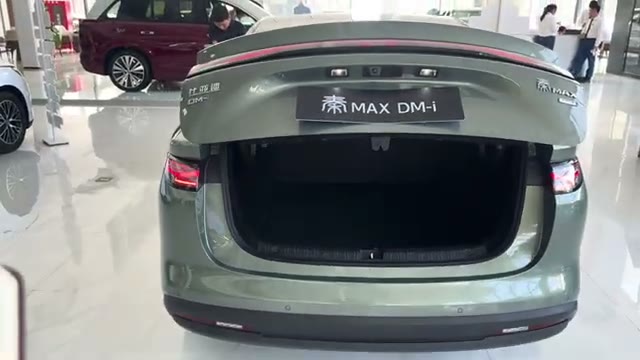
At 4,866 mm long, 1,880 mm wide and 1,495 mm tall on a 2,820 mm wheelbase, the Qin Max is slightly longer than the Qin L, which measures 4,830 mm with a 2,790 mm wheelbase (although the Qin L is a little wider at 1,900 mm), and clearly larger than the compact Qin Plus at 4,780 mm and 2,718 mm. The reviewer read out the same length, height and wheelbase on camera, so the showroom car matches the official dimensions. The boot is rated at 557 litres, a figure confirmed both by the launch materials and by the reviewer, and that is generous for a sedan that costs less than $15,000 at the entry point. The showroom car's rear bench looked wide, with dedicated rear air vents on the back of the centre console. The entry-level car in the video rode on 17-inch wheels, which the reviewer said carry 225/55 R17 tyres, while the cars that arrived at dealers before launch wore 18-inch wheels.
| LENGTH | 4,866 mm |
|---|---|
| WIDTH | 1,880 mm |
| HEIGHT | 1,495 mm |
| WHEELBASE | 2,820 mm |
| CARGO VOLUME | 557 L |
| TYRES (ENTRY TRIM) | 225/55 R17 (per the reviewer) |
Charging & Battery
The Qin Max DM-i uses an LFP battery in two sizes. The 25.287 kWh pack is rated at 230 km of CLTC electric range and the 34.275 kWh pack at 320 km, which works out to roughly 11.0 and 10.7 kWh per 100 km of electric driving on the CLTC cycle. The reviewer said home AC charging takes about three to four hours, which is plausible for the smaller pack on a typical wall box. Launch coverage does not quote an official DC fast-charging figure for the hybrid, although CleanTechnica reports peak rates of about 48 kW for the smaller pack and about 74 kW for the larger one. The flash-charging headlines BYD used at launch belong to the battery-electric model, so a buyer should treat the hybrid as a conventional DC charger and rely on the engine for long trips. That trade-off is exactly what the DM-i concept is built around: plug in at home for the daily commute, and let the 1.5-litre engine handle everything beyond it.
| BATTERY | 25.287 kWh or 34.275 kWh LFP |
|---|---|
| ELECTRIC RANGE | 230 km / 320 km (CLTC) |
| AC CHARGING | About 3–4 hours (reviewer estimate) |
| DC FAST CHARGING | Reported about 48 kW (25 kWh pack) / 74 kW (34 kWh pack) |
Design & Interior
The Qin Max is a low, sleek sedan with a sloping roofline, a chrome "dragon whiskers" element across the nose, semi-hidden door handles and a single full-width tail-light bar with an illuminated BYD logo in the middle. The reviewer noted full LED headlights with LED high and low beams and a full LED rear light bar, and the slim tail-lamp signature looks more expensive than the sticker suggests. BYD has shown the car in a light-pink paint finish and previewed a low-saturation purple interior colour scheme called Dawn Purple, while the showroom car in the video wore a muted sage green. Inside, the dashboard is built around a 15.6-inch floating central touchscreen and a full LCD instrument cluster, with a column-mounted gear selector and only a small number of physical buttons. The two-spoke steering wheel carries the Qin character on its hub, and the reviewer said he preferred it to the previous Qin wheel. The showroom car had light, cream-coloured upholstery, piano-black trim across the dash and threaded mounting points near the doors for accessories such as action cameras.
Technology & Features
BYD's DiLink infotainment system runs the central display, and the built-in AI assistant, called Xiaodi, was woken repeatedly by the reviewer during his interior tour. Launch coverage lists features such as an AR head-up display, a built-in cooling and heating fridge and a wireless phone charging pad in the centre tunnel, although not every item is fitted to every trim. On the mechanical side, the car uses a MacPherson front suspension with a five-link independent rear, and the DiSus-C intelligent damping system is offered at the top of the range or as an option. The dealer signage in the video also lists a high-speed tyre-blowout stability system, one of the safety extras BYD is advertising on this car. Taken together, the feature list is aimed squarely at buyers who would normally look at a larger, pricier sedan and expect a well-equipped cabin.
Safety & ADAS
The assisted-driving package is where the Qin Max DM-i shows how quickly BYD is pushing advanced hardware down to mainstream prices. The optional God's Eye B pack, sold as DiPilot 300, adds roof-mounted LiDAR and supports navigation-assisted driving on urban roads and highways as well as all-scenario parking assist, and it costs an extra 12,000 yuan (about $1,800) over the trim price. The showroom car in the video carried a 360-degree camera and a ring of parking sensors, and the dealer sign in front of it advertises God's Eye B as an available upgrade. Stacked on the 129,900 yuan top trim, the LiDAR pack would bring the price to about 141,900 yuan before any dealer offers.
| ADAS LEVEL | L2+ (God's Eye B with LiDAR is a 12,000 yuan option) |
|---|---|
| ADAS FEATURES | Navigation-assisted driving (urban and highway), all-scenario parking assist, 360° camera, parking sensors, high-speed tyre-blowout stability system |
Available Versions
BYD sells the Qin Max DM-i in four trims that step up in price by exactly 10,000 yuan each, and the reviewer's own dealer price guide showed the same 9.99, 10.99, 11.99 and 12.99 ten-thousand-yuan ladder. The two cheaper trims use the 25.287 kWh battery and the two dearer ones use the 34.275 kWh pack, so the choice comes down to how much electric range a buyer needs and how much equipment the upper trims add. Power, acceleration and top speed are the same across all four. BYD has only published the 2,370 km combined figure as a maximum, so it is shown here for the 320 km trims.
| VERSION | POWER | 0-100 | TOP SPEED | DRIVETRAIN | BATTERY | EV RANGE | COMBINED RANGE | PRICE | KEY DIFFERENCES |
|---|---|---|---|---|---|---|---|---|---|
| 230 km Leading | 235 hp | 7.5s | 185 km/h | FWD | 25.287 kWh | 230 km | — | $14,700 | Entry trim, 99,900 yuan; the car in the video was described as the basic version |
| 230 km Transcendence | 235 hp | 7.5s | 185 km/h | FWD | 25.287 kWh | 230 km | — | $16,200 | Same small battery, 109,900 yuan, one equipment step up |
| 320 km Transcendence | 235 hp | 7.5s | 185 km/h | FWD | 34.275 kWh | 320 km | 2,370 km | $17,600 | Larger battery for 90 km more electric range, 119,900 yuan |
| 320 km Excellence | 235 hp | 7.5s | 185 km/h | FWD | 34.275 kWh | 320 km | 2,370 km | $19,100 | Top trim, 129,900 yuan; LiDAR God's Eye B is a 12,000 yuan option |
Pricing & Availability
BYD launched the Qin Max in China on 13 August 2026, and the four DM-i trims cost 99,900, 109,900, 119,900 and 129,900 yuan, which is about $14,700, $16,200, $17,600 and $19,100 at roughly 6.8 yuan to the dollar. The reviewer, an export dealer, quotes roughly $15,000 to $19,500 at his own exchange rate, so US-dollar figures will vary a little depending on the conversion used. The LiDAR-equipped God's Eye B pack adds 12,000 yuan and a dual-tone paint finish adds 3,000 yuan. According to the reviewer, the new Qin Max is not yet ready for export, although BYD's earlier Qin models are already available through his business. As of September 2026 there is no confirmed launch in Europe or North America, so for now the car is a China-market product.
How It Compares
Inside BYD's own range, the Qin Max DM-i is the largest and most powerful of the Qin plug-ins: its 235 hp motor is a big step up from the 161 hp used in the Qin L and Qin Plus, and its 320 km of CLTC electric range compares with 210 km at best for those two. The Qin L starts at 96,800 yuan and the Qin Plus at 79,800 yuan, so the Qin Max costs a little more than the Qin L at the entry point and clearly more than the Qin Plus. The Geely Galaxy A7 PHEV is the closest outside rival, with the same 175 kW (235 hp) motor output, a 97,800 yuan starting price and up to 235 km of CLTC electric range. The Qin Max beats it by 85 km of electric range at the top of the range and claims up to 2,370 km combined, while the A7 is quicker on paper at 7.1 seconds to 100 km/h against the Qin Max's 7.5 seconds. Prices for all four cars are converted at roughly 6.8 yuan to the dollar and are China-market list prices.
- Up to 320 km of CLTC electric range, ahead of the Geely Galaxy A7 PHEV at 235 km and the smaller Qin models at 210 km, plus up to 2,370 km combined
- Real B-segment size, with a 2,820 mm wheelbase and a 557 L boot, from under $15,000
- A 175 kW (235 hp) motor and 7.5 s to 100 km/h, well above the 161 hp Qin L and Qin Plus
- Very low running costs, with 2.59 L/100 km on the NEDC cycle once the battery is depleted
- No flash charging on the hybrid, with reported DC rates of only about 48–74 kW
- LiDAR-based God's Eye B is a 12,000 yuan option rather than standard, and the car is still China-only
The Qin Max DM-i is one of the most complete plug-in sedans you can buy for under $20,000, with a big cabin, a 235 hp motor and electric range that most rivals cannot match. The 320 km trims are the sweet spot for anyone who can charge at home, because the daily commute can stay entirely electric while the 1.5-litre engine covers the long trips. Its weaknesses are modest DC charging and the fact that the best driver-assistance hardware costs extra. If you want a cheap, efficient, roomy family sedan and live where BYD sells it, this is an easy recommendation.