
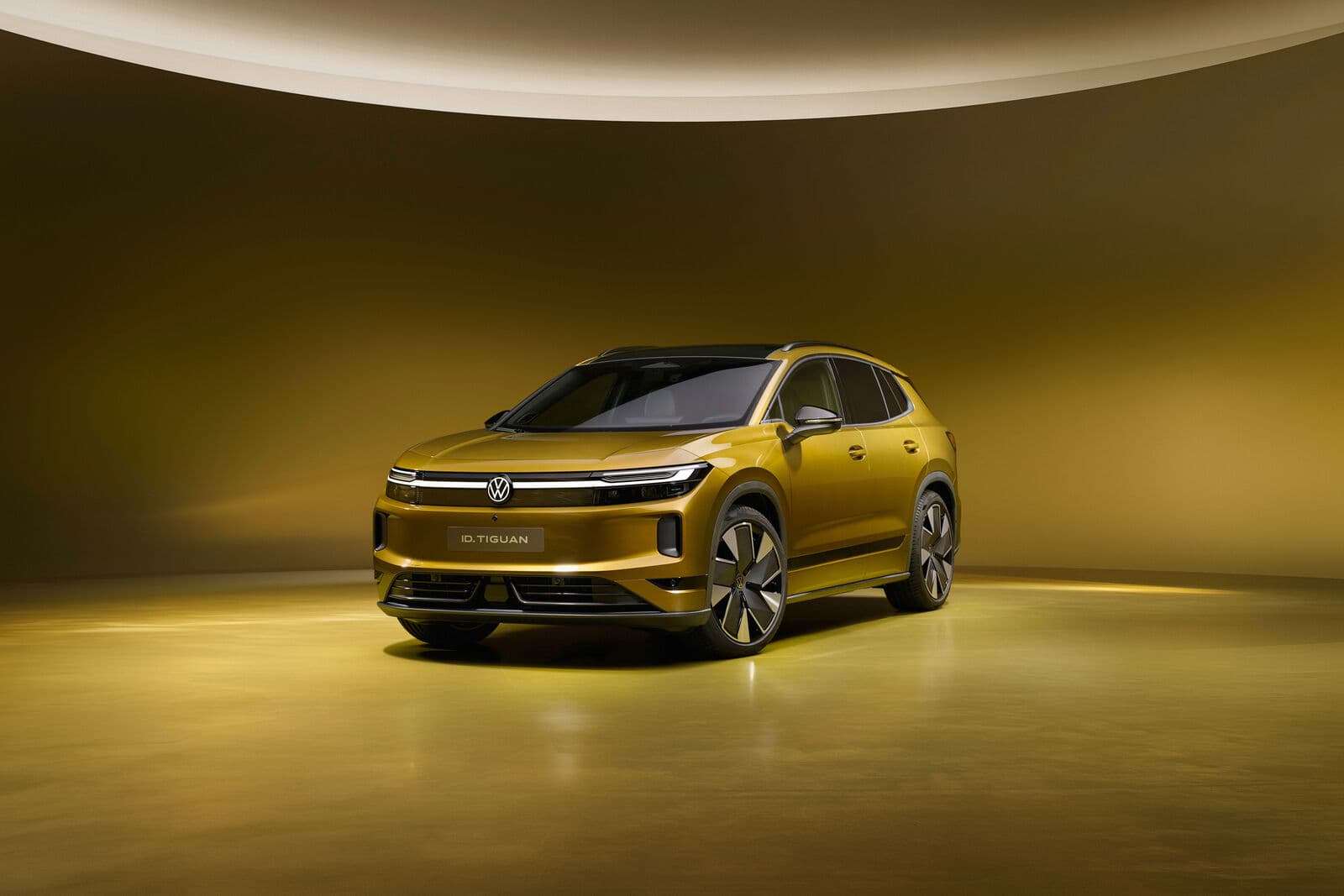
Volkswagen unveiled the ID. Tiguan on 9 October 2026, and it is the first all-electric Tiguan. The mid-size BEV SUV is built on the MEB+ platform at the Emden plant and replaces both the ID.4 and the ID.5, of which more than 950,000 units have been built. It is offered with three drive systems: a 140 kW (190 PS, about 187 hp) rear-wheel-drive car with a 58 kWh battery, a 210 kW (286 PS, about 282 hp) rear-wheel-drive car with a 77 kWh battery, and a 220 kW (299 PS, about 295 hp) 4MOTION all-wheel-drive version, also with 77 kWh. Volkswagen claims a WLTP range of up to 600 km, a design that it says looks like a car from the next segment up, and an interior that brings physical buttons back. Pre-sales start on 13 October 2026 in Germany and many other European countries from €42,695, with the car arriving at the beginning of 2027 alongside the petrol, diesel and hybrid Tiguan.
Performance & Specs
Volkswagen's own press release lists three performance levels and does not print acceleration, top speed or torque, so those figures here come from the hands-on reports of heise, electrive.net and Il Sole 24 Ore, which agree with each other. The 140 kW (190 PS, about 187 hp) rear-drive base car is reported at 0-100 km/h in 8.5 seconds with a 160 km/h top speed, and heise gives its motor as the APP350 with 350 Nm. The 210 kW (286 PS, about 282 hp) rear-drive car with the larger battery is reported at 6.6 seconds and 180 km/h, and the 220 kW (299 PS, about 295 hp) 4MOTION is reported at 6.3 seconds and 180 km/h. (PS is the metric horsepower, about 1.4 percent smaller than the imperial hp used here, so 299 PS is about 295 hp.) The 299 figure that circulated in early reports is therefore PS, not hp.
The same pairing of batteries and motors appears in the Skoda Enyaq, which shares the MEB+ platform. Heise reports a 400 V system voltage, and the one-pedal driving mode is standard on every ID. Tiguan, with strong deceleration from the accelerator pedal alone. The long-range numbers differ by version and are not officially split: Volkswagen says only that the WLTP range reaches up to 600 km depending on power and battery size. Electrive.net, Il Sole 24 Ore and heise all attribute roughly 450 km to the 58 kWh car, up to 600 km to the 210 kW 77 kWh car and up to 560 km to the 4MOTION, and the figures are provisional until homologation. Volkswagen publishes official combined consumption for all three versions in its release footnotes: 16.3 to 14.9 kWh/100 km for the 140 kW car, 16.2 to 14.6 kWh/100 km for the 210 kW car and 17.2 to 15.7 kWh/100 km for the 220 kW 4MOTION, and it notes that the up to 600 km applies to the most range-favourable equipment variant.

| Powertrain | Dual-motor 4MOTION AWD BEV |
|---|---|
| Power | 220 kW (299 PS / 295 hp) |
| Torque | Not published |
| 0–100 km/h | 6.3 s (reported) |
| Battery | 77 kWh net (NMC) |
| Range | Up to 560 km WLTP (reported) |
| POWERTRAIN TYPE | Battery electric (BEV), 3 versions |
|---|---|
| HORSEPOWER | 140 kW (190 PS / 187 hp), 210 kW (286 PS / 282 hp), 220 kW (299 PS / 295 hp) |
| ACCELERATION | 0-100 km/h in 8.5 s / 6.6 s / 6.3 s (reported, not in VW's release) |
| TOP SPEED | 160 km/h (58 kWh); 180 km/h (77 kWh versions), as reported |
| DRIVETRAIN | RWD (140 kW and 210 kW); 4MOTION AWD (220 kW) |
| BATTERY | 58 kWh LFP; 77 kWh NMC (net, as reported; gross not published) |
| WLTP RANGE | Up to 600 km (official, best version); reported 450 / 600 / 560 km per version |
| WLTP CONSUMPTION | 140 kW: 16.3-14.9; 210 kW: 16.2-14.6; 220 kW 4MOTION: 17.2-15.7 kWh/100 km combined (official) |
Dimensions & Practicality

| Length | 4.62 m (rounded) |
|---|---|
| Width | 1.86 m (rounded) |
| Height | 1.62 m (rounded) |
| Wheelbase | 2.77 m (rounded) |
| Boot | Up to 534 L, plus 32 L frunk |
Volkswagen's release gives no exterior dimensions, so the size comes from the premiere coverage: electrive.net and Il Sole 24 Ore both quote about 4.62 m in length, 1.86 m in width, 1.62 m in height and a 2.77 m wheelbase, and Drive in Australia puts the wheelbase at 2,765 mm. Drive also reports that the ID. Tiguan is 33 mm longer than the ID.4 it replaces and 21 mm lower. Volkswagen does confirm room for five people, a luggage compartment of up to 534 litres and a new 32-litre frunk, which Il Sole 24 Ore says is meant for the charging cable and small items. Il Sole 24 Ore also gives 1,577 litres with the load area filled to the roof, a single-source figure. Braked towing is up to 1,800 kg with the 58 kWh battery and up to 2,000 kg with the 77 kWh battery, and heise reports a 90 kg nose load and a 75 kg roof load.
| LENGTH | About 4.62 m |
|---|---|
| WIDTH | About 1.86 m |
| HEIGHT | About 1.62 m |
| WHEELBASE | About 2.77 m |
| CARGO VOLUME | Up to 534 L (1,577 L filled to the roof, Il Sole 24 Ore) |
| FRUNK | 32 L |
| SEATS | 5 |
| TOWING | 1,800 kg (58 kWh); 2,000 kg (77 kWh) |
Charging & Battery
Volkswagen confirms the two battery sizes, 58 kWh and 77 kWh, but its release does not name the chemistry, the net or gross capacity, or the charging speeds. Heise and Il Sole 24 Ore identify the 58 kWh pack as LFP (lithium iron phosphate) and the 77 kWh pack as NMC, and Il Sole 24 Ore lists both capacities as net. The sister Skoda Enyaq 60 uses a 61 kWh gross, 58 kWh net LFP pack, so the VW's 58 kWh is almost certainly the same unit, but Volkswagen has not said so. Electrive.net, Il Sole 24 Ore and heise give DC charging of up to 105 kW for the 58 kWh car with 10-80% in about 26 minutes, and up to 165 kW with about 29 minutes for the 77 kWh versions, with AC charging of 11 kW on every version. Heise puts the average charging power of the 77 kWh versions at about 111 kW.
A sanity check on the efficiency figures is reassuring. If the reported 560 km of the 4MOTION is its best case, 77 kWh net implies about 13.8 kWh/100 km at the battery, and Volkswagen's official best consumption of 15.7 kWh/100 km for the 4MOTION is about 14 percent higher, which is a normal size of charging loss. The ID. Tiguan also supports vehicle-to-load through a plug-in PowerSocket adapter, and electrive.net lists vehicle-to-home and vehicle-to-grid as supported.
| BATTERY | 58 kWh LFP (140 kW); 77 kWh NMC (210 kW and 220 kW); net, as reported |
|---|---|
| AC CHARGING | 11 kW (all versions, as reported) |
| DC FAST CHARGING | 105 kW (58 kWh); 165 kW (77 kWh), as reported |
| DC 10-80% TIME | About 26 min (58 kWh); about 29 min (77 kWh), as reported |
Design & Interior
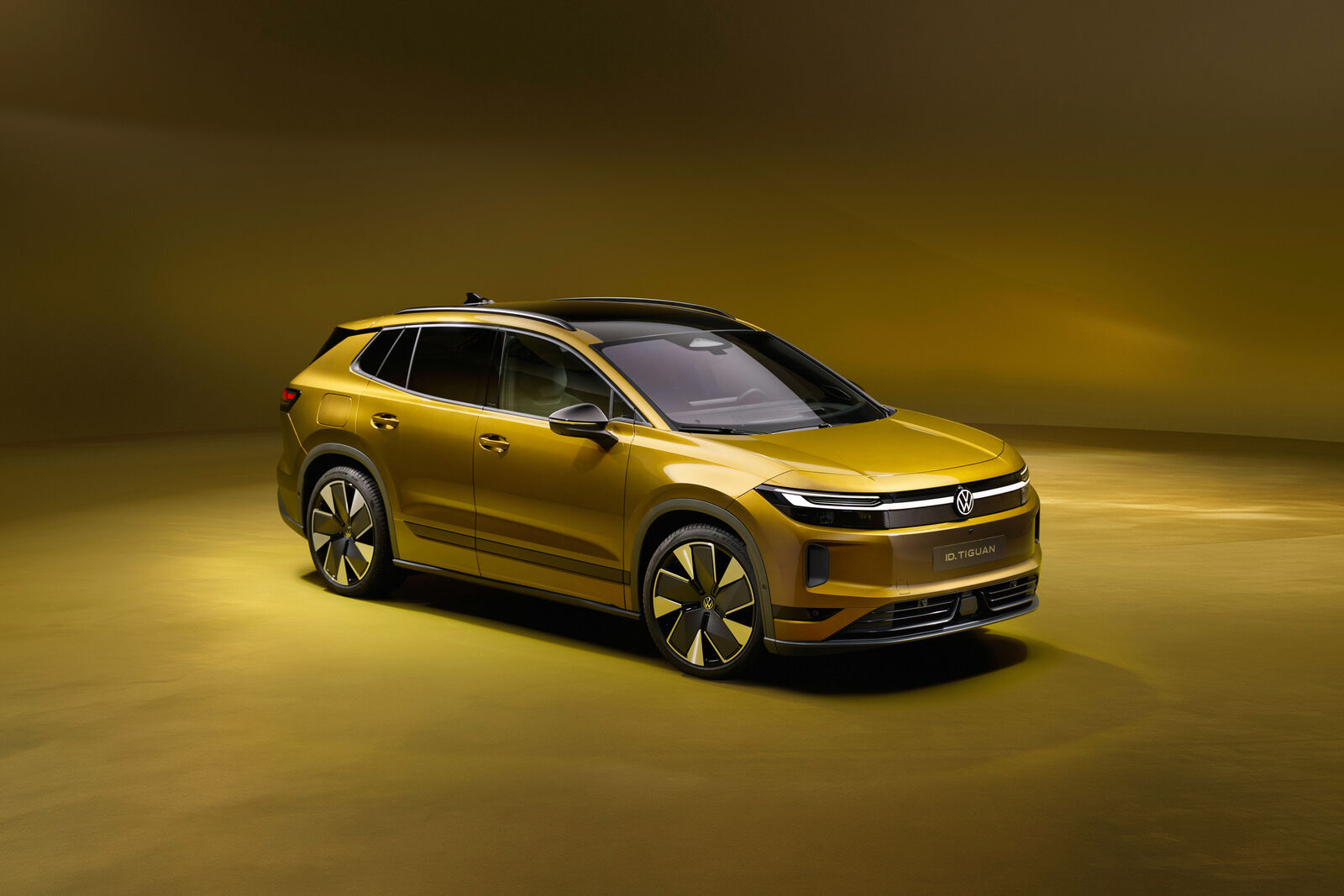
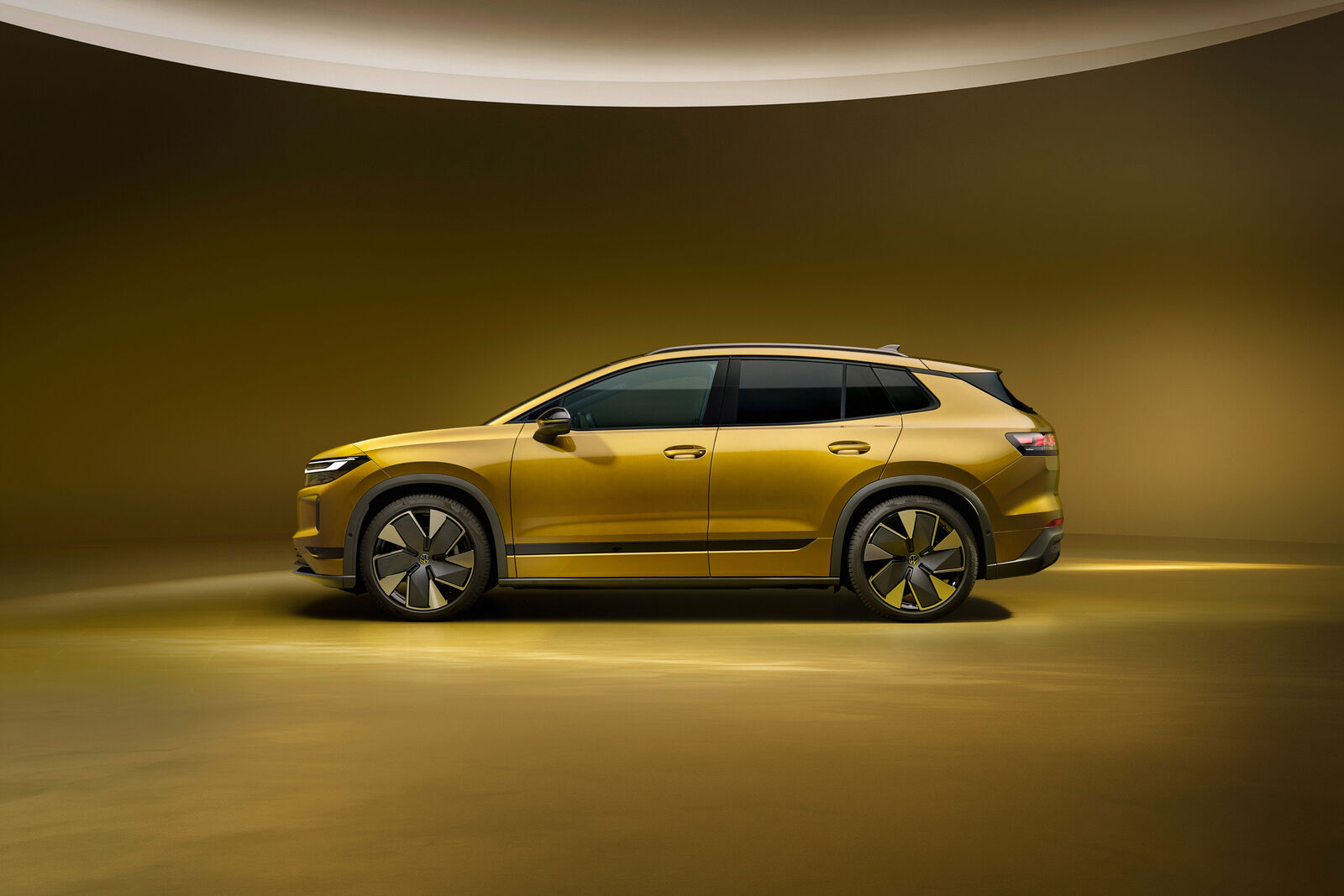
Volkswagen calls the style its Pure Positive design language and says the softer crossover shape of the ID.4 and ID.5 has given way to a more upright, powerful SUV with tightly sculpted surfaces. The press photos show a full-width LED light bar across the nose with the VW logo in the centre, a squared-off front bumper with slim air intakes, and a rear with illuminated light strips and an illuminated VW logo. Volkswagen also returns to classic pull-style door handles, which Electrek notes replace the flush handles of the ID.4. Inside, the company promises a leap in material quality, elegant lighting effects and an atmosphere it likens to the next segment up.
The most talked-about change is the return of physical controls. A button bar in the centre console now handles the basic climate functions, the interior door openers are reshaped, the four power windows get a redesigned driver-side panel, and volume and track changes are made mainly with a controller in the centre console. The multifunction steering wheel has physical buttons instead of touch controls, and two Qi2 wireless charging pads at the front use magnetic rings to hold the phone in place. A new Retro mode, switched on with the View button on the steering wheel, turns the Digital Cockpit into blue-red Golf IV style instruments, with the rev counter replaced by a power display. The infotainment screen has its own Retro view with a virtual garage of six models: Golf I, Golf II Country, Golf IV, Tiguan I, Race Touareg and Beetle.
Technology & Features
The display landscape is built from a 10-inch Digital Cockpit, a 15-inch centre screen and, for the first time in a European Volkswagen, a 12-inch co-driver display. A privacy mode hides the passenger screen from the driver, similar to a laptop privacy filter, and lets the passenger listen over paired Bluetooth headphones. Connected Travel Assist is new and adds assisted lane changes on motorways, traffic light recognition and automatic stops at red lights, and one-pedal driving is standard. The optional equipment list includes electrically adjustable front seats with massage, memory and ventilation, a 480 W Harman Kardon sound system and a panoramic sunroof. The Digital Key lets the owner share access to the car by text message, messenger or email through the Volkswagen app. Equipment is sold in four versions, Trend, Life, Style and R-Line; Il Sole 24 Ore reports that the 190 PS car comes in Trend, Life and Style, that the 286 PS car comes in Life and Style and is standard on R-Line, and that wheels range from 19 to 21 inches.
Safety & ADAS
Volkswagen's premiere release names the driver-assistance highlights but not a full list of safety equipment, and no Euro NCAP rating exists yet because the car is not on sale. The new Connected Travel Assist is the headline system, with assisted lane changes on motorways and automatic stopping at red lights. Volkswagen does not state an SAE automation level, and the assistance content will be confirmed by the German price list and the equipment lines when pre-sales open on 13 October 2026.
| ADAS LEVEL | Not stated by Volkswagen (driver assistance, not self-driving) |
|---|---|
| ADAS FEATURES | Connected Travel Assist (assisted lane change, traffic light recognition, stop at red lights), one-pedal driving (standard) |
Available Versions
| VERSION | POWER | TORQUE | 0-100 | TOP SPEED | DRIVETRAIN | BATTERY | EV RANGE | COMBINED RANGE | PRICE | KEY DIFFERENCES |
|---|---|---|---|---|---|---|---|---|---|---|
| ID. Tiguan 140 kW (58 kWh) | 187 hp | 350 Nm | 8.5s | 160 km/h | RWD | 58 kWh | 450 km | — | €42,695 | 190 PS, LFP, 105 kW DC, 1,800 kg towing; price is the lowest in the range, VW has not assigned it to a version |
| ID. Tiguan 210 kW (77 kWh) | 282 hp | — | 6.6s | 180 km/h | RWD | 77 kWh | 600 km | — | — | 286 PS, NMC, 165 kW DC, 2,000 kg towing, longest range |
| ID. Tiguan 4MOTION 220 kW (77 kWh) | 295 hp | — | 6.3s | 180 km/h | AWD | 77 kWh | 560 km | — | — | 299 PS, dual motor, 2,000 kg towing |
Pricing & Availability
Volkswagen's world-premiere release dated 9 October 2026 says pre-sales start on 13 October in Germany and many other European countries at prices from €42,695, and that the car launches at the beginning of 2027. The release does not say whether the price includes VAT, which version it belongs to, or give prices for individual versions, so the price should be read as a lowest list price for Germany that will be broken out when the price list is published. Electrive.net compares it with €40,580 for the current ID.4, and Il Sole 24 Ore speaks of list prices from around €45,000, which conflicts with Volkswagen's figure and is not used here. The car is built in Emden, not Wolfsburg, where the combustion Tiguan is made. In North America, Electrek reports that Volkswagen said the ID. Tiguan will replace the ID.4 there with prices and details announced in due course, but Volkswagen's own release names no US launch date or price. No launch has been announced for Israel as of October 2026.
How It Compares
The closest relative is the Skoda Enyaq, which sits on the same MEB+ platform and carries the same 190 PS, 286 PS and 299 PS power levels and batteries. The Enyaq 85, at 282 hp and up to 581 km WLTP, costs €50,990 in Germany, so the Volkswagen's entry price of €42,695 sits below even the Enyaq 60 at €43,490, although Volkswagen has not yet said which version that price buys. The Hyundai Ioniq 5 Centriq with the 84 kWh battery offers 226 hp and up to 570 km at €53,800, and Hyundai is ahead on charging, quoting up to 260 kW against the Volkswagen's 165 kW. The Peugeot E-3008 Long Range reaches 701 km WLTP with its 96.9 kWh battery for €46,990 in France, a clear lead on range, but with 228 hp it is the weakest of the group on power. The rival prices are German or French list prices from each maker's own data, and the Volkswagen's price is the only one in the group that is not yet broken out by version.
- Three drive systems from 140 kW (187 hp) to 220 kW (295 hp), with up to 600 km WLTP and a 2,000 kg towing rating with the 77 kWh battery
- Physical buttons return for climate, volume and the steering wheel, alongside a 15-inch screen and a 12-inch co-driver display with a privacy mode
- Pre-sale from €42,695 in Germany, below the €43,490 Skoda Enyaq 60 that shares its platform
- Charging is modest next to the newest rivals: 165 kW DC at most and 11 kW AC, against 260 kW for the Hyundai Ioniq 5
- Prices per version, net and gross battery capacity and official per-version range figures are not published yet, so the 450 / 600 / 560 km figures remain provisional
The ID. Tiguan fixes what many ID.4 owners complained about: a more upright SUV shape, physical buttons for the things you use every day, and a cabin that Volkswagen says is a class above. Its range of up to 600 km, towing of up to 2,000 kg and a starting price of €42,695 make it a strong family electric SUV on paper, even though its 165 kW charging peak is behind the best in the class. The decision will come down to the price list on 13 October and a real-world range test, since the per-version numbers are still provisional. For a buyer who wants a familiar Tiguan with a plug, it looks like a very safe choice.